
Navigating weed delivery in Canada involves more than just clicking “buy now.” From understanding the legal nuances of the Cannabis Act to figuring out if and how much to tip your driver, a smooth experience depends on knowing the rules and etiquette. This guide will walk you through everything from Canada shipping restrictions for cannabis delivery to provincial laws and essential safety tips, ensuring your next order is convenient, compliant, and considerate.
Why Delivery Etiquette Matters in Canada’s Legal Market
Since the legalization of recreational cannabis in 2018 under the federal Cannabis Act, the landscape of how Canadians access cannabis has transformed dramatically. A significant portion of legal purchases now happen online, delivered discreetly to your door by private couriers or through services like Canada Post parcel pick up. This convenience is fantastic, but it comes with a shared responsibility.
Good weed delivery etiquette isn’t just about being polite; it’s about safety, legality, and supporting a regulated system that prioritizes public health. Whether you’re a long-time consumer or a curious tourist wondering, “Is cannabis legal in Canada for tourists?” (the answer is yes, for adults, with important rules), understanding the dos and don’ts protects you, the driver, and the integrity of the legal market. This guide dives into the crucial questions around tipping, safety, and the Cannabis Act regulations that every informed consumer should know.
Understanding the Legal Framework: The Cannabis Act & Provincial Rules
Before you place an order, it’s essential to understand the laws that govern cannabis delivery. Canada’s legal framework operates on two levels: federal law sets the baseline, and provinces and territories add their own specific rules.
The Federal Baseline: The Cannabis Act
The Cannabis Act is the federal law that made non-medical cannabis legal across Canada. Its core public health goals are to keep cannabis out of the hands of youth, to displace the illegal market, and to protect public safety. For consumers, this act establishes key national rules:
- National Age Limit: The federal minimum age is 18, but provinces can set it higher.
- Public Possession Limit: Adults can legally possess up to 30 grams of dried cannabis (or its equivalent) in public. This is the legal amount of weed you can carry on your person.
- Home Cultivation: Adults are generally allowed to grow up to four cannabis plants per residence for personal use, unless their province or territory has banned it (like Quebec).
- Cross-Border Transport: It remains a serious criminal offense to take cannabis across Canada’s international borders, whether you are entering or leaving the country. This answers questions like “Can you bring a bong into Canada?”—if it’s clean and unused, it’s typically treated as personal property, but any residue could lead to severe penalties.
Recent Cannabis Act amendments in 2025 have also streamlined regulations for the industry, affecting packaging and labelling, which can impact the products you receive.
Provincial and Territorial Variations
Provinces and territories regulate where cannabis can be sold and consumed. This directly affects cannabis Canada delivery services and where you can use your products. The rules for where is weed legal in Canada to consume vary widely.
Important Note for Tourists: Yes, cannabis is legal in Canada for tourists who meet the age requirement of the province or territory they are visiting. However, you must purchase it from a licensed retailer and consume it in accordance with local laws, which often prohibit use in hotels, public parks, and on streets.
Why Bother with Weed Delivery Etiquette?
You might think, “It’s just a delivery—what’s the big deal?” The reality is that cannabis delivery drivers navigate a unique landscape. They are not only responsible for timely service but also for adhering to strict provincial regulations, verifying IDs, and handling products with care. Unlike a pizza delivery, they are ambassadors of a recently legalized industry, often facing stigma and complex logistics.
Practicing good etiquette directly impacts your experience. A driver who feels respected and appreciated is more likely to provide punctual, careful, and friendly service. Furthermore, prioritizing safe weed delivery protocols protects your privacy and ensures you are dealing with legitimate, licensed services. In short, good etiquette creates a win-win situation: you get a superior, hassle-free service, and drivers feel valued for their essential work. It’s the cornerstone of a trustworthy and sustainable mail order weed Canada system.
The Art of the Gratuity: Tipping Your Cannabis Delivery Driver
Let’s address the question at the forefront of most customers’ minds: tipping. While not legally mandatory, tipping is a widely recognized practice that shows appreciation for a service well done.
How Much Should You Tip for Weed Delivery?
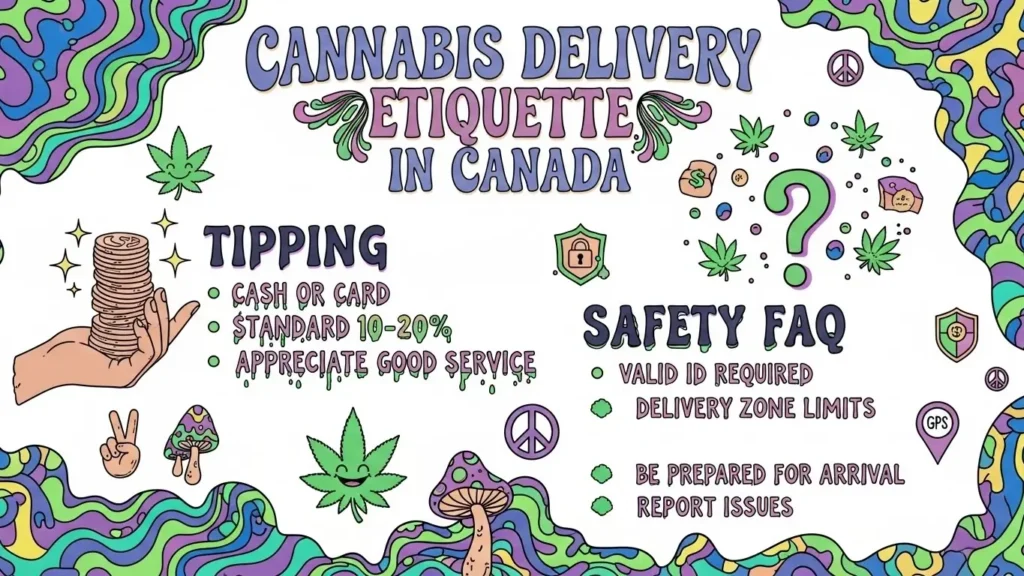
The consensus across the industry is that a tip of 10% to 20% of your total order value is considered standard and courteous. This range aligns with etiquette in other delivery sectors, like food.
- For a $50 order: A 10% tip is $5, while a 20% tip is $10.
- For a $100 order: A tip between $10 and $20 is appropriate.
For very small orders, many consumers and services recommend a minimum tip of $5 to acknowledge the driver’s effort regardless of the bill size. Consider increasing your tip towards the higher end for large orders, deliveries during inclement weather, late-night drops, or if the driver provides exceptional service.
Cash vs. Digital Tips: What’s Preferred?
Both methods are acceptable, but they have different pros and cons.
- Cash Tips: Often preferred by drivers as they receive the gratuity immediately without any processing fees deducted. It’s a direct and personal way to say thank you.
- Digital Tips: Many weed delivery apps and online platforms offer the option to add a tip during checkout or after delivery. This is incredibly convenient if you don’t carry cash. However, these tips may take time to process before reaching the driver.
Pro Tip: If you want to tip in cash, have the bills ready when the driver arrives to ensure a quick and smooth handoff.
When Might You Adjust the Tip?
Tipping is a reflection of service quality. It’s generally acceptable to reduce the tip if the service is poor—for example, if the driver is rude, the order is significantly incorrect, or the delivery is extremely late without communication. Conversely, exceptional service, navigating a hard-to-find address, or delivering in a snowstorm are all great reasons to be extra generous.
Safety First: Essential Protocols for Secure Cannabis Delivery
Your safety and privacy are paramount. Following these cannabis delivery safety tips ensures you’re protected from scams, legal issues, and privacy breaches.
1. Verify the Service’s Legitimacy
Always order from a licensed retailer. Check for a valid provincial cannabis retail license displayed on their website. Look for transparent contact information, secure payment gateways, and clear terms of service. A legitimate service will have verifiable reviews and a professional online presence.
2. Understand and Respect Local Laws
Cannabis delivery laws in Canada vary by province. Know your local rules regarding:
- Legal Age: This is 19 in most provinces, but 18 in Alberta and 21 in Quebec.
- Possession Limits: Adults can legally possess up to 30 grams of dried cannabis (or equivalent) in public. Ensure your order complies.
- Delivery Hours: Many provinces restrict delivery to between 9 a.m. and 11 p.m..
3. Use Secure Payment Methods
Opt for payment methods that offer protection. Credit cards and secure digital platforms are good choices. Be wary of services that only accept unconventional methods like wire transfers or gift cards, as these can be red flags for scams.
4. Ensure Discreet Packaging and Delivery
Reputable services use plain, unmarked packaging that doesn’t reveal its contents. This protects your privacy from neighbors or building staff. The delivery itself should be professional and low-key.
5. Prepare for the Delivery Handoff
Be ready to show two pieces of valid government-issued ID upon delivery, one of which must include your photo and date of birth. The delivery will likely require a signature. Have your ID and any cash tip ready at the door to minimize wait time.
Weed Delivery Safety: A 7-Point Checklist for Every Order
Your safety and privacy are paramount. Following these steps ensures a secure and positive cannabis delivery experience.
- 1. Verify the Service’s Legitimacy: Only order from provincially authorized retailers or their licensed delivery partners. Check for licensing information on their website.
- 2. Know Your Local Laws: Be aware of your province’s age limit, possession rules, and public consumption laws before you order.
- 3. Use Secure Payment Methods: Legitimate sites use encrypted, secure payment gateways. Avoid services that only accept cash or non-traceable methods.
- 4. Ensure Discreet Packaging & Delivery: Legal requirements mandate that cannabis be shipped in smell-proof, tamper-evident, and plain packaging without any markings that indicate the contents. Reputable services use unmarked vehicles.
- 5. Communicate Clearly with Your Driver: Be available at the delivery time. You will need to show valid government-issued ID to prove you are of legal age. The driver is required to check it.
- 6. Track Your Order in Real-Time: Use the provided tracking number to monitor your delivery window, reducing uncertainty and allowing you to be prepared.
- 7. Plan for Safe Storage: Upon delivery, store your cannabis securely, away from children and pets.
The Tipping Guide: Should You Tip Your Cannabis Delivery Driver?
This is one of the most common etiquette questions. Unlike food delivery, there’s no established standard, but here’s a framework to decide.
- The Case for Tipping: Drivers ensure safe, discreet, and age-verified delivery, often navigating complex logistics. A tip is a direct “thank you” for this professional service, especially in poor weather or during busy times.
- The Case Against Tipping (or for Minimal Tips): Drivers are typically paid an hourly wage or salary, unlike restaurant servers. The delivery fee you pay may already contribute to their compensation.
- Current Market Practice: Tipping is not universally expected but is generally appreciated. It’s becoming more common, especially for exceptional service.
How Much to Tip? A Suggested Framework
| Service Scenario | Suggested Tip | Reasoning |
|---|---|---|
| Standard, efficient delivery | $2 – $5 | A polite acknowledgment of good, professional service. |
| Exceptional service (late night, bad weather, extra helpful) | $5 or more (or 5-10% of order) | For service that goes clearly above and beyond. |
| Large or complex order | $5 – $10 | For handling multiple items or a high-value order with care. |
| “Cashless” or Pre-Paid Order | Consider an in-app tip if available, or have a few dollars cash ready. | Drivers may not carry change. |
The Bottom Line: Tipping is a personal choice. If you do tip, cash is king for immediacy. If a driver provides a notably safe, friendly, and efficient service, a tip is a meaningful way to show your appreciation and support good service practices in the industry.
What You Can and Cannot Do: Shipping, Travel, and Quantities
Misinformation can lead to serious legal trouble. Let’s clarify common questions.
- Shipping Cannabis by Mail: Individuals can ship and receive cannabis within Canada via Canada Post, provided they follow strict packaging rules and both sender and receiver are adults. However, you cannot use UPS, FedEx, or USPS as an individual to send cannabis. FedEx marijuana shipping is a contract-only service for licensed businesses. Sending weed UPS or via USPS marijuana services across borders is illegal.
- Domestic Air Travel: You can travel within Canada with up to 30 grams of dried cannabis (or equivalent). It must be in your carry-on or checked baggage and stored in accordance with airline policies.
- International Travel: It is illegal to take cannabis across the Canadian border, even to a U.S. state where it is legal. This includes any product made from what is marijuana made of, including CBD oils and edibles. Conversely, shipping an iPhone from Canada to the US is fine, but shipping any cannabis product is not.
- Edible Possession Limits: The legal amount of weed you can carry includes edibles. The 30-gram public possession limit translates to an equivalent amount. For commercially produced edibles, this means you can carry as many packages as contain a total of up to 30 grams of dried cannabis equivalent. A single package of edibles cannot contain more than 10 mg of THC. How much edibles can you carry in Canada in practical terms? You could carry multiple packages, as long as the total THC equivalency doesn’t exceed 30 grams of dried flower.
Responsible Use and Recognizing Cannabis Use Disorder
Legal access emphasizes responsible use. Part of cannabis law Canada framework includes public education. Cannabis use disorder (CUD) is a recognized medical condition where an individual is unable to stop using cannabis despite it causing harm to their health, work, or social life. Legalization has facilitated more open conversations and support for those who may need help. If you’re concerned about your own or someone else’s use, resources are available through Health Canada and provincial health services.
Conclusion: Being a Respectful and Informed Consumer
Navigating weed delivery etiquette in Canada boils down to three pillars: Knowledge (of the Cannabis Act regulations and local laws), Respect (for drivers, neighbors, and the legal system), and Responsibility (for your safety and consumption).
By ordering from licensed sources, understanding possession limits like the legal amount of weed you can carry, tipping appropriately for good service, and consuming privately and responsibly, you contribute to the success and safety of Canada’s legal cannabis framework. The next time your doorbell rings with a cannabis delivery, you can feel confident, prepared, and courteous.
FAQ: Your Top Weed Delivery Questions Answered
Can I ship cannabis to a friend in another province using Canada Post?
Yes, adults can ship cannabis to other adults within Canada via Canada Post, as long as the package meets all Canada Post parcel pick up rules and federal packaging requirements: odor-proof, tamper-proof, and with no external markings indicating cannabis. Both sender and receiver must be of legal age in their province.
What is ‘General Delivery’ with Canada Post, and can I use it for cannabis?
General delivery Canada Post is a service where mail is held at a specified post office for pickup. You likely cannot use it for cannabis from a private individual. Licensed retailers often use the “Deliver to Post Office” or FlexDelivery service, where you pick up your package from a post office with ID and age verification.
Why was marijuana legalized in Canada?
The official objectives of the Cannabis Act are to prevent youth access, displace the illegal market, and protect public health and safety by allowing adults access to quality-controlled legal cannabis. Public opinion and a desire to reduce harms of prohibition also played a key role.
What are the key 2025 changes to the Cannabis Act regulations?
The 2025 Cannabis Act amendments focused on streamlining rules for industry. Key changes for consumers include: updated packaging rules (allowing transparent windows and co-packs), removal of the 1-gram limit on pre-rolled cannabis, and more flexible labelling. The public possession limit of 30 grams remains unchanged.
Is it true I can now carry more edibles?
The rules on how much edibles can you carry in Canada are based on the 30-gram dried cannabis equivalent limit for public possession. The 2025 amendments removed the requirement for an “equivalency statement” on labels, but the THC limits per package (e.g., 10 mg THC for edibles) and the overall public possession limit have not changed. Always purchase from licensed retailers whose products comply with these rules.
Is it customary to tip weed delivery drivers?
Yes, it is becoming customary, much like tipping for food delivery. While optional, it is a widely appreciated gesture that acknowledges the driver’s service and effort.
Can I tip my driver with cannabis instead of money?
No. Tipping with cannabis is illegal, as it constitutes an unlicensed transfer of a controlled substance. Always use cash or a digital money transfer for tips.
What ID do I need to receive a weed delivery?
You will need to present two pieces of government-issued ID. The primary ID must have your photo, name, and date of birth (e.g., driver’s license, passport). The secondary ID must have your name and either a signature or photo (e.g., credit card, student card).
Can I get same-day weed delivery?
Many services in major urban areas offer same-day weed delivery, often within a 1-3 hour window if you order by a certain time. Check the specific policies of your chosen retailer.
What if my order is incorrect or I have an issue?
Contact the dispensary’s customer service immediately. Reputable services will have policies to resolve incorrect orders or other issues. Providing feedback helps improve the service for everyone.
Are there areas where delivery is not available?
Yes. Delivery is typically restricted to within the province of the licensed retailer. Some services may have further geographic restrictions within a certain radius of their storefront. Always check the delivery map on the website before ordering.
How can I ensure my privacy during delivery?
Choose services that guarantee discreet packaging. You can also provide delivery instructions (e.g., “leave at side door”) in the order notes to minimize interaction if desired.