
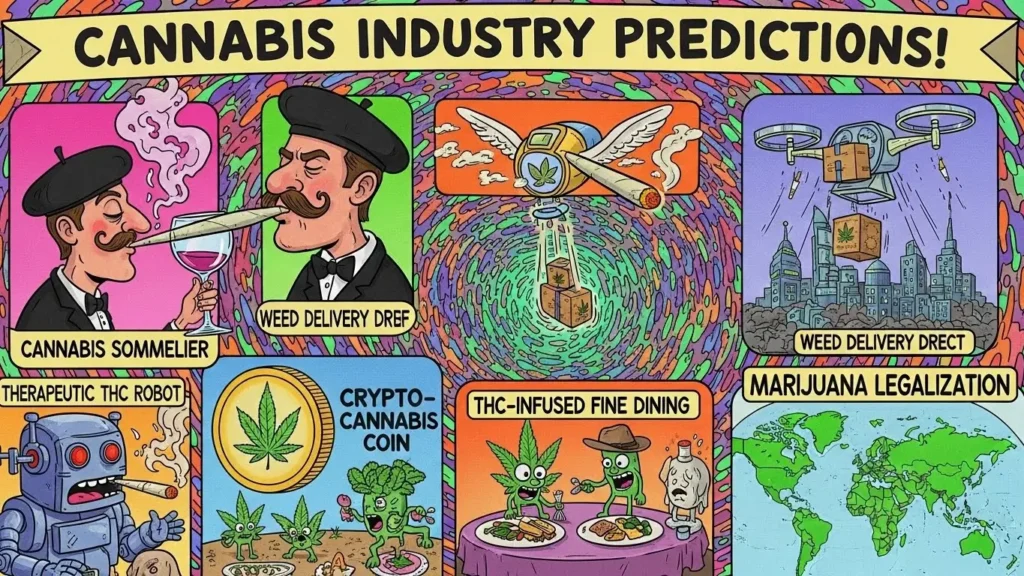
The global cannabis industry is accelerating toward a pivotal year. As we approach 2026, the sector is maturing beyond its initial growing pains, but navigating its future requires a keen eye for complex trends. This year is expected to be defined by a powerful mix of continued commercial growth, profound regulatory recalibrations, and a dramatic evolution in how consumers interact with cannabis products. For entrepreneurs, investors, and business leaders, understanding these forces is not optional—it’s the key to unlocking success in an increasingly competitive landscape.
This guide synthesizes the latest market intelligence, policy analysis, and consumer data to deliver the most actionable Top Cannabis Industry Predictions for 2026. We will cut through the noise to explore what the future holds, from the potential of a $61 billion global market to the specific business models poised for profitability. Whether you’re a seasoned operator or planning your first venture, what you read here will prepare you for the opportunities and challenges on the horizon.
The Macro View: Market Growth and Economic Potential
A $61 Billion Global Industry by 2026
Analysts project a robust and expanding market. BDSA, a leading market research firm, forecasts that global cannabis sales will surpass $61 billion in 2026, representing a compound annual growth rate (CAGR) of over 16% from 2021. This growth is not uniform but is being driven by powerful regional engines. While established markets like the United States and Canada continue to expand, the most explosive growth is coming from international medical and newly adult-use markets.
The potential of the cannabis market is staggering. In the U.S., sales are projected to reach $46 billion by 2026. However, the international segment is the true growth frontier. Sales outside the U.S. and Canada, led by countries like Germany and Mexico, are expected to balloon from $1.4 billion in 2021 to $9.5 billion by 2026—a remarkable CAGR of approximately 46%. This signals a massive, global shift in acceptance and commercialization.
The Oversupply Equation and Price Compression
Growth, however, comes with growing pains. A major theme for 2026 will be managing the tension between massive production capacity and regulated demand. In markets like Canada, operators have scaled up production significantly, with annual exports more than doubling from 107 tonnes in 2024 to approximately 240 tonnes in 2025. This “flood of cannabis” is entering global markets just as key import regions like Germany and Australia face potential regulatory tightening, setting the stage for chronic oversupply and further price compression.
Projected Global Cannabis Sales Growth to 2026
Regulatory Reckoning: The Rules of the Game Are Changing
Telemedicine: The Engine of Growth Faces Scrutiny
Telemedicine has been a revolutionary force, connecting patients with prescribers and fueling growth in major medical markets like Australia, Germany, and the UK. However, its ease of access has drawn political scrutiny. Concerns that platforms are being used by recreational users have led to plans for restrictions in Germany and ongoing discussions in Australia. Senior Analyst Alex Khourdaji predicts that “telemedicine restrictions are bound to occur in Germany and could be seen in Australia in 2026”. For businesses, this is a critical cannabis industry prediction for 2026: reliance on telemedicine channels may face sudden disruption, requiring agile adaptation of patient acquisition strategies.
The Long Road to Federal Reform in the U.S.
In the United States, the federal landscape remains a patchwork. While a shift from Schedule I to Schedule III is under review, experts at Paybotic Financial predict a final, effective rule is unlikely in 2026, meaning the crippling 280E tax code will remain in place for most of the year. Similarly, hopes for the SAFE Banking Act are dimming, with the prediction that federal reform will “die again,” pushing innovation to the state level. For operators, this means continued high costs, limited banking access, and a focus on state-specific compliance solutions. What is your business doing to build financial resilience in this prolonged period of federal uncertainty?
The Intoxicating Hemp Cliff-Edge
The market for intoxicating hemp-derived products (like Delta-8 and THCA) exploded into a multi-billion dollar “grey market”. In 2026, this sector faces a cliff-edge. A federal ban passed in late 2025 is set to come into force in late 2026. While enforcement is a question, this will force a massive recalibration. As Business of Cannabis editor Ben Stevens notes, “the genie is out of the bottle,” and the demand for these alternatives will likely migrate, creating both challenges for regulated THC markets and opportunities for compliant product innovation.
Product Innovation: What Consumers Will Buy in 2026
The Rise of Non-Flower Formats and Beverages
The dominance of raw flower is beginning to wane under regulatory and consumer pressure. In 2026, we will see explosive growth in alternative formats:
- Cannabis Beverages: Positioned as a mainstream alcohol alternative, low-dose THC beverages are expected to gain significant traction for social and “sober-curious” consumers.
- Pre-Rolls: Especially infused and multi-pack options, are the fastest-growing category, winning on convenience and consistency.
- Edibles & Topicals: These discreet, dose-controlled formats are favored by wellness-focused consumers and new user demographics.
Wellness as the Dominant Consumer Frame
The “stoner” stereotype is obsolete. The primary driver for cannabis use is now wellness: relaxation, sleep, and pain management. Sixty-four percent of consumers cite relaxation as their main motivation, and one-third now prefer cannabis over alcohol entirely. This shift demands that marketing and product development move from talking about potency to explaining specific, functional benefits. Consumers are seeking sophisticated, science-backed products with defined cannabinoid and terpene profiles for targeted outcomes.
Profitable Opportunities: Building a Cannabis Business in 2026
What Type of Cannabis Business Is Most Profitable?
The “most profitable” model depends on your capital, risk tolerance, and expertise. The cannabis industry prediction for 2026 suggests that ancillary (non-plant-touching) businesses often offer the best balance of lower regulatory risk and healthy margins.
- High-Profit Ancillary Services: Cannabis testing labs are essential for compliance, with fees of $75-$300 per mandated test. Specialized marketing agencies and compliance software providers also address critical, recurring industry needs with high demand.
- Plant-Touching Models with Scale: For those with significant capital, processing/manufacturing (turning flower into concentrates, edibles) and vertically integrated operations can capture margins at multiple supply chain points.
- Low-Barrier Entry Points: For entrepreneurs, cannabis content creation, consulting, and accessories sales online require minimal licensing and can be started with under $5,000.
Comparison of Select Cannabis Business Models for 2026
Marketing and Consumer Trends: Connecting with the 2026 Buyer
The future outlook for cannabis marketing is a complete strategic reset. The demographic has shifted—women now make up more than half of consumers, and purchases are increasingly driven by millennials and Gen Z. They shop for cannabis digitally, with 68% expecting clear online menus and 75% influenced by easy reordering.
Personalization is no longer a luxury. Nearly 90% of consumers are more likely to return to brands that offer tailored recommendations, yet few feel they receive them. Successful brands in 2026 will leverage data to create authentic, founder-led stories that connect on a human level, emphasizing wellness, science, and shared values over generic “premium” claims.
Financial Infrastructure: Banking and Payments Evolution
With federal banking reform stalled, innovation is happening elsewhere. The cannabis industry prediction for 2026 for finance includes:
- Pay-by-Bank as Default: For e-commerce and delivery, “pay-by-bank” options using ACH and real-time rails will become the dominant cashless method, projected to hit 42% of transaction volume.
- BNPL Enters Cannabis: Consumer-facing “Buy Now, Pay Later” programs are predicted to launch pilots in states like California and Michigan, helping to increase basket sizes for premium products.
- Persistent Capital Gap: The lending shortfall for the industry is expected to grow to a staggering $18-$22 billion, keeping capital expensive and highlighting the critical importance of cash flow management.
Sustainability and Social Equity: The Imperatives of a Mature Industry
A focus on Environmental, Social, and Governance (ESG) is moving from a “nice-to-have” to a business imperative. Regulators are beginning to mandate energy and resource reporting for energy-intensive indoor cultivation. Consumers increasingly support brands that demonstrate real environmental action and social responsibility.
Furthermore, social equity will remain a central theme. More states will implement or refine programs aimed at ensuring communities disproportionately impacted by prohibition have a fair chance to participate in the legal market. Successful companies in 2026 will integrate these principles into their core operations, not just their marketing.
Conclusion: Preparing for the Pivotal Year Ahead
The Top Cannabis Industry Predictions for 2026 paint a picture of a sector reaching a new level of maturity—one defined by sophisticated consumers, complex regulations, and fierce competition. The potential of the cannabis market is immense, but so are the challenges.
The businesses that will thrive are those that move beyond a growth-at-all-costs mentality. They will be the ones who:
- Embrace data-driven agility to manage supply chains and pricing in a volatile market.
- Pivot to a wellness-centric, personalized marketing approach that resonates with the mainstream consumer.
- Build operational resilience to withstand regulatory shocks, whether in telemedicine, hemp, or taxation.
- Invest in financial technology to navigate the persistent gaps in banking and capitalize on new payment rails.
- Integrate authentic sustainability and equity practices into their business model.
2026 will separate the tactical operators from the strategic leaders. The time to prepare is now.
What is your biggest strategic question as you plan for 2026? Share your thoughts in the comments below, and subscribe to our newsletter for ongoing analysis as these trends develop.
Frequently Asked Questions (FAQs)
What is the cannabis industry prediction for 2025?
Looking back at 2025, it was a year of momentum and policy complexity. It followed a reform-driven 2024 but saw a shift as global elections brought new political dynamics, stalling some legislative reforms in markets like the U.S. and Czech Republic. A key feature was the massive growth of telemedicine as a primary patient access channel and the continued surge of the intoxicating hemp market, which set the stage for the regulatory reckonings expected in 2026.
What is the future outlook for cannabis?
The long-term future outlook for cannabis is one of robust growth and mainstream integration. The market is projected to exceed $61 billion globally by 2026. Cannabis is increasingly positioned as a wellness and lifestyle product, competing directly with alcohol and pharmaceuticals. However, this growth will be accompanied by increased regulatory scrutiny, industry consolidation, and a consumer demand for higher quality, consistency, and ethical business practices.
What type of cannabis business is most profitable?
Profitability depends on scale and risk profile. Ancillary businesses often offer strong margins with lower regulatory hurdles; for example, testing labs and compliance software providers address essential, recurring needs. For well-capitalized operators, processing/manufacturing (creating edibles, concentrates) and vertical integration can be highly profitable by capturing value at multiple stages. In the current climate, delivery services also present a strong model due to growing consumer demand and lower overhead than brick-and-mortar dispensaries.
What is the potential of the cannabis market?
The potential of the cannabis market is extraordinary, extending far beyond current sales figures. BDSA forecasts the global cannabis market to reach $61 billion by 2026. Beyond direct sales, the economic potential includes vast ancillary service industries, agricultural technology, pharmaceutical research and development, and tourism. As legalization expands and stigma fades, cannabis is poised to become a major global commodity, with potential applications in wellness, medicine, food, textiles, and sustainable materials.
Q1: Will cannabis really be rescheduled in 2026, and what does that mean?
While not guaranteed, there is significant momentum and a notable probability (estimated at 20% by Capstone) that cannabis could be moved from Schedule I to Schedule III federally in 2026 . This would not make it federally legal for adult use but would eliminate the devastating IRS Code 280E, allowing businesses to deduct normal expenses like payroll, rent, and marketing, dramatically improving profitability and access to capital .
Q2: What is the single fastest-growing product category?
Pre-rolls, especially infused and multi-pack formats, are currently the fastest-growing category in many markets . They offer consumers convenience and consistency. However, cannabis beverages are the category with the most explosive growth potential as they tap into a massive, existing market for social and functional drinks .
Q3: How is the medical cannabis market changing globally?
Major medical markets like Germany and Australia are facing potential regulatory tightening, particularly around telemedicine prescriptions, due to concerns about recreational use . This could cause short-term demand disruption. Meanwhile, new models are emerging, like France’s pharmaceutically-focused, non-flower approach, which could become a template for other countries .
Q4: What’s the biggest challenge for cannabis businesses in 2026?
Navigating extreme regulatory fragmentation while maintaining profitability. With each new legal state adding a unique set of rules for licensing, testing, packaging, and taxes, multi-state operators face immense complexity. Coupled with price volatility and high taxes, this makes data-driven decision-making and operational efficiency non-negotiable for survival .
Q5: Are cannabis jobs still a growing career field?
The growth in pure headcount has plateaued (around 425,000 full-time jobs in the U.S.), as businesses focus on efficiency . However, revenue continues to grow. This means the opportunities are shifting from entry-level cultivation to more specialized roles in data analytics, compliance, marketing, and product formulation. The market is maturing and demanding higher skill sets.