
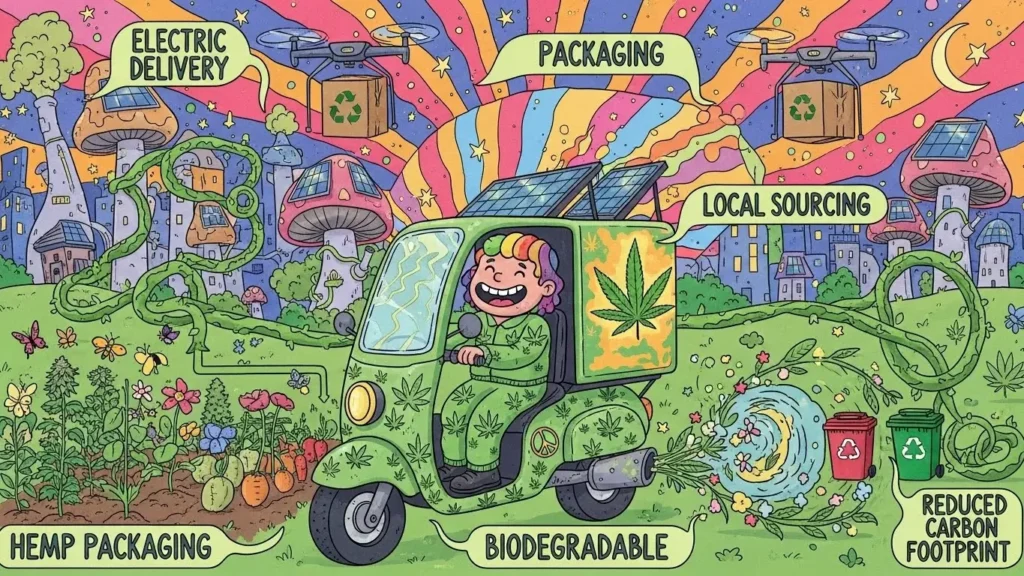
The cannabis industry is booming, with the global market projected to reach hundreds of billions of dollars in the coming years. As demand for convenient weed delivery surges, a critical question emerges: at what cost to our planet? The truth is, the convenience of having cannabis products arrive at your door can come with a hidden environmental price tag, from vehicle emissions to packaging waste. However, a powerful shift is underway. Sustainable cannabis delivery is no longer a niche ideal but an urgent, achievable, and necessary evolution for businesses and conscious consumers alike.
This guide explores seven actionable, impactful strategies to transform cannabis delivery services into a force for environmental good, ensuring that the future of this industry is as green as the products it delivers.
Why Sustainable Delivery Is a Game-Changer for the Cannabis Industry
The environmental footprint of traditional retail and delivery models is significant. From energy-intensive indoor cultivation facilities to fleets of delivery vehicles and mountains of single-use plastic, the industry faces real challenges. Yet, this also presents an unparalleled opportunity. Modern consumers are increasingly voting with their wallets, favoring brands that demonstrate genuine environmental and social responsibility. For a cannabis delivery business, embracing sustainable practices is a powerful way to build trust, foster fierce customer loyalty, and future-proof operations in a competitive market. It’s a holistic approach that benefits the cannabis industry, the customer, and the planet.
Imagine the impact if every delivery was made by an electric vehicle, every product arrived in compostable packaging, and every route was optimized to save fuel. This vision is within reach, and the journey begins with the following seven transformative strategies.
1. Electrify and Optimize the Last-Mile Fleet
The “last mile” of delivery—the final leg to the customer’s door—is often the most carbon-intensive. A fundamental shift to electric vehicles (EVs) for delivery fleets is one of the most effective ways to slash direct emissions. Companies leading this charge are investing in EVs to ensure their operations produce zero tailpipe emissions, appealing directly to eco-conscious consumers.
Technology supercharges this strategy. Advanced route optimization software is a game-changer, allowing businesses to plan the most efficient delivery paths. This technology consolidates orders, avoids traffic, and reduces total miles driven, which conserves fuel (or battery charge) and lowers operational costs. Some forward-thinking services are even exploring innovative models like mobile dispensaries—efficiently routed vehicles that reduce the need for multiple individual trips to a fixed store location.
- Actionable Tip for Businesses: Start a phased transition of your fleet to electric or hybrid vehicles. Simultaneously, implement a route optimization platform to maximize efficiency for every vehicle on the road, regardless of its power source.
- Actionable Tip for Consumers: When ordering, look for delivery services that advertise eco-friendly practices like EV fleets or consolidated delivery windows. Opting for a slightly longer delivery window can often allow the company to group your order with others, making the trip more efficient.
2. Champion Zero-Waste, Plant-Based Packaging
Packaging is one of the most visible sources of waste in the cannabis delivery chain. The good news? It’s also one of the easiest areas to innovate. The move away from single-use plastics is critical. The future lies in biodegradable and compostable packaging made from materials like recycled paper, plant-based plastics, or even hemp itself.
Leading brands are already adopting minimalist designs and materials that break down naturally, significantly reducing landfill burden. Furthermore, companies can encourage a circular economy by implementing take-back programs or offering discounts to customers who return packaging for proper recycling or reuse. For the consumer, receiving a product in discreet, eco-friendly packaging that aligns with their values enhances the entire unboxing experience.
- Actionable Tip for Businesses: Audit your packaging line. Can child-resistant containers be made from recycled glass or metal? Can mylar bags be swapped for certified compostable alternatives? Start by switching one product line to sustainable packaging and communicate the change to your customers.
- Actionable Tip for Consumers: Support brands that use minimal and recyclable or compostable materials. After enjoying your product, take an extra moment to properly separate and dispose of the packaging according to your local recycling guidelines.
3. Source from Regenerative and Certified Sustainable Farms
A truly sustainable cannabis delivery service looks beyond its own warehouse. The environmental story of a product begins long before it’s packaged—it starts at the farm. By consciously partnering with cultivators who use regenerative farming and organic cultivation methods, delivery services can ensure their supply chain is green from the ground up.
These practices avoid synthetic pesticides, improve soil health, capture carbon, and promote biodiversity. To verify these claims, look for credible certifications. Programs like Clean Green Certified and Envirocann operate similarly to the USDA Organic label, providing third-party verification of sustainable and organic farming practices within the cannabis industry. By building a menu around products from these verified sources, a delivery service makes a powerful statement about its commitment to comprehensive sustainability.
- Actionable Tip for Businesses: Make sustainable sourcing a key criterion for your procurement team. Prioritize products that carry reputable environmental certifications and build relationships with growers who are transparent about their farming practices.
- Actionable Tip for Consumers: Use your purchasing power. Browse your delivery service’s menu for information on cultivators and look for indicators of organic cannabis or sustainability certifications. Choosing these products sends a clear market signal.
4. Implement Smart Energy and Waste Management at Facilities
Sustainability must extend to the home base—the dispensary, warehouse, and office. Implementing smart energy management can dramatically reduce a business’s carbon footprint. This includes installing LED lighting, which uses significantly less energy and produces less heat than traditional lighting, especially important in cultivation and storage areas. Adding solar panels can transform a facility to run on renewable energy, while smart climate systems optimize HVAC use.
Waste management is the other crucial pillar. A robust program goes beyond recycling paper and plastics. For businesses that handle cultivation, plant waste like stems and leaves can be composted. Furthermore, responsible programs for recycling vape cartridges and batteries are essential, as these items contain electronic components and should never be tossed in regular trash.
- Actionable Tip for Businesses: Conduct an energy audit of your facilities. Switching to LEDs and installing programmable thermostats are often low-cost, high-impact first steps. Establish clear, labeled recycling stations for both employees and customers.
- Actionable Tip for Consumers: If your local dispensary or delivery service has a recycling program for batteries or cartridges, please use it. If they don’t, ask if they might consider starting one—customer interest drives change.
5. Leverage Technology for Transparency and Efficiency
Technology is the backbone of a modern, eco-friendly cannabis delivery operation. Blockchain technology, for instance, is revolutionizing supply chain transparency. It can provide a secure, immutable record of a product’s journey from seed to sale, verifying sustainable sourcing claims and ensuring compliance. This builds immense consumer trust.
On the operations side, dynamic delivery systems use real-time data to manage inventory across locations and optimize delivery routes on the fly, ensuring vehicles are fully loaded and taking the shortest possible paths. For the customer, this means reliable, efficient service. For the planet, it means fewer wasted miles and lower emissions. This tech-driven efficiency is a core component of innovations in cannabis delivery that benefit everyone.
- Actionable Tip for Businesses: Investigate software solutions that offer integrated inventory management, route optimization, and logistics tracking. The efficiency gains not only reduce environmental impact but also improve your bottom line.
- Actionable Tip for Consumers: Choose services that offer clear tracking and efficient logistics. A smooth, predictable delivery process is often indicative of an operation that uses technology to minimize waste and inefficiency.
6. Build a Culture of Sustainability with Customers and Community
A company’s sustainability mission shouldn’t be a secret. Educating and engaging customers turns them from passive recipients into active partners in your green journey. Use your website, packaging inserts, and social media to share what you’re doing and, more importantly, why it matters. How does choosing compostable packaging help? What is the impact of switching to an EV fleet?
Launch creative initiatives that incentivize sustainable behavior. A green loyalty program could reward customers with points for returning packaging, choosing slower (more efficient) delivery windows, or consistently ordering from sustainable brands. Extend this ethos to the broader community by partnering with or donating to local environmental organizations, solidifying your brand’s role as a responsible community actor.
- Actionable Tip for Businesses: Create a “Sustainability” page on your website detailing your goals and progress. Train your customer service team to talk knowledgeably about your eco-friendly initiatives.
- Actionable Tip for Consumers: Engage with brands that are transparent about their efforts. Participate in their recycling or loyalty programs, and provide positive feedback when you appreciate their sustainable choices.
7. Advocate for Supportive Policies and Industry Collaboration
Lasting, large-scale change often requires shaping the playing field. Cannabis delivery services can become powerful advocates for policies that support sustainability, such as incentives for commercial EV adoption, streamlined regulations for compostable packaging, or uniform recycling standards for the industry.
Furthermore, progress accelerates through collaboration. Businesses can join industry groups like the Cannabis Sustainability Work Group, share best practices, and collectively push for higher environmental standards. When companies work together to solve common challenges—like developing scalable solutions for cannabis waste recycling—the entire industry rises, creating a new norm where sustainable practices are expected, not exceptional.
- Actionable Tip for Businesses: Join a trade association focused on sustainable cannabis. Share your successes and challenges. Consider how your business can be a voice for sensible, green policy at local and state levels.
- Actionable Tip for Consumers: Support businesses that are active in industry leadership and advocacy. Your choice to patronize them empowers their voice for positive change.
8. Empower Consumers with Education and Green Choices
The most powerful driver for change is an informed consumer. Sustainable cannabis delivery services act as educators and enablers, providing the tools for customers to make greener decisions.
- Offer Clear Sustainability Filtering: Imagine a delivery app where you can filter products by “sun-grown,” “plastic-free packaging,” or “Clean Green Certified.” This transparency allows consumers to easily align their purchases with their values.
- Promote Concentrates and Longer-Lasting Products: While flowers are popular, cannabis concentrates and tinctures often come in smaller packaging and last much longer per dose, reducing the overall frequency of deliveries and packaging waste.
- Provide Clear Recycling/Reuse Instructions: Simply using recyclable packaging isn’t enough if consumers don’t know how to properly dispose of it. Leading services include clear, simple instructions on how to recycle, compost, or return every component of the packaging.
9. Build a Circular Ecosystem with Partnerships
No company can be sustainable in a vacuum. The most impactful services build networks with other eco-conscious businesses and organizations.
- Partner with Environmental Charities: Some companies formally commit a percentage of profits to environmental causes through organizations like 1% for the Planet, directly funding reforestation, ocean clean-up, and climate initiatives.
- Collaborate with Sustainable Labs: The testing process is energy-intensive. Partnering with labs that use efficient technology, like GC/MS for terpene testing, and prioritize renewable energy further reduces the supply chain’s impact.
- Create Industry Alliances: Joining or supporting coalitions like the Sustainable Cannabis Coalition helps set higher industry-wide standards, pushing the entire sector toward better practices.
10. Cultivate a Company-Wide Culture of Sustainability
Ultimately, a company’s environmental ethos must be woven into its very fabric, from leadership to every delivery driver.
- Incentivize Green Employee Behavior: Companies can create internal programs that reward employees for carpooling, biking to work, or participating in sustainability initiatives, turning the mission into a shared team effort.
- Invest in Continuous Green Innovation: This means allocating resources to regularly audit and improve environmental performance, whether it’s by installing solar panels on warehouses or piloting the latest compostable packaging material.
- Lead with Transparent Reporting: Building real trust means not just talking about goals but showing progress. Sharing annual sustainability reports on emissions reduced, packaging diverted from landfills, or water saved demonstrates accountability and authentic commitment.
The Human Impact: More Than Just Carbon Footprints
The benefits of sustainable weed delivery ripple out far beyond reduced emissions. For medical cannabis patients or those with limited mobility, reliable, discreet delivery is not just a convenience—it’s a critical healthcare access point. Eco-friendly practices ensure this vital service is provided responsibly.
Furthermore, by sourcing from local, ethical producers who use regenerative farming, delivery services support community health, fair labor practices, and robust local economies. The ultimate goal is a holistic model where patient care, community well-being, and planetary health are all prioritized, redefining what it means to be a successful business in the modern cannabis industry.
The Future is Green: Your Role in a Sustainable Cannabis Culture
The journey toward a truly sustainable and eco-friendly weed delivery system is not just the responsibility of businesses—it’s a partnership with you, the consumer. The seven strategies outlined here, from electric fleets to circular packaging, are not distant dreams but actionable practices being implemented by pioneering companies today. The data is clear: a significant majority of cannabis consumers now prefer products with sustainable packaging and are willing to support brands that demonstrate genuine environmental responsibility.
The next time you place an order, you have a choice. You can choose the service that invests in clean transportation, champions sun-grown flower, and offers a way to return your packaging. Your purchasing power is the most potent force for change. By demanding and supporting green cannabis practices, you help ensure that the industry’s growth benefits well-being without costing the Earth. The clean weed revolution is here—and it’s being delivered to your door.
Looking Ahead: The Future of Green Delivery
The trajectory is clear. As technology advances, we will see more pilot programs for ultra-efficient drone delivery in certain areas and smarter AI managing logistics networks. Consumer demand for verifiable sustainability will continue to grow, making practices like carbon offsetting and full lifecycle analysis standard. The businesses that thrive will be those that see sustainable cannabis delivery not as a cost, but as a core investment in their brand, their customer relationships, and the future.
The most powerful question you can ask today is this: Does my favorite cannabis service deliver with the planet in mind? The answer should guide your choice, and the collective answer from millions of consumers will shape the industry for decades to come.
Frequently Asked Questions (FAQs)
As a consumer, what’s the single most important thing I can do to support sustainable cannabis delivery?
Be an informed and intentional buyer. Choose delivery services and brands that are transparent about their sustainable practices, such as using electric vehicles or compostable packaging. Your purchasing decisions are the most powerful driver for change in the market.
Is sustainable cannabis delivery more expensive?
Not necessarily. While some upfront costs for businesses can be higher (like buying EVs), many sustainable practices lead to significant long-term savings through reduced energy bills, lower fuel costs, and less waste disposal fees. For consumers, prices are increasingly competitive as these practices become mainstream.
How can I tell if a cannabis brand or delivery service is truly sustainable and not just “greenwashing”?
Look for specific, verifiable claims instead of vague terms like “eco-friendly.” Do they mention specific certifications like Clean Green Certified? Do they detail the materials in their biodegradable packaging? Do they share concrete goals, like a plan to convert their fleet to electric? Transparency is key.
What should I do with cannabis packaging, especially vape cartridges and batteries?
First, check if your cannabis delivery service or local dispensary has a recycling program for these items. If not, batteries and electronics must be taken to a dedicated hazardous waste or e-waste recycling facility—never thrown in household trash. For compostable packaging, ensure you dispose of it in a commercial composting stream if your city offers one.
Can home-growing cannabis be part of a sustainable model?
Yes, if done responsibly. Home-growing can eliminate packaging and transportation emissions entirely. To make it sustainable, use organic soil, practice water conservation techniques like collecting rainwater, and employ energy-efficient LED lighting for indoor grows. Always compost your plant waste.
What is the biggest environmental problem with weed delivery?
The largest issues are the carbon emissions from delivery vehicles and the excessive single-use plastic packaging. The “last mile” of delivery can be carbon-intensive, and child-resistant regulations often lead to complex, non-recyclable plastic containers. The most sustainable services tackle both by using electric vehicles and innovative, plastic-free packaging solutions.
How can I tell if a cannabis delivery service is truly eco-friendly?
Look for concrete actions, not just marketing terms. A truly sustainable service will often:
- State their sourcing policy (e.g., “prioritizes sun-grown flower”).
- Describe their packaging (e.g., “100% hemp plastic” or “reusable glass jars”).
- Offer a take-back program for used containers.
- Use delivery vehicles like EVs or bikes.
- Hold recognized certifications like Clean Green for their products.
Are there eco-friendly options for vapes and cartridges?
Yes, but you need to be selective. The biggest issue is disposable waste. Look for brands with robust recycling programs for used cartridges. For example, some companies have systems where you can return empty carts to the dispensary for proper recycling. The most sustainable choice is often a refillable vaporizer device used with concentrates, which generates far less hardware waste over time.
Is it better for the environment to just go to the dispensary myself?
It depends. A single, optimized delivery route dropping off multiple orders in a neighborhood can be more efficient than numerous individual car trips to the dispensary. The greenest choice is to walk, bike, or use public transit to a local dispensary. If you drive, consolidating your purchases into fewer trips is better. If you choose delivery, opt for services that use EVs and group delivery windows to maximize route efficiency.
What are the top certifications to look for in sustainable cannabis?
Since the USDA cannot offer “organic” certification for cannabis federally, look for these industry-leading standards:
- Clean Green Certified: Modeled on USDA organic rules, it covers farming, handling, and processing.
- Sun+Earth Certified: Goes “beyond organic” to require regenerative farming practices that heal the ecosystem.
- OCal (California): A state-specific program with standards identical to the National Organic Program.