
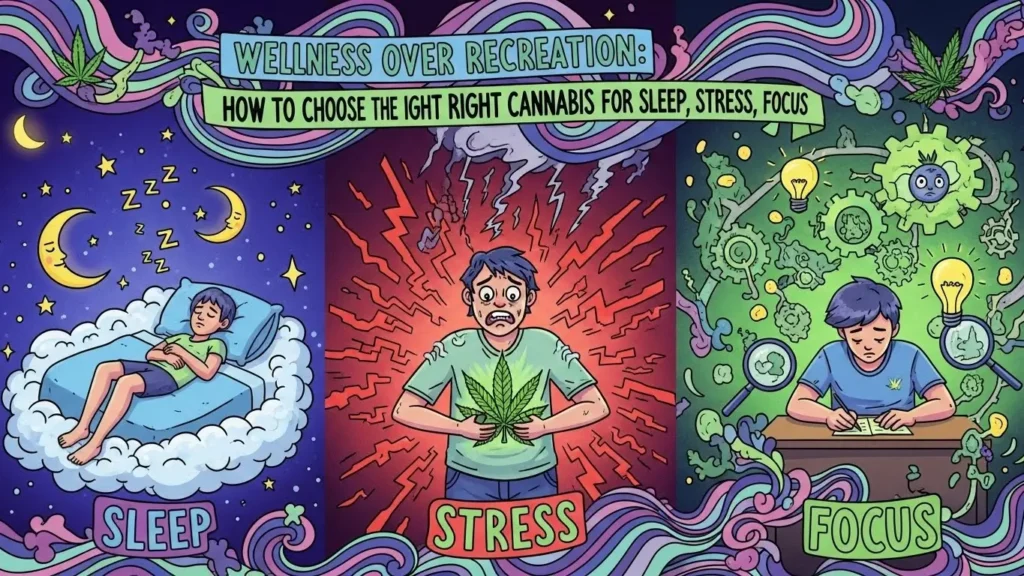
Let’s be honest. When your mind is racing at 2 AM, your stress levels are through the roof before a big meeting, or you just can’t seem to concentrate, your primary goal isn’t recreation—it’s relief. You’re not looking to just zone out; you’re searching for a tangible, effective solution to reclaim your well-being. This is where the modern conversation about cannabis has fundamentally shifted.
Gone are the days of one-size-fits-all “weed.” In 2026, the landscape is about precision, purpose, and personalization. The most common question we hear is: “Can you use cannabis for sleep, stress, and focus, and how do I navigate this complex world?” The short, direct answer is yes—but the how is everything. The real query isn’t just “does marijuana work for sleep?” but “how can I use it correctly for my specific needs?”
This guide is your strategic map. We’re moving beyond anecdotal evidence and into a data-informed, experience-driven approach to cannabis wellness. We’ll dissect the science, debunk myths, and provide you with a clear, actionable framework to choose products that align with your goals for sleep, stress, and focus. Think of this as your ROI-focused plan for investing in your personal well-being, maximizing therapeutic benefits of cannabis for sleep and cognitive function while minimizing guesswork and side effects. Ready to optimize your approach? Let’s dive in.
The 2026 Mindset: From Getting High to Getting Well
The era of cannabis as a simple recreational escape is over. The modern consumer approaches the plant with the same intention and specificity as someone selecting a supplement or a skincare serum. This isn’t a minor trend; it’s the dominant force reshaping the entire industry. Brands are rapidly innovating beyond flower, creating functional wellness products that merge cannabinoids with adaptogens and botanicals targeted for specific outcomes like stress relief or improved focus.
Why the Shift Happened:
- Demographic Evolution: The consumer profile has radically changed. Women now compose more than half of all cannabis users, and they overwhelmingly skew toward wellness-oriented, non-flower formats like tinctures and topicals. Simultaneously, millennials and Gen Z drive nearly two-thirds of all U.S. spending, and these generations prioritize holistic health and intentional living.
- The “California Sober” Movement: There’s a growing cultural movement to replace alcohol and other substances with cannabis as a gentler, plant-based alternative. One-fifth of Dry January participants swapped alcohol for THC or CBD products, with many reporting better outcomes for sleep and anxiety.
- Normalization & Education: As legalization expands, stigma decreases, and credible research grows. Consumers are more informed and sophisticated, seeking predictable, manageable experiences over overwhelming psychoactive effects.
This shift demands a new approach from you, the consumer. It’s no longer about what strain is the “strongest,” but about which product profile is the smartest for your desired state of being. The question changes from “What will get me high?” to “What will help me sleep through the night, quiet my racing mind, or concentrate on my work?”
Understanding the Shift: From THC-Driven Recreation to Cannabinoid-Specific Wellness
The old paradigm of “Indica = sleep, Sativa = energy” is as outdated as a flip phone. Modern cannabis science and consumer experience have shown this binary to be misleading. The effects are driven less by the strain’s name and more by its unique chemical profile: its cannabinoids and terpenes.
- Cannabinoids: These are the primary active compounds. THC (tetrahydrocannabinol) is psychoactive, while CBD (cannabidiol) is non-psychoactive and known for its calming, anti-anxiety properties. Others like CBN (cannabinol) are gaining traction for sleep.
- Terpenes: These aromatic compounds define a plant’s scent and work synergistically with cannabinoids—a phenomenon called the “entourage effect.” Myrcene is often sedating, limonene can be uplifting, and pinene may aid focus.
Why does this matter for you? Because choosing cannabis based on this “chemovars” approach is like choosing a medication based on its active ingredients rather than its brand name. It’s precise, predictable, and personalized. This is the core of achieving true wellness outcomes, whether you’re exploring the benefits of marijuana for sleep or seeking clarity for a demanding project.
The New Science of Selection: Cannabinoids, Terpenes, and Your Goals
Forget the old indica/sativa binary. In 2026, practical product selection is based on understanding two key elements: cannabinoids (the active chemical compounds) and terpenes (the aromatic oils that influence effects). Think of cannabinoids as the engine and terpenes as the steering wheel, guiding the experience.
Core Cannabinoids and Their Wellness Profiles
| Cannabinoid | Primary Wellness Association | Ideal For | Product Examples |
|---|---|---|---|
| THC | Psychoactive effects, euphoria, potent sleep aid (in higher doses), appetite stimulation. | Managing acute stress (low dose), severe sleep issues, creative bursts. | Microdose edibles, tinctures, specific flower. |
| CBD | Non-intoxicating, anti-anxiety, anti-inflammatory, moderates THC’s intensity. | Daily stress management, foundational calm, physical discomfort, balancing THC. | Full-spectrum oils, capsules, gummies, topicals. |
| CBN | Often called the “sleepy” cannabinoid, potent sedative qualities. | Sleep initiation, staying asleep, restfulness. | Sleep-specific tinctures, capsules, gummies. |
| CBG | “Mother cannabinoid,” associated with uplifting, focused calm. | Focus and alertness without anxiety, digestive support. | Daytime tinctures, functional beverages. |
Table: A guide to key cannabinoids and their wellness applications in 2026.
The Critical Role of Terpenes
Terpenes are what give cannabis (and many other plants) its distinct aroma. They work synergistically with cannabinoids in what’s called the “entourage effect” to fine-tune your experience. Here are a few power players:
- Myrcene: Earthy, musky aroma. Promotes relaxation and sedation. Often found in strains/products geared for sleep.
- Linalool: Floral, lavender scent. Strongly associated with stress relief, calm, and anti-anxiety effects.
- Limonene: Citrusy aroma. Uplifting, mood-enhancing, and may aid with focus and stress.
- Pinene: Pine scent. Associated with alertness, memory retention, and counteracting some cognitive fogginess, making it useful for focus.
Building Your Target Formula
Now, let’s apply this science to your top wellness intentions:
- For Sleep: Target formulas high in CBN and myrcene, with moderate THC and supportive CBD. A 1:1:1 ratio of THC:CBD:CBN in a tincture or edible can be profoundly effective. Avoid products high in limonene or pinene for nighttime use.
- For Stress & Anxiety: Prioritize CBD-dominant or balanced THC:CBD ratios. Look for significant levels of linalool and myrcene. Microdosing (2.5-5mg THC) is a highly effective strategy for managing daily stress without impairment.
- For Focus & Creativity: Seek formulas with CBG and limonene or pinene. Low-dose THC (microdose) or THC-dominant products with these terpenes can enhance flow state. For a non-intoxicating option, try a CBG-forward tincture in the morning.
Building Your Personalized Cannabis Protocol
Choosing the right product is the first step; using it correctly is what unlocks its full potential. This is where mindful ritual meets modern science.
Step 1: Define Your “Why” with Precision.
Before you consume, set a clear intention. “I want to relax” is vague. “I want to quiet my mind after work to transition peacefully into my evening” is precise. This clarity guides your entire process.
Step 2: The Non-Negotiable Rule: Start Low, Go Slow.
This is the cardinal rule of wellness-centric use. Especially with edibles or tinctures, begin with the lowest possible dose (often 2.5mg THC or 5-10mg CBD). Wait the full onset time (up to 2 hours for edibles) before considering more. The goal is to find the minimum effective dose that provides your desired benefit.
Step 3: Track and Refine.
Keep a simple journal or use a notes app. Record:
- Product: Name, cannabinoid ratio, listed terpenes.
- Dose: Exact amount consumed.
- Method & Time: Tincture at 9 PM, edible at 4 PM, etc.
- Effect & Timing: “Felt calming effects after 45 mins, slept deeply for 7 hours without waking.”
This data is invaluable. Over weeks, you’ll see clear patterns revealing what works uniquely for your body.
The Sleep Optimization Protocol: Does Cannabis Really Work for Rest?
This is the million-dollar question: Does cannabis work for sleep? The research and countless user reports suggest a resounding yes for many people—but with critical nuances. Cannabis, particularly strains or products rich in certain cannabinoids and terpenes, can act as a powerful sleep aid by helping users unwind, quiet mental chatter, and fall asleep faster. The key benefit often cited is this reduction in sleep latency—the time it takes to fall asleep.
However, it’s not a magic cure-all. The relationship between cannabis and sleep architecture is complex. While it may help you fall asleep, it can potentially suppress REM sleep, the stage crucial for memory consolidation and dreaming. This is why a strategic, informed approach is non-negotiable.
How to Choose the Best Cannabis for Sleep: A 3-Step Framework
Forget browsing random strain names. Use this actionable framework to find what works for you.
Step 1: Identify Your Primary Sleep Disruptor
- Mind Won’t Shut Off (Anxiety/Racing Thoughts): You need compounds that promote relaxation.
- Physical Discomfort or Pain: You need cannabinoids with noted analgesic properties.
- Simply Can’t Feel Sleepy: You need heavier, sedative effects.
Step 2: Match Cannabinoid & Terpene Profiles to Your Need
- For the Anxious Sleeper: Look for ratios with higher CBD and moderate THC. CBD counteracts anxiety, allowing THC’s sedative effects to work. Target terpenes: Linalool (lavender, calming) and Myrcene (earthy, sedative).
- For the Physically Uncomfortable: A balanced THC:CBD ratio or a THC-dominant product with the terpene Caryophyllene (spicy, anti-inflammatory) can be effective.
- For Pure, Heavy Sedation: Consider products with CBN, often dubbed the “sleepy cannabinoid.” High-THC Indica-dominant strains with Myrcene are the classic choice here. This directly addresses the search for “what is the best cannabis product to help with sleep?”
Step 3: Select the Right Consumption Method
- Inhalation (Vaping/Flower): Fastest onset (minutes), ideal for those who need to fall asleep quickly. Effects last 1-3 hours.
- Edibles/Tinctures: Slower onset (30-90 mins), but longer-lasting effects (4-8 hours), perfect for staying asleep through the night. This is often the best cannabis method for sleep for those with maintenance insomnia.
- Topicals: For pain-related sleep issues, a THC/CBD cream applied locally can provide relief without systemic psychoactive effects.
Quick Win: Start low and go slow. For sleep, a small, consistent dose 60-90 minutes before bed is more effective than a large dose that can cause next-day grogginess.
The Stress Relief Funnel: From Overwhelm to Equilibrium
Stress is a lead generator for burnout. Using cannabis for stress isn’t about avoidance; it’s about interrupting the stress cycle and facilitating a return to baseline. The goal is to reduce the perception of stress and ease the physiological symptoms (tense muscles, rapid heart rate).
Deconstructing the Best Cannabis for Stress Relief
The ideal profile for stress relief often avoids high-THC sativas that can induce paranoia in some users. Instead, focus on:
- Cannabinoid Sweet Spot: A 1:1 THC:CBD ratio is the gold standard for many. CBD modulates THC’s anxiety-inducing potential while providing its own well-documented anti-anxiety benefits.
- Key Terpenes: Limonene (citrus) is associated with elevated mood and stress relief. Beta-Caryophyllene acts directly on the body’s endocannabinoid system to reduce anxiety.
- Strain Type: While not absolute, Indica or hybrid strains with the above profiles are typically more reliable for stress than racy, pure Sativas.
Actionable Tip: For acute stress, a fast-acting method like a vape pen with a calming profile can provide near-instant relief. For chronic, all-day stress management, a low-dose, extended-release option like a microdose edible or tincture can maintain equilibrium.
The Focus & Creativity Stack: Biohacking Your Cognitive Flow State
This is the most nuanced application. Can cannabis really aid focus and creativity? Absolutely, but the margin for error is slim. The wrong product will scatter your thoughts. The right one can dissolve mental barriers and promote hyper-focus on a single task.
Indica or Sativa for Focus and Creative Thinking?
The old rule would say “Sativa for focus.” The new, more accurate answer is: “It depends on the chemotype and your brain.”
- For Analytical Focus (coding, writing, detailed work): You generally want a Sativa-dominant or balanced hybrid with very low to moderate THC and higher percentages of the terpene Pinene (think pine needles), which is associated with alertness and memory retention. Too much THC will sabotage this.
- For Divergent, Creative Thinking (brainstorming, artistic work): Some users find that a mild, hybrid or even certain Indica strains can quiet the internal critic and allow for free-flowing idea association. The terpene Terpinolene (found in some Sativas like Jack Herer) is also linked to creative energy.
Which cannabis is best for focus? For most in a professional or task-oriented setting, the answer is a product with a high CBD:THC ratio or even CBD-dominant with trace THC. This can alleviate the underlying anxiety that hinders focus without introducing significant psychoactive interference.
Building Your Cognitive Stack
Consider cannabis as one tool in your kit. Pair it with:
- Caffeine/L-Theanine: For clean, jitter-free alertness.
- Clear Intentions: Use it after you’ve defined your task, not to find it.
- The Right Environment: Use focus-enhancing strains in a setting conducive to work, not distraction.
How to Vet a Cannabis Brand or Product (Checklist)
- Transparency: Does the brand provide full, third-party lab reports (Certificate of Analysis) for potency and contaminants?
- Experience-Driven: Do they detail the expected effects and chemovar profile (terpenes listed)?
- Authority: Are they recognized by reputable industry sources or medical professionals?
- Trustworthiness: Do they have verified customer reviews that speak to specific effects (e.g., “helped me sleep through the night”)?
Top Product Formats for 2026
- Fast-Acting Tinctures/Oils: For precise, adjustable dosing for sleep or stress.
- Microdose Edibles: For sustained focus or all-day stress management without impairment.
- Type II Flower (Mixed Ratio): Flower with balanced THC and CBD, offering the full entourage effect for sophisticated users.
- CBN-Infused Products: Specifically marketed and formulated for sleep support.
Common Pitfalls to Avoid (The “What Not to Do” List)
- Chasing High THC Percentages: Higher THC does not mean better for wellness. It often means increased side effects.
- Ignoring Set and Setting: Using a focus strain in a chaotic environment won’t work. Your mindset and environment are 50% of the equation.
- Not Taking Tolerance Breaks: Regular use can diminish effects and disrupt natural sleep cycles over time. Schedule brief pauses.
- Mixing Unwisely: Combining cannabis with alcohol or other sedatives can be dangerous and counterproductive.
The 2026 Product Landscape: Formats for a Wellness Lifestyle
The market has exploded with discreet, precise, and lifestyle-friendly options. Flower, while beloved, now represents just 21% of stated consumer preference, as other formats surge.
- Tinctures & Oils: The gold standard for precision and control. Placed under the tongue, they offer relatively fast onset (15-45 minutes) and easy dose titration (use the dropper!). Ideal for sleep, stress, and focus protocols.
- Edibles & Microdoses: Perfect for sustained, long-lasting effects. Precision edibles with clearly measured, low doses (e.g., 2.5mg THC per piece) are ideal for managing daytime stress or promoting sleep without overdoing it.
- Cannabis Beverages: One of the fastest-growing categories. These offer a fast-onset (similar to a tincture), social, and hydrating alternative to alcohol. Perfect for a calming end to the day or a functional, focused lift.
- Topicals: Lotions, balms, and patches infused with cannabinoids. They work locally on the body without psychoactive effects. Excellent for targeted relief of physical tension that may contribute to stress or interrupt sleep.
From First Purchase to Lifelong Routine: Implementation and Safety
- Source Legally & Safely: Always purchase from licensed dispensaries. This guarantees the product has been tested for potency and contaminants, ensuring you get what’s on the label.
- Consult Your Physician: This is crucial if you have underlying health conditions or are on medication. Be open about your intent to use cannabis for wellness.
- Create a Supportive Environment: Pair your consumption with other wellness practices. Take your tincture during a meditation, use a topical as part of a wind-down yoga routine, or enjoy a cannabis beverage instead of a glass of wine while reading.
- Respect the Plant: Cannabis is a powerful tool. Periods of intentional non-use, or “tolerance breaks,” can help maintain its efficacy for your wellness goals.
Disclaimer: This article is for informational and educational purposes only. It is not intended as medical advice. The legality of cannabis products varies by state and country. Always consult with a qualified healthcare professional before starting any new wellness regimen, especially if you are pregnant, nursing, taking other medications, or have a pre-existing medical condition.
Frequently Asked Questions (FAQ)
Can cannabis help you fall asleep faster?
Yes, many users report a significant reduction in the time it takes to fall asleep, primarily due to the relaxing and anxiety-reducing effects of certain cannabinoids like THC and CBN.
Does cannabis affect REM sleep?
Research suggests that THC, in particular, can suppress REM sleep. While this may reduce dream recall and potentially benefit those with PTSD nightmares, long-term REM suppression may impact memory and cognitive processing.
Does cannabis cure insomnia?
No, cannabis is not a cure for insomnia. It is a management tool that can alleviate symptoms for many people. Underlying causes of insomnia should be addressed with a healthcare professional.
Does THC Make you Sleepy?
THC can have sedative effects, especially at higher doses and in strains with specific terpene profiles (like those high in myrcene). However, in lower doses or in certain sativa strains, it can be stimulating.
What type of cannabis is best for sleep?
Indica-dominant strains or products with higher levels of the cannabinoids CBN and THC, and the terpene myrcene, are typically best for sleep. Edibles or tinctures provide longer-lasting effects for all-night rest.
What is the best strain for focus?
Strains with a balanced THC:CBD ratio or high-CBD content, and terpenes like pinene and limonene, are often best for focus. Examples include Cannatonic or specific phenotypes of Jack Herer.
Is Indica or Sativa better for creative thinking?
It’s highly individual. Some find sativa-dominant strains spark idea generation, while others find indica-leaning hybrids help quiet the inner critic. Experiment cautiously with low doses of hybrids.
What is the best cannabis for stress relief?
Products with a 1:1 ratio of THC to CBD are widely considered excellent for stress relief, as CBD modulates THC’s potential to cause anxiety while providing its own calming benefits.
Which cannabis is best for focus?
For task-oriented focus, CBD-dominant or low-THC, high-pinene strains are best. They reduce anxiety without significant psychoactive interference, allowing for sustained concentration.
Are weed strains good for insomnia?
Certain strains, specifically those formulated for relaxation and sedation, can be very effective for managing the symptoms of insomnia, such as difficulty falling asleep. However, they address the symptom, not the root cause.
Are weed strains good for anxiety?
Yes, strains with higher CBD content, specific terpenes like linalool and caryophyllene, and moderate THC levels can be profoundly effective for reducing symptoms of anxiety for many users.
Can cannabis help you sleep better?
Many users report not only falling asleep faster but also experiencing deeper, more restful sleep. However, the impact on sleep architecture (like REM sleep) means “better” is subjective and should be monitored individually.
Can cannabis help with anxiety?
Extensively reported and supported by growing research, cannabis—particularly CBD and balanced THC:CBD products—can significantly reduce anxiety for a large subset of users by interacting with the body’s endocannabinoid system.
What’s the biggest mistake people make when choosing cannabis for wellness?
The biggest mistake is selecting a product based solely on high THC percentage. In 2026, wellness is about specific cannabinoid ratios (like THC:CBD:CBN) and terpene profiles tailored to your goal, not maximum potency.
Can I use cannabis for focus without feeling high?
Yes. Non-intoxicating cannabinoids like CBG and CBD are excellent for promoting a calm, focused state. You can also explore very low-dose (“microdose”) THC products with terpenes like limonene or pinene, which many find sharpens creativity without significant impairment.
How long does it take to find the right product and dose?
Patience is key. With consistent journaling and by adhering to the “start low, go slow” principle, most people can identify promising products and their effective dose within 2-4 weeks. It’s a personal discovery process.
Are there risks to using cannabis for sleep long-term?
As with any substance, mindful use is critical. While many find it effective, there is a potential for dependency or increased tolerance. It’s healthiest to view cannabis as one tool in a larger sleep toolkit that includes sleep hygiene, stress management, and possibly other supplements. Consider cycling your use and consult a doctor for chronic sleep issues.
How do I talk to my doctor about using cannabis for stress or sleep?
Be direct, factual, and focused on wellness. Frame it as, “I’m exploring plant-based options for managing my stress/sleep and would like your guidance. I’m looking at products with these cannabinoids from licensed sources.” Bring your research and product labels.
Is the “entourage effect” real, and should I look for full-spectrum products?
A growing body of research and user experience supports the idea that whole-plant, full-spectrum products (containing multiple cannabinoids and terpenes) are more effective than isolated compounds. For wellness goals, full-spectrum or broad-spectrum products are generally recommended over CBD or THC isolates.
Conclusion: Your Personalized Path to Cannabis Wellness
The journey from asking “does cannabis really work” to confidently selecting the best cannabis product to help with sleep or enhance your focus is one of education and mindful experimentation. In 2026, wellness is the priority. You now have the framework: understand your goal (sleep, stress, focus), decode the chemovar profile (cannabinoids + terpenes), choose the right consumption method, and source from transparent, trustworthy brands.
This isn’t about recreational use; it’s about functional, intentional living. Start low, go slow, journal your results, and refine your approach. You have the tools to become the expert on your own well-being.
Ready to take the next step? Share your experiences or questions in the comments below—let’s build a community of informed wellness seekers. For a deeper dive into understanding cannabinoids, check out our guide [Internal Link: The Complete Guide to CBD, THC, and Minor Cannabinoids]. And for further scientific context, reputable sources like the [External Link: National Institutes of Health (NIH)] and [External Link: Project CBD] provide valuable research.
Disclaimer
This article is for informational and educational purposes only. It is not intended as medical advice, diagnosis, or treatment. Cannabis laws vary by state and country. Always consult with a qualified healthcare professional before starting any new wellness regimen, especially if you have pre-existing medical conditions or are taking other medications. The use of cannabis may carry risks and is not suitable for everyone.