
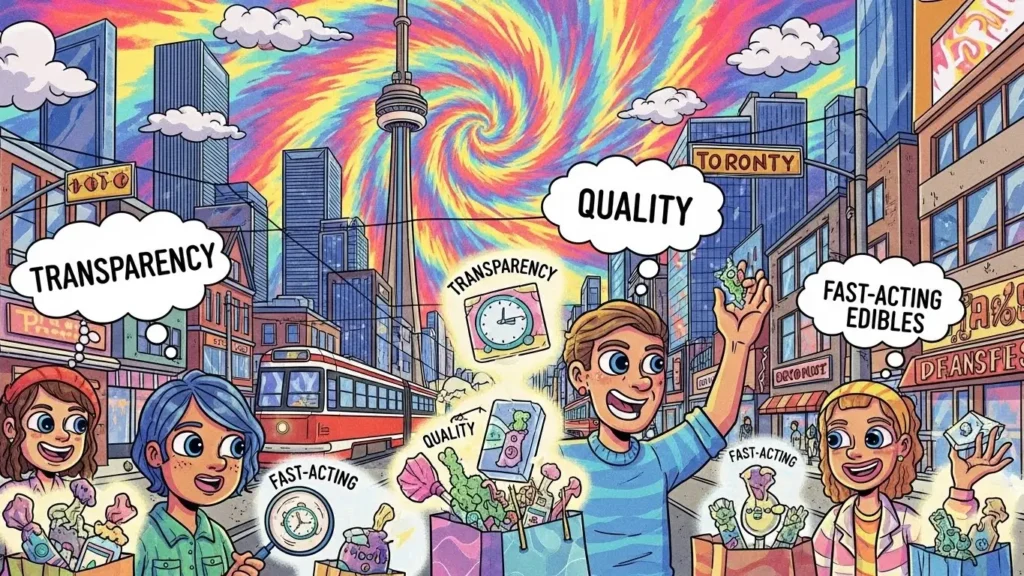
Picture this: You’re a brand manager for a popular cannabis edibles line. Your sales in Toronto are steady, but growth has flatlined. You notice a new competitor, with sleek packaging that prominently features a “Live Rosin” label and a “Fast-Acting in 15 Minutes” promise, is suddenly dominating shelf space and social media chatter. What’s happening? You’re witnessing the seismic shift in consumer behavior in 2026 firsthand.
The Toronto consumer is no longer just shopping; they’re investigating, verifying, and demanding. They’ve evolved. After years of market maturation, information overload, and economic recalibration, today’s shopper is a hybrid of a savvy detective and a wellness-focused pragmatist. The old playbook of vague marketing and slow-onset products is obsolete.
This article is your definitive guide to understanding and winning over this new archetype. We’ll dive deep into the three non-negotiable pillars defining the market: an insatiable demand for brand transparency, an unwavering pursuit of premium quality, and the rising gold standard of fast-acting edibles. By the end, you’ll have a clear, actionable framework to optimize your brand, deepen consumer trust, and secure a dominant position in one of North America’s most competitive markets. Let’s decode the future.
Understanding the 2026 Toronto Consumer: A Data-Driven Profile
Before crafting a strategy, you must understand who you’re speaking to. The Toronto consumer in 2026 is not a monolith, but they are united by key behavioral traits shaped by technology, economics, and a post-pandemic mindset.
Who Are They?
- The Informed Wellness Advocate: They use apps like Leafly and community forums not just to shop, but to educate themselves on cannabinoid ratios, terpene profiles, and extraction methods like live hash rosin. Their purchase is a calculated decision for mental or physical well-being.
- The Value-Driven Connoisseur: “Value” no longer means “cheapest.” It means the best quality-to-price ratio. They will pay a premium for products that demonstrably offer superior experiences, clearer effects, and ethical production.
- The Time-Sensitive Professional: Toronto’s pace is relentless. Waiting 60-90 minutes for a traditional edible to kick in is a significant friction point. Efficiency is paramount in their consumption, just as it is in their work life.
Key Driver: The Trust Deficit
A recent study by Edelman Trust Barometer consistently shows a global decline in trust toward institutions, with a parallel rise in trust toward “my employer” and “brands I use.” This places an enormous burden—and opportunity—on consumer brands. Are consumers demanding brand transparency? The answer is a resounding, data-backed yes. It’s no longer a “nice-to-have”; it’s the price of entry.
Pillar 1: Radical Brand Transparency – The New Currency of Trust
Transparency is the foundational layer of trust. In 2026, it goes beyond listing ingredients. It’s about opening the kimono on your entire process. Why? Because the Toronto consumer equates transparency with integrity and quality.
What True Transparency Looks Like in 2026
- Beyond the COA: The Journey of the Plant.
Simply having a Certificate of Analysis (COA) for potency is table stakes. Progressive brands are providing seed-to-sale storytelling. This includes:- Cultivation Details: Organic practices, soil health, light cycles. Is it sun-grown or indoor? Which specific cultivar was used?
- Extraction Method Deep Dives: Don’t just say “rosin.” Specify if it’s live rosin (made from fresh-frozen flower) or cured flower rosin. Explain the difference and why it matters for flavor and effect.
- Third-Party Verification: Links to full-panel lab tests for not just THC/CBD, but also terpenes, heavy metals, and pesticides. Consider QR codes on packaging that lead to batch-specific results.
- Ingredient Sourcing with a Story.
Where does your cocoa come from? Is your sugar fair-trade? The ethos of the craft food movement has fully permeated the edibles space. Transparency about supply chains builds a halo of responsibility around your brand. - Pricing Transparency.
Can you justify your price point? Articulate the cost behind live hash rosin extraction versus distillate. Educated consumers understand and are often willing to pay for the artisan process.
Quick Win: Audit your packaging and website today. Can a consumer find your lab results and a clear explanation of your extraction process in under 30 seconds? If not, you’re losing trust points.
Pillar 2: The Uncompromising Pursuit of Premium Quality
Transparency builds the bridge, but premium quality is the destination. For the Toronto consumer, quality is a sensory and experiential metric: taste, effect, consistency, and presentation.
Defining “Premium” in the Edibles Space
- Superior Inputs = Superior Outputs: The shift from THC distillate (often flavorless and one-dimensional) to full-spectrum extracts and solventless options like live rosin is the clearest indicator of this trend. Live rosin, which preserves the delicate terpene profile of the fresh plant, offers a richer, more nuanced effect known as the “entourage effect.” Brands leveraging this are commanding a premium edibles price tier.
- Culinary-Level Craftsmanship: The era of overly sweet, gelatinous gummies is fading. Consumers seek chef-crafted flavors, natural sweeteners, innovative formats (think nano-emulsified beverages, fast-acting chocolate), and dietary-conscious options (vegan, sugar-free, gluten-free).
- Consistency is King: A premium experience is a reliable one. Every unit in every batch must deliver the exact same dose and onset time. Inconsistency is the fastest way to erode loyalty in a market with endless alternatives.
Actionable Checklist: Is Your Product “Premium”?
- Does it use a high-quality, clearly named extract (e.g., Live Rosin, Full-Spectrum Hash Oil)?
- Are the ingredients gourmet and recognizable?
- Is the flavor profile complex and enjoyable without cannabis aftertaste?
- Is the dosing accurate and consistent across independent lab tests?
- Does the packaging feel premium and protect the product’s integrity?
Pillar 3: Fast-Acting Edibles – The Game-Changer
This is the most significant technological and experiential shift in the market. The question “Are fast-acting products a new standard for premium edibles?” can be answered by observing shelf velocity—they are becoming the default choice for discerning consumers.
Why Fast-Acting Technology is Revolutionary
Traditional edibles must be metabolized by the liver, a slow and variable process. Fast-acting edibles use advanced delivery systems, like nano-emulsification, to break cannabinoids into tiny particles that can be absorbed directly through the stomach lining or even sublingually. The result? Onset in 15-30 minutes, not 2 hours.
The Impact on Consumer Behavior:
- Controlled Experience: Users can titrate their dose effectively. They feel effects quickly, can assess, and decide if they need more, eliminating the common “overdose” scenario of eating too much while waiting.
- Efficiency: Aligns perfectly with the time-sensitive lifestyle of urban professionals. A lunchtime microdose or a pre-evening wind-down becomes practical.
- Perceived Potency & Value: A more efficient delivery system can lead to a more pronounced effect, increasing perceived value and satisfaction.
How to Successfully Market Fast-Acting Edibles
- Lead with the Benefit, Educate on the Science: Your primary marketing message should be “Fast-Acting in 15 Minutes.” Use secondary copy or QR codes to briefly explain the “how” (e.g., “Thanks to nano-emulsification technology…”).
- Dose Accordingly: Because the onset is faster and effects can feel more direct, many brands offer slightly lower per-unit doses (e.g., 5mg instead of 10mg). This promotes responsible use and builds trust.
- Segment Your Line: Consider offering both traditional and fast-acting versions of your flagship products. This allows you to cater to both traditionalists and early adopters while migrating your user base.
Integrating the Pillars: A 2026 Go-To-Market Strategy for Toronto
Now, let’s operationalize these insights. Here is a step-by-step strategy to optimize your brand for the Toronto consumer in 2026.
Phase 1: The Transparency
- Experience: Do you/show you actually make the product? Use behind-the-scenes content, founder stories, and employee spotlights.
- Expertise: Employ certified budtenders or chemists for your content. Cite sources like Health Canada regulations or peer-reviewed studies on bioavailability.
- Authoritativeness: Get featured in reputable publications like StratCann or Leafly. Build backlinks from Ontario cannabis review sites.
- Trustworthiness: Showcase real customer reviews, have clear contact and return info, and maintain flawless compliance.
Phase 2: Product Portfolio Re-alignment
- Audit: Which of your products align with the three pillars? Prioritize them.
- Innovate or Formulate: Develop at least one fast-acting, live rosin-based edible SKU. This is your new flagship.
- Package as a Educator: Your packaging is a silent salesperson. Use it to explain fast-acting benefits and live rosin quality.
Phase 3: Content & Community Building
Create content that answers the Toronto consumer’s questions before they ask.
- Blog Content: “Live Rosin vs. Distillate: A Toronto Consumer’s Guide,” “Why Fast-Acting Edibles are Perfect for Toronto’s Busy Lifestyle.”
- Video: Short-form videos on TikTok/Reels showing the fast-acting onset timing, or a tour of your production facility.
- Community: Engage authentically on forums like Reddit’s r/TheOCS. Don’t just promote; answer questions and provide value.
The 2026 Toronto Consumer Profile: Beyond Demographics
To succeed in Toronto’s market, you must move beyond basic demographics and understand the psychographic drivers—the why behind the buy. The consumer has leveled up, and your strategy must too.
1.1 The Wellness Revolution is Mainstream
The most significant shift is the dominance of wellness as a consumption driver. Toronto consumers are integrating cannabis into daily routines for managed benefits, not just weekend recreation. This is reflected in usage patterns: daily or near-daily cannabis use in the U.S. has increased sevenfold since 2000, a trend clearly present in Canada. Consumers are using edibles for:
- Sleep Support: Cannabis is now more popular for sleep than prescription sleep aids or alcohol among adults.
- Stress and Anxiety Management: Over half of consumers use cannabis to reduce anxiety.
- Pain Relief: Nearly half turn to it for pain management.
- Social and Lifestyle Integration: Products like fast-acting beverages are chosen at happy hours, with one in three younger demographics regularly opting for THC over alcohol.
1.2 The Demand for Sophisticated “Science-Backed” Buying
The Toronto consumer is educated. The era of marketing based solely on THC percentage is conclusively over. Today’s shopper exhibits “science-backed buying” behavior:
- They seek understanding of full-spectrum effects, asking about minor cannabinoids and terpenes.
- They value provenance and cultivation methods, showing preference for living soil or organic products.
- They use resources diligently, with 68% checking clear online menus before visiting a store and relying heavily on budtender knowledge.
1.3 The Digital-First Path to Purchase
The customer journey now mirrors that of any mainstream e-commerce product.
- Discovery: Occurs via word-of-mouth, local SEO, and social media (41% of new customer discovery).
- Research: Consumers visit websites for menus, lab results, and educational content. 75% say easy reordering influences where they shop.
- Transaction: While many purchases are completed in-store for immediate access, a significant portion flows through click-and-collect or delivery. Stores offering debit payments see 59% more transactions than cash-only operations.
- Loyalty: Post-purchase engagement is key. Nearly 90% of consumers return to brands that offer personalized recommendations, yet only 29% feel they receive them—representing a massive opportunity.
2. The Product Landscape: What Toronto is Buying (and Why)
Toronto’s market is characterized by category fragmentation and sophisticated value assessment. Consumers know exactly what they want from each format.
2.1 The Reign of Discreet, Controlled Formats
While flower is foundational, growth is in formats that offer dose control, discretion, and specific functionality.
- Edibles & Gummies (16% consumer preference): The cornerstone of the wellness shift. Demand is for consistent dosing, clean ingredients, and functional blends (e.g., with CBN for sleep or CBG for focus). The introduction of 100mg multi-packs in late 2025 has shifted demand away from single 10mg units toward better value.
- Beverages (Fastest-growing category): Projected to grow over 11% in 2025, beverages satisfy the desire for a social, fast-acting, and calorie-conscious option. Their growth signals cannabis becoming a true lifestyle alternative.
- Pre-Rolls & Infused Pre-Rolls: Sales jumped 12% to over $4.1 billion in a recent yearly period. Infused pre-rolls represent the “trade-up” segment where consumers pay more for a premium, enhanced experience.
2.2 The Breakthrough of Fast-Acting Edibles
Fast-acting edibles are arguably the most significant product innovation for the 2026 consumer. They solve the primary pain point of traditional edibles: unpredictable and lengthy onset times.
Why they resonate in Toronto: They align perfectly with the urban lifestyle—offering a convenient, predictable, and discreet experience that fits into a busy schedule without a long wait.
2.3 The “Trade-Up, Trade-Down” Value Model
Toronto consumers have a nuanced approach to value:
- Trade-Down: They seek value on “everyday” items like standard gummies and flower, opting for larger-pack formats and value brands.
- Trade-Up: They willingly pay a premium in categories where quality and experience are tangible, such as fast-acting formulas, solventless extracts, craft flower, and infused pre-rolls.
This behavior forces retailers to strategically curate portfolios that cater to both the price-sensitive and the experience-seeking shopper.
3. Winning Strategies for Brands & Retailers
Success in 2026 requires a hybrid approach: the analytical rigor of a tech company and the authentic connection of a local boutique.
3.1 Master Data-Driven Curation & Retail Execution
The “stack-it-high” mentality is obsolete. Winning retailers use data to build intentional, localized menus.
- Hyper-Local Assortment: A bestseller in Leslieville may not work in North York. Use sales data to tailor SKUs to neighborhood preferences.
- Dynamic Merchandising: Group products by effect (e.g., “Sleep,” “Focus,” “Social”) rather than just category. This aligns with how consumers shop—by desired outcome.
- Revive the Budtender as a Key Asset: “Product knowledge became a real differentiator again,” notes an industry regional manager. Invest in continuous education so staff can guide the outcome-focused user confidently.
3.2 Build an Authentic, Transparent Brand
In a commoditizing market, authenticity is your moat.
- Founder-Led Storytelling: “People want to know who they’re buying from,” states a communications CEO. Highlight your origin, mission, and values.
- Radical Transparency: Showcase your supply chain, cultivation practices, and full-panel lab results. This builds the trust (a core component of E-E-A-T) that the educated consumer demands.
- Community Integration: Don’t just sell in Toronto; be of Toronto. Participate in local events, partner with other wellness brands, and build a genuine community presence.
3.3 Deploy Personalization at Scale
Generic marketing is not just ineffective; it can drive customers away. One-third of customer churn is linked to irrelevant outreach.
- Loyalty Programs: Use purchase history to offer tailored discounts and recommendations. Effective programs retain 69% of users.
- Post-Purchase Engagement: Two-thirds of consumers cite post-purchase education as key to loyalty. Follow up with usage tips, content about the cannabinoids in their product, and responsible consumption guides.
- Omnichannel Personalization: Sync online browsing behavior with in-store purchase data to create a single customer view, enabling seamless personalization across all touchpoints.
4. The Regulatory & Operational Backbone
Navigating the landscape requires understanding the rules of the game and operational excellence.
4.1 Understanding the Regulatory Climate
Health Canada’s 2025 streamlining amendments reduced burdens while maintaining safety. Key changes for consumers include:
- Packaging & Labeling Flexibility: Allows cut-out windows, accordion labels, and QR codes, enabling brands to better showcase product and provide digital information.
- Co-Packing: Permits bundling of products (e.g., a variety pack of edibles), facilitating the high-demand multi-packs.
- Clarity on THC Limits: The 10mg THC per serving limit for edibles remains, making the precision of fast-acting technology even more valuable for controlled dosing.
4.2 Operational Imperatives for 2026
Profitability hinges on operational discipline.
- Inventory Precision: Use data analytics for demand forecasting to reduce stockouts of high-turn items like fast-acting edibles and minimize dead stock.
- Supplier Partnerships: Build strong relationships with LP’s for reliable supply of top-performing SKUs and access to new innovation.
- Embracing Consolidation: The market is maturing. As one expert predicts, “operators who have dialed in their unit economics will quietly acquire those who haven’t”
Conclusion: The Future Belongs to the Authentic and Agile
The trajectory for the Toronto consumer in 2026 is clear: a continued march towards informed, efficient, and quality-driven consumption. Brands that cling to opaque practices, mediocre inputs, and slow technology will be relegated to the discount bin.
The winning formula is now evident: fuse radical transparency with uncompromising quality, and deliver it through the superior experience of fast-acting edibles. This isn’t just a marketing trend; it’s a fundamental realignment with what modern consumers value—trust, efficacy, and respect for their time and intelligence.
Your call to action starts now. Conduct an audit of your brand through the lens of the 2026 consumer. Where are your gaps in transparency? Is your product line built for yesterday or tomorrow? The market is moving fast. Are you?
Ready to deepen your strategy? Explore our guide on [Advanced Solventless Extraction Techniques for Craft Producers] (internal link) or read this seminal study on [Consumer Trust in Regulated Cannabis Markets] (external link to a .edu or .gov source).
Frequently Asked Questions (FAQs)
How can brands understand consumer behavior in 2026?
Brands must move beyond traditional sales data. Understand consumer behavior in 2026 by leveraging social listening tools on platforms like Reddit and Instagram, conducting direct community engagement, analyzing search trend data for terms like “fast-acting edibles Toronto,” and consistently commissioning or reviewing third-party market research focused on psychoactive wellness and consumption habits.
How is consumer behavior changing in 2026?
Consumer behavior is changing towards being more investigative, time-sensitive, and experience-driven. Shoppers are doing more pre-purchase research, demanding products that fit into their busy schedules (hence the rise of fast-acting formats), and valuing the holistic quality and story behind a product over price alone. Trust is earned through proof, not promise.
Are consumers demanding brand transparency?
Absolutely. Consumers are demanding brand transparency at unprecedented levels. They expect clear, accessible information about a product’s origin, ingredients, production methods (e.g., live rosin extraction), and lab-verified safety. A lack of transparency is increasingly interpreted as having something to hide, which directly erodes trust and purchase intent.
Are fast-acting products a new standard for premium edibles?
Yes, fast-acting products are rapidly becoming the new standard for premium edibles. Their predictable and rapid onset provides a safer, more controlled, and efficient consumer experience. While traditional edibles will remain, the superior user experience of fast-acting technology is setting a new benchmark for what a high-end, modern edible should deliver.
What is the biggest change in the Toronto cannabis consumer for 2026?
The most significant change is the mainstream adoption of cannabis as a wellness and lifestyle product, not just a recreational one. Toronto consumers are now sophisticated, outcome-focused shoppers who prioritize specific benefits like stress relief, sleep aid, and social relaxation over simple intoxication. They demand transparency, quality ingredients, and science-backed product information.
Why are fast-acting edibles so popular now?
Fast-acting edibles are popular because they solve the major drawback of traditional edibles: long and unpredictable onset times. Using advanced formulations like nano-emulsification, they take effect in 10-20 minutes instead of 30-90, offering consumers greater control, predictability, and convenience—perfect for Toronto’s fast-paced, social lifestyle.
How do Toronto consumers shop for cannabis products?
They follow a digital-first path to purchase. Most research begins online, with 68% expecting clear menus and product information before visiting a store. They value in-store guidance from knowledgeable budtenders but also expect seamless options like click-and-collect and delivery. After purchase, personalized communication and education drive loyalty.
What does “transparency” mean to today’s cannabis consumer?
For the 2026 consumer, transparency means clear, accessible information beyond just THC percentage. This includes full cannabinoid and terpene profiles, lab testing results for potency and contaminants, details about sourcing and cultivation methods (e.g., organic, living soil), and clean, understandable ingredient lists.
Are consumers still only looking for the highest THC products?
No, this trend is decisively over. While potency remains a factor, the educated Toronto consumer is increasingly driven by entourage effects and specific outcomes. They seek balanced THC/CBD ratios, minor cannabinoids (like CBN for sleep, CBG for focus), and flavorful terpene profiles that contribute to the desired experience.
What is the most important factor for building customer loyalty?
Personalized engagement is the top loyalty driver. Nearly 90% of consumers are more likely to return to brands that offer tailored recommendations. This combines data-driven offers (based on purchase history) with valuable post-purchase education about the products they bought, making them feel understood and supported in their wellness journey.