
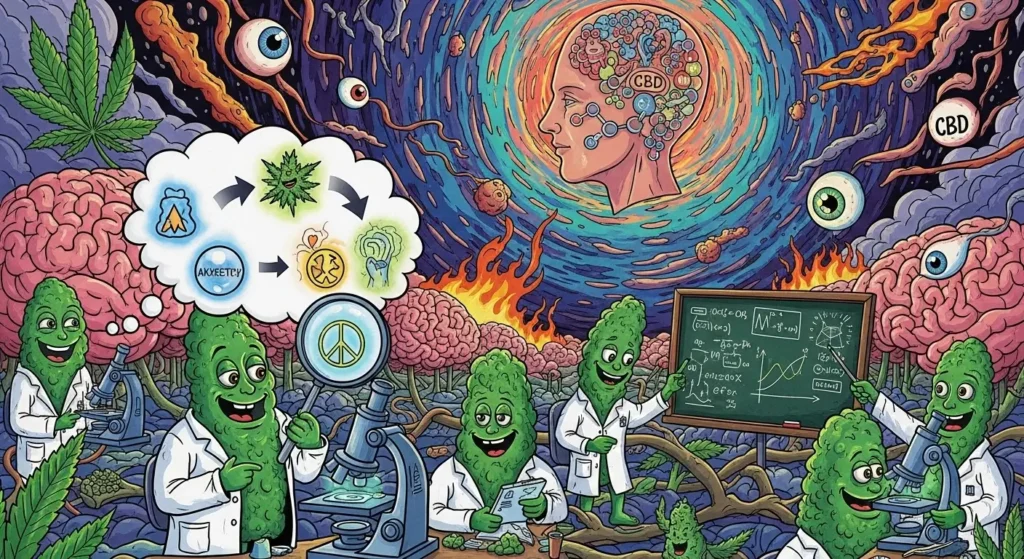
The complex interplay between cannabis and mental health is one of the most urgent public health topics of our time. In 2026, as legal landscapes continue to shift globally, the conversation has moved beyond simple binaries of “good” or “bad.” Today’s research paints a nuanced picture: for some, cannabis may offer symptomatic relief, but for others, particularly those with underlying vulnerabilities, it presents a significant mental health risk. As the largest-ever survey on cannabis use concludes , we now have unprecedented data revealing that the reason for first using cannabis is a powerful predictor of future mental health outcomes. This comprehensive analysis will distill the latest evidence, separating established risks from potential benefits and charting a clear path through the current scientific landscape to inform personal and policy decisions.
The Neurobiological Foundation: How Cannabis Interacts with the Brain
Understanding the neurobiology of marijuana use is essential for grasping its complex effects on mental health. At the center of this interaction is the endocannabinoid system (ECS), a vast network of receptors and signaling molecules that plays a crucial role in regulating mood, stress, memory, and brain development .
When cannabis is consumed, its primary psychoactive compound, delta-9-tetrahydrocannabinol (THC), mimics the brain’s natural endocannabinoids by binding to CB1 receptors. This binding triggers a cascade of neurochemical changes, including the dysregulation of dopamine and glutamate systems—alterations that bear a concerning resemblance to those observed in individuals with schizophrenia . This similarity in cannabis neurobiology and the pathology of certain psychiatric disorders suggests a plausible biological mechanism for cannabis-induced mental illness. The effects are not uniform, however. Does high-potency cannabis impair mental health more significantly? The evidence strongly suggests yes. High-THC products can lead to less synaptic density and efficiency in critical brain regions like the prefrontal cortex, which governs decision-making and impulse control .
Conversely, cannabidiol (CBD), another major cannabis compound, operates differently. It does not produce intoxication and may modulate some of THC’s effects. Some research indicates CBD possesses antipsychotic and anxiolytic properties, pointing to the plant’s complex pharmacological profile . This dualistic nature—embodied by THC and CBD—is why understanding product composition is non-negotiable for anyone considering cannabis for mental wellness.
Established Risks: Cannabis and the Exacerbation of Psychiatric Disorders
A robust and growing body of research underscores the significant mental health risks associated with cannabis use, particularly for individuals with a predisposition to certain disorders. The link between mental and behavioural disorders due to use of cannabinoids ICD-10 classifications is well-documented, with cannabis recognized as a component cause that can interact with other genetic and environmental factors to trigger illness .
Psychosis and Schizophrenia
The association between cannabis and psychosis is one of the most strongly validated in psychiatric epidemiology. A landmark Finnish study of 18,000 individuals found that nearly 50% of people hospitalized for cannabis-induced psychosis were later diagnosed with schizophrenia . The risk is not uniform; it is dramatically amplified by high-potency cannabis. Regular use of high-THC products is associated with a fourfold increase in the risk of developing a psychotic disorder like schizophrenia—a risk magnitude comparable to that between high cholesterol and heart disease . This is a critical public health finding, as the average potency of cannabis products in legal markets has risen sharply. Programs like Yale’s Specialized Treatment Early in Psychosis (STEP) found over 75% of their patients with early schizophrenia had a history of cannabis use .
Mood Disorders: Depression and Bipolar Disorder
The relationship between cannabis and mood disorders is equally concerning. A major 2024 systematic review of 78 studies concluded that cannabis use is linked to increased depressive and manic symptoms in the general population and elevates the likelihood of developing major depressive disorder (MDD) and bipolar disorder (BD) . Furthermore, cannabis is associated with an unfavorable prognosis in both MDD and BD, often leading to more severe symptoms, more frequent mood episodes, and poorer treatment outcomes .
A crucial question for clinicians and patients is: Does cannabis use affect prognosis and treatment outcomes in people with MDD? The evidence indicates it does. Cannabis use can reduce the efficacy of pharmacological treatments for depression and is linked to a higher number of persistent depressive symptoms, including anhedonia, sleep disturbances, and psychomotor problems .
The Critical Role of Age and Trauma
Two factors that critically modulate risk are age of first use and a history of trauma.
- Adolescent Brain Development: The adolescent brain, undergoing significant maturation and synaptic pruning, is exceptionally vulnerable. Exposure to THC during this period can disrupt normal neurodevelopmental processes, leading to lasting changes in brain structure and function . The advice from experts is clear: delaying any cannabis use until at least age 25, when the brain is more fully developed, significantly mitigates risk .
- Childhood Trauma: The 2025 Cannabis & Me study, the largest of its kind, revealed a powerful interaction. Individuals with a history of childhood trauma, particularly emotional abuse, reported higher baseline paranoia. When these individuals used cannabis, the exacerbating effect on paranoia was significantly stronger . This underscores the importance of screening for trauma in individuals presenting with cannabis-related mental health concerns.
The Therapeutic Conundrum: Medicinal Cannabis and Mental Health
Despite the clear risks for some, the potential for medicinal cannabis benefits for mental health continues to drive both research and self-medication. The central conundrum is this: while many report short-term relief, robust clinical evidence for its efficacy as a primary mental illness and cannabis treatment remains scarce.
The Self-Medication Paradox
The Cannabis & Me survey provided profound insights into this paradox. It found that individuals who started using cannabis to self-medicate for anxiety, depression, or physical pain reported the highest levels of subsequent paranoia, anxiety, and depression . In contrast, those who started out of “fun or curiosity” reported the lowest scores. Furthermore, the self-medication group consumed significantly more THC weekly—often the equivalent of 10-17 standard joints . This creates a vicious cycle where symptoms drive use, and increased use exacerbates symptoms, complicating the course of the underlying mental illness with cannabis.
What Does the Clinical Evidence Say?
For conditions like chronic neuropathic pain, a major 2026 Cochrane review analyzed 21 trials and found no high-quality evidence that cannabis-based medicines provide meaningful relief over placebo . In psychiatry, the evidence is similarly cautious. While low doses of THC or CBD may show anxiolytic properties in some settings , large-scale, high-quality randomized controlled trials (RCTs) are lacking. A 2020 review noted that evidence for the efficacy and safety of medicinal cannabinoids in major depression is still weak, with some studies even showing a worsening of symptoms after repeated use .
*Table: Summary of Clinical Evidence for Cannabis in Mental Health (2020-2026)*
This does not mean medicinal cannabis for mental health has no future. It highlights that the current “whole plant” approach is problematic. Future mental illness with marijuana research must focus on purified, specific cannabinoids (like pharmaceutical-grade CBD or novel synthetic agents) and rigorously test them for defined conditions. The genetic relationship between cannabis use disorder, cannabis use and psychiatric disorders is also a key area of investigation, as it may help identify who is most likely to benefit versus who is at greatest risk .
Critical Gaps and Future Directions in Cannabis Research
Despite progress, glaring research gaps persist. The Mental Health Commission of Canada (MHCC) has explicitly noted that decades of illegal status stifled study design and data collection, leaving “critical knowledge gaps” . As legalization spreads, filling these gaps is a global priority.
- Long-Term, High-Quality Clinical Trials: As the Cochrane pain review highlighted, many existing trials are too short or poorly designed to draw firm conclusions . The field desperately needs more large-scale, randomized, placebo-controlled trials lasting at least 12 weeks that include people with common co-morbidities .
- Research on Vulnerable & Diverse Populations: Most studies exclude those with the most severe mental illnesses. Studies like the one from the Red Fish Healing Centre are rare but essential, showing that within this group, cannabis use is associated with greater overall distress . More work is needed with LGBTQ2+, Indigenous, and racialized communities .
- Personalization vs. Standardization: The trend is toward personalized cannabis care , but science requires standardization. Bridging this gap—figuring out how to tailor treatments based on genetics, endocannabinoid system differences, and specific diagnoses—is the grand challenge.
- Understanding Cannabis Use Disorder (CUD): With an estimated 30% of users developing CUD , more research is needed on its prevention, its interaction with mental illness, and treatment protocols.
The 2026 Research Landscape: Promise, Hype, and Hard Evidence
The Push for Therapeutic Applications
The therapeutic momentum for cannabis is powerful and consumer-driven. In 2026, the focus has sharply turned to personalized wellness routines, where cannabis is tailored for specific outcomes like anxiety relief and mood stabilization . The market reflects this, bursting with sophisticated products—from cannabinoid-infused skincare to functional beverages—all promising to support the body’s endocannabinoid system for holistic balance .
Exciting 2026 clinical trials are exploring frontiers like CBD as an adjunct treatment for early psychosis and its role in regulating meal-time anxiety for individuals with anorexia nervosa . Other research is investigating minor cannabinoids like CBG for neuroprotective effects and CBN for sleep regulation, moving far beyond the traditional THC vs. CBD dichotomy . This push toward personalized cannabis care and precision dosing, sometimes aided by AI tools, represents the cutting edge of cannabis therapy .
The Reality Check: Where the Evidence Falls Short
However, this enthusiasm must be tempered by equally robust, sobering evidence. A major 2026 Cochrane review delivered a significant reality check, finding no strong proof that cannabis-based medicines outperform placebos in providing meaningful relief for chronic neuropathic pain, a condition for which it is often promoted .
More critically for our focus, a landmark genetic study published in Nature Mental Health established bidirectional causal relationships between Cannabis Use Disorder (CUD) and several psychiatric conditions. This means the relationship runs both ways: not only can conditions like schizophrenia, bipolar disorder, anxiety, and PTSD increase the risk of developing CUD, but having CUD also increases the genetic risk of developing these conditions . As senior author Dr. Joel Gelernter notes, “We show that over time, cannabis is more likely to cause PTSD than to treat it” . This challenges a common narrative and underscores a vital public health message.
Table: Key 2026 Research Findings on Cannabis and Mental Health
Deep Dive: Mental Health Conditions Under the Microscope
Anxiety, PTSD, and Depression: A Double-Edged Sword
This is perhaps the most contentious area. Anecdotal reports and some 2025-2026 clinical trials suggest CBD-dominant or balanced THC:CBD products can help with generalized anxiety, social anxiety, and trauma-related stress . However, the previously mentioned Yale genetic analysis provides a crucial counterpoint, establishing for the first time a bidirectional causal link between CUD and anxiety disorders, major depressive disorder (MDD), and PTSD .
What does this mean for you? It suggests extreme caution. The relationship is not simple. While a carefully dosed, non-intoxicating cannabinoid regimen under strict medical supervision might help some individuals, developing a problematic pattern of use (CUD) appears to be a significant risk factor for developing these same conditions. The substance purported to treat the problem may, for some, exacerbate or even contribute to its cause.
Psychosis and Severe Mental Illness: Proceed with Extreme Caution
The link between cannabis, particularly high-potency THC products, and psychosis is one of the most robust in the literature, and 2026 research continues to affirm it. The Yale study confirmed the known bidirectional link with schizophrenia . Furthermore, research on vulnerable populations—like those with severe concurrent disorders—finds that cannabis users among them report higher levels of self-reported psychotic symptoms .
This is critically important for young people, as the adolescent brain is uniquely vulnerable. A 2026 analysis of German health data found that 78.3% of adolescents diagnosed with a cannabis-related disorder had at least one co-occurring child and adolescent psychiatric disorder (CAPD), most commonly depression . This doesn’t necessarily mean cannabis caused the depression, but it highlights a dangerous and common synergy that demands integrated treatment approaches.
The Role of Minor Cannabinoids and the Entourage Effect
Beyond THC and CBD, 2026 is the year minor cannabinoids stepped into the spotlight for mental wellness . Researchers are pinpointing their unique profiles:
- CBG (Cannabigerol): Studied for its potential neuroprotective and anti-inflammatory properties, which could be relevant for mood and neurodegenerative conditions .
- CBN (Cannabinol): Gaining attention for sleep regulation, offering a potential alternative for sleep disturbances linked to anxiety or PTSD .
- THCV (Tetrahydrocannabivarin): Being looked at for its potential to promote focus and clarity, which could benefit certain cognitive symptoms .
Equally important is the recognition of terpenes—the aromatic compounds in cannabis. Linalool (anti-anxiety) and limonene (mood-boosting) are now understood to contribute significantly to the therapeutic entourage effect, where the whole plant’s compounds work synergistically . This complexity is why isolated synthetic cannabinoids often don’t replicate the effects of whole-plant medicine.
Critical Gaps and Future Directions in Cannabis Research
Despite progress, glaring research gaps persist. The Mental Health Commission of Canada (MHCC) has explicitly noted that decades of illegal status stifled study design and data collection, leaving “critical knowledge gaps” . As legalization spreads, filling these gaps is a global priority.
- Long-Term, High-Quality Clinical Trials: As the Cochrane pain review highlighted, many existing trials are too short or poorly designed to draw firm conclusions . The field desperately needs more large-scale, randomized, placebo-controlled trials lasting at least 12 weeks that include people with common co-morbidities .
- Research on Vulnerable & Diverse Populations: Most studies exclude those with the most severe mental illnesses. Studies like the one from the Red Fish Healing Centre are rare but essential, showing that within this group, cannabis use is associated with greater overall distress . More work is needed with LGBTQ2+, Indigenous, and racialized communities .
- Personalization vs. Standardization: The trend is toward personalized cannabis care , but science requires standardization. Bridging this gap—figuring out how to tailor treatments based on genetics, endocannabinoid system differences, and specific diagnoses—is the grand challenge.
- Understanding Cannabis Use Disorder (CUD): With an estimated 30% of users developing CUD , more research is needed on its prevention, its interaction with mental illness, and treatment protocols.
Future Frontiers and Responsible Pathways in 2026 and Beyond
As we look ahead, the future of cannabis and mental health research hinges on moving beyond observational data to precise, actionable science. Here are the key frontiers:
- Precision Cannabinoid Medicine: The era of “cannabis as medicine” must evolve into “cannabinoids as medicine.” Research will increasingly isolate specific compounds and tailor ratios (e.g., THC:CBD) to target specific neurological pathways with minimal side effects, moving away from the unpredictable entourage effect of whole-plant products.
- Genetic and Biomarker Research: A top priority is unraveling the genetic relationship between cannabis use disorder, cannabis use and psychiatric disorders. Identifying genetic markers that predict vulnerability to cannabis-induced psychosis or a propensity for cannabis use disorder will enable truly personalized risk assessment and prevention strategies .
- Standardization and Regulation: The 2025 Cannabis & Me study proposed a groundbreaking concept: standard THC units, analogous to alcohol units, to help users track and regulate intake . Implementing this in legal markets, alongside clear labeling of potency (with a recommended cap on THC levels for recreational products), is a critical public health measure.
- Enhanced Public Education: Education must shift from generic warnings to specific, evidence-based messaging. It should emphasize the heightened risk for adolescents, individuals with a family history of psychosis, and those with childhood trauma. It must also honestly address the self-medication paradox, guiding those in distress toward proven therapies first.
Actionable Guidance for Individuals in 2026
Based on the current evidence, here is a responsible pathway for consideration:
- Assess Your Vulnerability: Be ruthlessly honest about personal and family mental health history, especially regarding psychosis or severe mood disorders. If risk factors are present, avoidance is the safest strategy.
- Delay Use Until Adulthood: If considering use, wait until at least age 25 to protect developing brain circuitry.
- Start Low, Go Slow, and Know Your Source: If using in a legal context, choose products from regulated dispensaries with verified, low-to-moderate THC content and higher CBD ratios. Avoid high-potency extracts.
- Monitor and Seek Help: Be vigilant for emerging symptoms like increased paranoia, anxiety, or social withdrawal. These are signs to stop use immediately and consult a healthcare professional.
- Prioritize Evidence-Based Treatments First: For diagnosed mental health conditions, pursue first-line treatments (therapy, approved medications) with proven efficacy. View cannabis, if considered at all, as a potential adjunct only under strict medical supervision.
- Consult a Healthcare Professional. Never self-prescribe. Discuss your mental health history openly with a doctor knowledgeable about cannabinoid therapy. This is non-negotiable, especially if you have a personal or family history of psychosis or severe mood disorders.
- Prioritize Product Safety and Transparency. Only use products from legal, regulated sources that provide certificates of analysis (COAs) from independent labs. This verifies potency and screens for contaminants like pesticides and heavy metals.
- Start Low, Go Very Slow. This is the golden rule. Begin with the lowest possible dose of a low-THC or THC-free product. Observe effects for several days before considering a tiny increase. Patience is key to finding a sub-intoxicating, therapeutic window.
- Maintain a Detailed Journal. Track everything: product name, cannabinoid/terpene profile, dose, time administered, and effects on specific symptoms (e.g., “anxiety reduced from 8/10 to 5/10 for 2 hours”). Also note any side effects. This data is invaluable for you and your doctor.
- Integrate, Don’t Isolate. Cannabis should not be a standalone treatment. Its greatest potential likely lies as an adjunct therapy integrated with other evidence-based treatments like psychotherapy (CBT, DBT), mindfulness, regular exercise, and good sleep hygiene.
- Schedule Regular Check-Ins. Re-assess with your healthcare provider every 1-3 months. Is it still helping? Has your tolerance changed? Are there signs of problematic use? Continuous monitoring is essential for safe, long-term use.
Conclusion: A Call for Clarity and Caution
The question, “Is cannabis the future of wellness in 2026?” cannot be answered with a simple yes or no. For mental wellness, the current evidence suggests that for a substantial subset of the population, it is a significant risk factor rather than a panacea. The romanticized view of cannabis as a harmless, natural remedy is conclusively outdated. It is a potent psychoactive substance with a neurobiology of marijuana use that can fundamentally alter brain function.
The path forward requires respect for the science, which clearly establishes the link between mental and behavioural disorders due to use of cannabinoids. It demands that public policy and personal decisions be informed not by anecdote or commercial interest, but by the rigorous findings of studies like the Cannabis & Me survey and systematic reviews published in journals like Nature Mental Health.
Ultimately, the goal is harm reduction and patient safety. By embracing precision, personalization, and above all, caution, we can navigate the complex landscape of cannabis and mental health, ensuring that the pursuit of wellness does not inadvertently pave the way to illness.
Frequently Asked Questions (FAQs)
Is cannabis the future of wellness in 2026?
For mental wellness, the current scientific consensus is cautious. While targeted cannabinoid-based pharmaceuticals may have a future, recreational or whole-plant cannabis is not broadly considered a wellness product due to its established risks for psychosis, mood disorders, and dependency, particularly with high-potency products.
How many studies have been conducted on medicinal cannabis?
Thousands of studies exist, but high-quality, large-scale randomized controlled trials (RCTs) are still limited. For example, a 2026 Cochrane review on neuropathic pain analyzed 21 RCTs , and a major 2024 systematic review on mood disorders incorporated 78 studies . The field is growing but requires more rigorous clinical research.
Does cannabis use affect prognosis and treatment outcomes in people with MDD?
Yes, evidence suggests it does negatively. Systematic reviews find that cannabis use is linked to an unfavorable prognosis in Major Depressive Disorder (MDD), including more severe symptoms, poorer response to conventional treatment, and a more chronic course of illness .
Can medicinal cannabis improve mental health?
The evidence is currently insufficient to support this for most conditions. While some individuals report short-term symptom relief, clinical studies often fail to show a meaningful benefit over placebo. Crucially, long-term or heavy use is frequently associated with the worsening of underlying anxiety, depression, and psychosis .
What is the link between cannabis and mental health issues?
The link is well-established as one of increased risk. Cannabis, especially high-potency THC products, is a known component cause for psychosis and can exacerbate mood disorders. The risk is highest for adolescents, individuals with a personal or family history of mental illness, and those with a history of childhood trauma .
Does the latest research show cannabis is an effective treatment for anxiety?
The evidence is mixed and requires nuance. While some 2026 clinical trials show CBD-dominant products may help some individuals with anxiety, a major genetic study found a bidirectional causal link between Cannabis Use Disorder (CUD) and anxiety disorders. This means problematic cannabis use can increase the risk of developing anxiety. It is not a simple treatment and should only be explored under close medical supervision .
I’ve heard cannabis can help with PTSD. Is this true in 2026?
This is a major point of contention. Some veteran-focused studies report symptom reduction, but the preponderance of recent, high-quality evidence urges extreme caution. The Yale genetic study explicitly concluded that “cannabis is more likely to cause PTSD than to treat it” over time, based on observed bidirectional causality. It should not be considered a first-line or proven treatment .
What are the biggest risks for young adults using cannabis?
Adolescents and young adults are at the highest risk. A 2026 analysis found that over 78% of teens with a cannabis-related disorder had a co-occurring psychiatric diagnosis like depression . Furthermore, the developing brain is more susceptible to the psychosis-inducing effects of THC, and early use is linked to a higher risk of developing Cannabis Use Disorder and related mental health issues .
What are “minor cannabinoids” and why are they important for mental health?
Beyond THC and CBD, compounds like CBG, CBN, and THCV are gaining research attention in 2026. They may offer targeted effects—such as CBG for neuroprotection or CBN for sleep—with potentially fewer psychoactive side effects than THC. This represents a move toward more personalized and nuanced cannabis therapy .
How can I safely explore cannabis for a mental health concern?
- Consult a doctor first: Discuss your full mental health history.
- Choose legal, tested products: Ensure they have a Certificate of Analysis (COA).
- Start with a low-dose, high-CBD/low-THC product: Begin with a minimal dose.
- Keep a detailed journal: Track doses, products, and effects on symptoms and mood.
- Use it as a potential adjunct, not a replacement: Integrate it with established therapies like counseling.
Disclaimer: This article is for informational purposes only and is based on scientific literature available as of early 2026. It is not intended as medical advice. Cannabis laws vary by region. The use of cannabis, particularly for mental health conditions, carries significant risks and should only be considered in consultation with a qualified healthcare professional who can assess individual risks and benefits.