
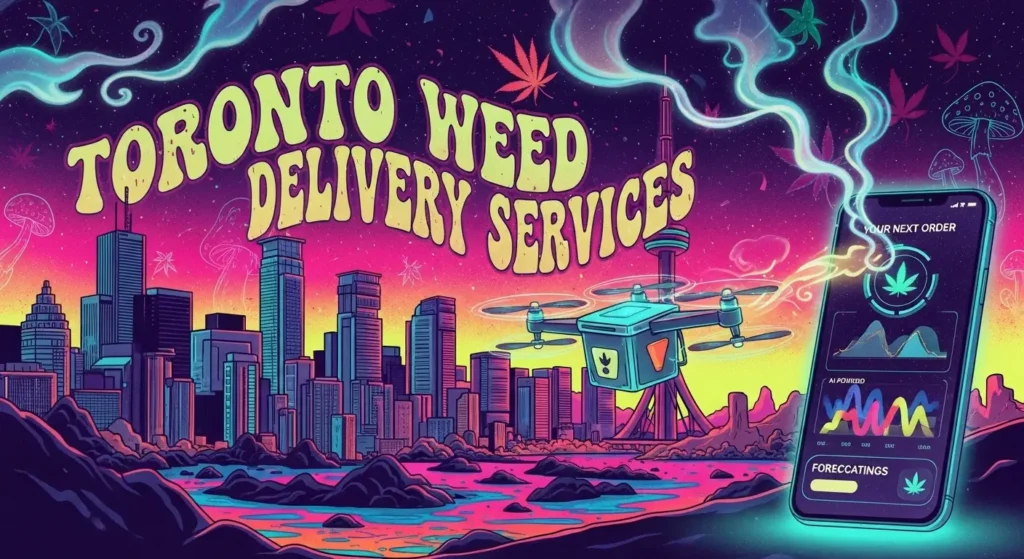
Picture this: you’re about to place your weekly order from a Toronto weed delivery service. As you log in, a notification pops up: “Your usual Friday unwind strain is running low. We’ve pre-loaded your cart with 3g of that AAAA Pink Kush you love, plus a new Sativa our AI predicts you’ll enjoy based on your creative weekend projects.” This isn’t science fiction—it’s the rapidly materializing future of cannabis e-commerce in the Greater Toronto Area (GTA).
The convenience of having weed delivered to your door in 1-3 hours is now table stakes . The real battleground for Toronto weed delivery services in 2026 is personalization, and the weapon of choice is artificial intelligence. Forget static menus and generic recommendations. The leaders in cannabis delivery Toronto are deploying sophisticated AI to anticipate your needs, optimize their supply chains, and create a shopping experience that feels less like a transaction and more like a concierge service.
This article is your insider’s guide to this seismic shift. We’ll explore how weed delivery Toronto is moving from a model of reactive fulfillment to one of predictive intelligence, transforming how you discover, purchase, and enjoy cannabis. Whether you’re a casual consumer or a connoisseur, understanding this evolution will help you leverage the best the market has to offer.
Why AI is the Game-Changer for Toronto’s Cannabis Delivery Scene
The Toronto cannabis delivery market is saturated. With numerous services vying for attention, competition is brutal on price and speed. However, a deeper industry crisis makes AI adoption not just innovative, but essential for survival. A 2025 analysis of the broader cannabis retail market revealed a troubling paradox: sales volume is booming, but profits are evaporating. Units sold jumped 12.8% while average prices fell 11%, forcing deeper discounts that erode margins. In this environment, efficiency is everything. AI in cannabis delivery addresses the core pain points choking profitability:
- Margin Dilution: Competing on price alone is a race to the bottom. AI helps optimize operations to protect margins.
- Inventory Drag: A slow-moving product sitting in a warehouse is cash trapped. AI predicts what will sell, ensuring capital isn’t wasted.
- Discount Addiction: Customers trained to wait for sales are hard to retain. AI enables smarter, targeted promotions that build loyalty rather than conditioning bargain-hunting.
Mainstream retail giants like Walmart and Amazon have been using predictive analytics for years to streamline logistics and anticipate demand. Now, that same enterprise-grade technology is being tailored for weed delivery in the GTA. The goal is simple: transform the delivery service from a reactive order-taker into a proactive personal concierge.
The Engine of Prediction: How AI is Remaking Toronto Weed Delivery
The integration of AI is the single most significant trend defining the future of cannabis delivery in Toronto. It’s not just about chatbots; it’s about building a dynamic, learning system that benefits both the consumer and the business.
- For the Consumer: Hyper-Personalized Discovery. The days of endlessly scrolling through hundreds of strains are fading. AI algorithms now analyze your purchase history, browsing behavior, and even the time of day you typically order to build a unique profile. For example, if you consistently order heavy Indicas on Sunday evenings and creative Sativas on Saturday afternoons, the system learns these patterns. The result? A curated storefront that highlights products you’re most likely to enjoy, often before you even search for them. This moves the experience from “What should I buy?” to “Here’s what you’ll love” .
- For the Business: Smarter Operations & Inventory. AI’s power extends far beyond the customer interface. Weed delivery services are using predictive analytics to revolutionize logistics. By analyzing historical sales data, seasonal trends, local events, and even weather patterns (think: rainy weekends), AI can forecast demand with remarkable accuracy. This allows a weed delivery Toronto service to:
- Optimize Inventory: Pre-stock popular products in neighborhood hubs, ensuring faster fulfillment and fewer “out of stock” disappointments.
- Streamline Delivery Routes: Dynamically route drivers to reduce wait times, moving the industry standard from “same-day” toward “near-instant” delivery in core areas .
- Reduce Waste: Precise demand forecasting means less over-purchasing of perishable flower, contributing to both business sustainability and fresher product for you.
The 2026 Toronto Weed Delivery Consumer Checklist
Navigating the new landscape requires a savvy approach. Use this checklist to evaluate if a service is truly leveraging modern tech for your benefit.
- Look for “Smart” Recommendations: Does the menu offer personalized suggestions beyond “Best Sellers”? A true AI-driven service will provide recommendations tailored to your history.
- Evaluate Delivery Intelligence: Does the service offer precise, narrow delivery windows (e.g., “30-45 minutes”) rather than broad ones (e.g., “1-3 hours”)? This often indicates sophisticated route optimization.
- Check for Predictive Features: Some advanced apps may allow you to set up “smart subscriptions” or receive proactive low-stock alerts for your favorites.
- Verify Compliance & Safety: AI is also enhancing security. Ensure your chosen service uses robust, legal age verification at checkout and delivery . Some retailers are even employing AI security systems to ensure safe transactions .
- Assess Product Transparency: The best services combine AI with human expertise. Look for detailed product pages with lab results, terpene profiles, and “cannabis sommelier”-style notes on effects and pairings .
Beyond the Algorithm: The Irreplaceable Value of Local Expertise
While AI handles the “what” and “when,” the “why” still comes from people. The most successful Toronto weed delivery services are those that fuse cutting-edge technology with deep local expertise. A platform’s algorithm might know you buy CBD oils, but a local expert can recommend a specific full-spectrum oil from a small-batch Ontario producer that’s perfect for post-yoga recovery, or advise which new exotic strain is creating buzz in the city’s cannabis community .
This human touch is what transforms a efficient service into a trusted partner. It’s the difference between getting a product and having a personalized cannabis journey. As Brooke Silversides of 1922 Cannabis Retail notes, understanding Toronto’s cannabis scene is about “connecting with the people and the pulse of the city” . The ideal 2026 service offers the seamless convenience of AI-powered logistics with the curated, knowledgeable guidance of a local expert.
Legal Landscape & Choosing a Trusted Service
With rapid innovation, staying compliant and safe is paramount. The foundation of any reputable service is an unwavering commitment to Ontario’s legal framework. Always choose a service that is licensed by the Alcohol and Gaming Commission of Ontario (AGCO) and transparent about it .
The Future at Your Doorstep: What’s Next After AI?
As we look beyond 2026, the convergence of technology and cannabis delivery will only deepen. We can anticipate trends like:
- Integration with Smart Home Ecosystems: Voice-ordering via smart speakers (“Hey Google, reorder my favorite vape cart from [Service X]”).
- Enhanced Sustainability: Leading services will invest in carbon-neutral logistics, electric delivery fleets, and fully biodegradable eco-friendly packaging to meet consumer demand for responsible practices .
- Blockchain for Provenance: Some services are beginning to use blockchain to provide immutable proof of a product’s journey from seed to sale, offering ultimate transparency
How AI Predicts Your Cannabis Order: The Technology Explained
So, how does a Toronto marijuana delivery service practically use AI to forecast your needs? It’s a sophisticated blend of data analysis, pattern recognition, and machine learning. Here’s a breakdown of the key systems at work:
1. The Data Foundation: What AI Analyzes
AI models are only as good as their data. For a reliable cannabis delivery service, the AI ingests multiple streams of information to build a complete picture:
- Your Personal Order History: This is the primary dataset. It includes what you buy, how often, at what times (e.g., weekday evenings vs. Saturday mornings), and in what combinations (e.g., a specific vape cartridge with a particular edible).
- Aggregate, Anonymized Market Data: The AI looks at broader trends from thousands of other orders. Is there a spike in demand for tropical-flavored sativas in the summer? Are CBD beverages gaining popularity in your neighborhood? Platforms like Headset provide real-time sales data from thousands of retailers to fuel these insights.
- External Contextual Factors: Advanced systems incorporate data like local weather (rainy days might increase demand for cozy indicas), traffic patterns (affecting delivery routing), and even local events or holidays.
2. The Predictive Engine: From Data to Forecast
With this data, machine learning algorithms identify subtle patterns invisible to the human eye.
- Pattern Recognition: The AI might learn that customers who buy “Product A” have a 65% likelihood of purchasing “Product B” within three weeks. It might notice that your orders have a consistent 18-day cycle.
- Demand Forecasting: On a macro level, the service can predict total demand for specific products (like pre-rolls or vapes) in specific Toronto postal codes for the upcoming week. This is crucial for inventory management, helping to reduce costly stock-outs by 19.6% or more, as seen in operational AI tools.
- Personalized Predictive Scoring: Each customer gets a dynamic “propensity score” for hundreds of products. Your score for a new energizing hybrid might be high because your history shows a preference for morning-use sativas.
3. The Consumer-Facing Output: How You Experience It
This complex technology manifests in simple, convenient features:
- Smart “Replenishment” Reminders: Instead of a generic “You haven’t ordered in a while” email, you get a notification saying, “Your usual Pineapple Express is back in stock. Reorder with one tap?” just as you’re likely running low.
- Hyper-Personalized Product Recommendations: Your app homepage doesn’t show the same generic “Deals of the Week” as everyone else. It shows “For Your Next Creative Project” or “To Unwind After Work,” based on your demonstrated preferences and timing.
- Optimized Logistics and Delivery Windows: AI doesn’t just predict what you’ll order, but when and where. It can cluster deliveries geographically in real-time, suggesting accurate delivery windows and reducing wait times—a key factor for fast weed delivery in Toronto.
Table: The AI-Powered Delivery Funnel vs. Traditional Model
Beyond Convenience: The Tangible Business Benefits of AI Delivery
For Toronto weed delivery services, investing in AI-driven systems is a strategic move with a clear return on investment (ROI). The benefits extend far beyond a cool feature set.
- Dramatically Increased Customer Lifetime Value (LTV): When a service accurately anticipates your needs, it becomes indispensable. This predictive personalization fosters deep loyalty, reducing customer churn and increasing the total value of a customer over time. A service that feels “personal” is harder to replace than one that’s just “cheap.”
- Superior Inventory Management & Reduced Waste: Cannabis is a perishable good. AI-powered inventory forecasting ensures capital isn’t tied up in slow-moving products and that fresh, popular items are always in stock. This directly attacks the “inventory drag” that locks up an average of $75,000 in working capital for retailers. For delivery services, this means a fresher, more reliable product catalog for you.
- Optimized Operational Efficiency: AI in logistics for cannabis delivery in Toronto means smarter route planning. This reduces fuel costs, allows drivers to complete more deliveries per shift, and provides you with more accurate ETAs. Tools like Headset Bridge Nexus demonstrate the impact, helping clients cut order creation time by 80% and save thousands in monthly labor costs.
- Data-Driven Product Curation: By analyzing aggregate purchase data, services can make smarter decisions about which brands and products to carry. They can spot emerging trends (like the rapid growth of cannabis beverages) before competitors and tailor their offerings to the unique preferences of different Toronto neighborhoods.
Navigating Compliance and Trust in an AI-Driven Market
The use of AI in cannabis, especially in a strictly regulated market like Ontario, brings up important questions of compliance and consumer trust.
- Regulatory Adherence: All AI-driven recommendations and operations must function within the legal framework set by the AGCO. This includes ensuring all promoted products are from licensed producers, enforcing purchase limits, and maintaining rigorous seed-to-sale tracking. Specialized AI compliance platforms are emerging that are trained on state and provincial regulations to help businesses navigate these complex rules automatically.
- Data Privacy and Security: A reliable cannabis delivery service using AI must be transparent about its data use. Look for services with clear privacy policies that explain how your data is anonymized, aggregated, and protected. Your personal purchase history should be used to serve you better, not sold to third parties.
- Building Digital Trust (E-E-A-T): For Google and informed consumers, trust is paramount. Services can build Experience, Expertise, Authoritativeness, and Trustworthiness (E-E-A-T) by:
- Experience: Demonstrating real-world use of AI to solve customer problems, not just claiming to have it.
- Expertise: Citing credible data sources (like industry reports) and explaining complex concepts clearly.
- Authoritativeness: Featuring reviews from trusted platforms and building a reputation as a knowledge leader.
- Trustworthiness: Having secure websites (HTTPS), transparent business practices, and responsive customer service.
The Future is Predictive: What’s Next for AI and Cannabis Delivery
The integration of AI in cannabis delivery is just beginning. As we look to 2026 and beyond, several exciting developments are on the horizon:
- Integration with Wearables and IoT: Imagine your fitness tracker or smartwatch sharing (with your explicit permission) that you’ve had a stressful week with poor sleep. Your Toronto marijuana delivery app could then respectfully suggest a calming CBN tincture or a high-myrcene indica to aid relaxation, backed by data showing 64% of consumers use cannabis to relax.
- Generative AI for Hyper-Personalization: Beyond predictive analytics, generative AI could create completely unique product descriptions, tailored educational content, or even virtual “budtender” conversations that guide you based on your unique desired effects and past experiences.
- Advanced Computer Vision for Quality Control: AI-powered cameras could be used in fulfillment centers to perform instant quality checks on products, ensuring consistency and that what you order is exactly what you receive—addressing a common pain point seen in customer reviews.
Conclusion: Your Personalized Cannabis Journey Awaits
The evolution of Toronto weed delivery services from simple order-takers to AI-driven lifestyle partners is well underway. The market is shifting to prioritize unprecedented convenience, intelligent personalization, and trusted expertise. For you, the consumer, this means more time enjoying your products and less time spent figuring out how to get them.
The question for 2026 is no longer if you should use a delivery service, but which service best aligns with your desire for speed, selection, and a personalized experience. The future of cannabis delivery Toronto is predictive, personalized, and at your doorstep faster than ever.
Ready to experience the next generation of weed delivery? Share your thoughts in the comments below: What’s the one feature you wish your current delivery service would add?
FAQs: Toronto Weed Delivery in the Age of AI
Q1: How do Toronto weed delivery services use my data with AI?
Responsible services use your order history and preferences solely to improve your shopping experience through personalized recommendations and to optimize their inventory and delivery logistics. They operate under strict Canadian privacy laws (PIPEDA), and you should always review their privacy policy.
Q2: Is AI making weed delivery in Toronto faster?
Absolutely. A major application of AI is in logistics optimization. By predicting demand and dynamically routing drivers, services can reduce delivery times, with many in dense downtown cores now offering delivery windows under one hour .
Q3: Can I still get expert advice if everything is automated?
Yes. The best services combine AI efficiency with human expertise. Many offer live chat with knowledgeable staff or detailed product guides written by cannabis experts. The AI handles routine tasks, freeing up human experts to provide deeper consultation when needed .
Q4: Are there 24/7 weed delivery options in Toronto?
True 24/7 operation remains a logistical challenge, but several leading services offer exceptionally extended hours and promote near-24/7 availability, especially in the downtown core, to cater to shift workers and late-night needs .
Q5: What’s the #1 thing to look for in a Toronto weed delivery service in 2026?
Look for the balance. The top-tier service will offer a seamless, fast, AI-powered user interface and demonstrate a commitment to transparency (clear lab results, AGCO license), product quality, and local market knowledge. Technology should enhance the experience, not replace the fundamentals of a trustworthy cannabis retailer.
Q6: How can I ensure the service I’m using is legal?
Always verify the service holds a valid AGCO retail license, which should be clearly displayed on their website. They must also conduct rigorous age verification (19+) at checkout and upon delivery. Be wary of services with suspiciously low prices or no visible licensing information .