
Ever found yourself three hours into a “chill” afternoon only to realize you’re glued to the couch, convinced the ceiling fan is judging your life choices? Or worse—have you ever had that sinking feeling in the pit of your stomach wondering if you’re actually okay to get behind the wheel? If you’re nodding along, you’re in the right place.
Let’s be real: the landscape of modern celebration has changed dramatically. Gone are the days of guessing the potency of a brownie you found in a backpack. Today, we’re dealing with precisely dosed edibles, high-potency concentrates, and a social landscape that demands we keep our wits about us even while we’re trying to unwind. The goal isn’t to kill the vibe—it’s to protect it. Because nothing ruins the afterglow faster than a panic attack, a trip to the ER, or flashing blue lights in the rearview mirror.
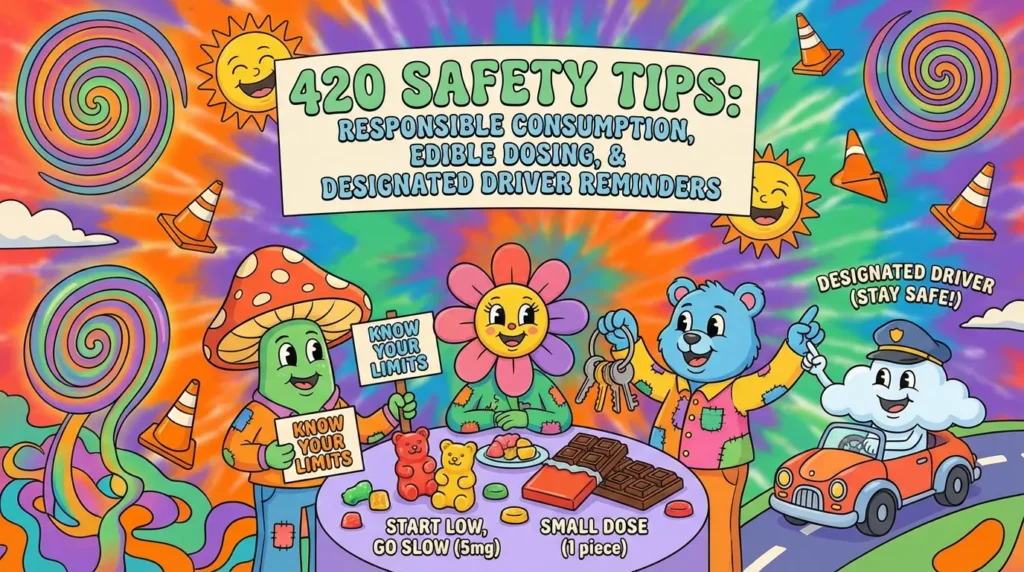
This isn’t a lecture on abstinence. It’s a playbook for 420 safety tips that smart enthusiasts use to maximize the good times and minimize the “oh no” moments. Whether you’re a seasoned veteran or a curious newcomer staring at a menu of gummies and wondering what 2.5mg versus 10mg actually feels like, this guide provides the responsible consumption framework you need. We’re going deep on edible dosing, the non-negotiable designated driver reminders, and the critical interactions that most people don’t think about until it’s too late.
Pull up a chair. Let’s get you prepared for a smooth, safe, and memorable day.
Why 420 Safety Tips Are Your Ticket to a Better High
The term “harm reduction” gets thrown around a lot in public health circles, but what does it actually look like in your living room or at a friend’s gathering? It’s the difference between curating a perfect evening and causing a scene. Cannabis harm reduction is about acknowledging that people consume, and our job is to provide the tools to do so without ending up in the back of an ambulance or a holding cell.
Why is this more important now than ever? Because the products are stronger. According to data analyzed by public health officials, the concentration of THC in available flower and concentrates has increased significantly over the past decade . Couple that with the fact that edibles can take hours to kick in, and you have a recipe for accidental overconsumption.
Did you know? Studies indicate that in some regions, over 40% of drivers involved in fatal crashes tested positive for THC . This isn’t a scare tactic; it’s a wake-up call. Responsible consumption isn’t just about you feeling okay—it’s about the safety of everyone around you. When you incorporate 420 safety tips into your routine, you’re not just being cautious; you’re being a good friend and a conscientious community member.
The Golden Rule of Responsible Consumption: Start Low, Go Slow
If you take nothing else from this guide, let it be these four words: Start low, go slow. This is the cornerstone of responsible consumption and the single most effective way to avoid a miserable experience. But what does “low” actually mean?
Public health agencies, including Health Canada and local public health units, have distilled this advice based on years of data and emergency room visits . The concept is simple: you can always take more, but you can never take less once it’s in your system.
Here’s the clinical reality of why this is crucial for 420 safety tips:
- Inhalation (Smoking/Vaping): Effects hit within seconds to minutes. You feel it almost instantly, which acts as a natural brake. You can take a puff, wait 15 minutes, and assess .
- Ingestion (Edibles): This is where people get into trouble. The liver metabolizes THC into a much more potent compound (11-hydroxy-THC). This process takes 30 to 90 minutes, sometimes up to two hours .
Because of this delay, the biggest risk factor for a bad trip is re-dosing too soon. You eat half a gummy, feel nothing in 30 minutes, and pop the other half. Then, precisely as the second half hits, the first half decides to join the party. Suddenly, you’re on a ride you didn’t sign up for.
The Checklist for Responsible Consumption:
- Know your product: Is it 10% THC flower or 90% concentrate? Is the edible 5mg or 50mg total?
- Track your time: Set a timer on your phone. If you’re eating an edible, do not even think about reaching for more for at least 2 full hours.
- Stay hydrated: Cottonmouth is real. Keep water nearby, but avoid sugary drinks that might crash your energy later.
Edible Dosing Decoded: How Much Is Too Much?
Let’s talk numbers. If you’ve ever stared at a package wondering if 10mg is a lot, you’re not alone. The confusion around edible dosing is a leading cause of those “I’m dying” calls to poison control. Let’s break down the tiers based on clinical observations from medical professionals .
The 2.5mg Threshold: The Gentle Introduction
This is the recommended starting point for anyone new to edibles or anyone prone to anxiety. At this level, you are unlikely to feel “stoned.” Instead, you might notice a subtle softening of the edges—a slight relaxation in your shoulders or a bit more ease falling asleep. For many people, especially older adults or those using it for wellness, 2.5mg is the sweet spot . You get the benefits without the intoxication.
The 5mg Standard: The Social Dose
This is the standard unit sold in most regulated dispensaries. For an experienced user with a bit of tolerance, this can provide a pleasant euphoria, giggles, and a noticeable body high. However, for a beginner, 5mg can feel like a freight train. This is the dose that “divides the crowd,” as one palliative care physician put it . It’s enough to cause dizziness or paranoia in sensitive individuals.
The 10mg Danger Zone: Not for Beginners
A 10mg gummy looks so small and innocent, doesn’t it? Don’t be fooled. For someone without tolerance, 10mg is a one-way ticket to a very long, very uncomfortable day. Expect intense sedation, cognitive impairment, and a high likelihood of nausea or panic. This dose is reserved strictly for those with an established, consistent tolerance .
Actionable Edible Dosing Tip:
If you have a 10mg gummy, cut it into quarters. Start with one quarter (2.5mg). Wait. Wait longer. Only after you know how that quarter affects you over several separate sessions should you even consider moving up to half.
| THC Dosage | Expected Experience | Best For |
|---|---|---|
| 1 – 2.5 mg | Subtle relaxation, mild stress relief. Little to no “high” sensation. | First-timers, older adults, anxiety-prone users. |
| 2.5 – 5 mg | Noticeable euphoria, mood lift, stronger body relaxation. | Occasional users, social settings. |
| 5 – 10 mg | Significant intoxication, strong body high, altered perception. | Regular users with established tolerance. |
| 10 mg + | Intense sedation or psychoactivity. High risk of panic/paranoia. | Heavy/frequent consumers ONLY. |
Why Patience Is the Ultimate Edible Hack
Since we’re hammering this home for a reason, let’s look at the timeline. If you understand the pharmacokinetics of edibles, you’ll save yourself a world of hurt. Edible dosing isn’t just about how much; it’s about when.
- Onset: 30 minutes to 2 hours.
- Peak Effects: 2 to 4 hours after ingestion.
- Total Duration: Up to 12 hours, with residual effects (like brain fog or grogginess) potentially lasting up to 24 hours .
The 420 Safety Tips Pro Move:
Plan your edible consumption for a time when you have zero responsibilities. That means no driving to pick up the kids, no Zoom calls with the boss, and no operating heavy machinery for the rest of the day and likely the next morning. If you consume an edible at 8 PM on a Saturday, do not plan on driving to brunch at 10 AM on Sunday. You might feel fine, but your reaction time and coordination are likely still compromised.
Designated Driver Reminders: The Ride or Die Rule
Let’s be crystal clear: Cannabis impairs driving. This is not a matter of opinion or a conspiracy theory; it’s physiological fact. Cannabis affects coordination, reaction time, decision-making, and the ability to track moving objects (like a car stopping suddenly in front of you) . Designated driver reminders are the most critical 420 safety tips we can offer.
The Myth of “Better Driver When High”:
Some users claim they drive slower and more carefully when high. While that might be true in a straight line on an empty road, driving requires split-second peripheral awareness. The study data is unforgiving: cannabis significantly increases the risk of a motor vehicle collision .
The Legal Reality Check:
- THC Blood Levels Are Tricky: Unlike alcohol, where a breathalyzer gives a real-time impairment snapshot, THC can linger in your system for days or weeks after the high has faded. However, law enforcement is trained to look for impairment indicators (bloodshot eyes, dilated pupils, poor performance on field sobriety tests) .
- DUI Consequences: In legal states like Colorado, a cannabis DUI carries the same weight as an alcohol DUI: jail time, fines up to $1,000, and license suspension .
- Out-of-State Visitors: Many tourists assume that legalization means anything goes. It does not. Rideshare services report spikes in DUI arrests around major airports on holidays because visitors don’t plan their ride home .
Your Designated Driver Reminders Action Plan:
- Pre-Plan: Before you even open the package, decide how you’re getting home.
- Rideshare Apps: Keep Uber, Lyft, or a local taxi number handy. The cost of a ride is infinitely cheaper than a DUI lawyer.
- Sober Friend: If you’re in a group, elect a designated driver who abstains from all intoxicating substances for the day. Treat this person like royalty—buy their dinner, give them gas money.
- Wait It Out: If you’ve consumed, wait at least 6 hours after smoking/vaping and at least 12 hours after edibles before even considering driving . When in doubt, wait longer.
Ask Yourself This: Is getting home 20 minutes faster worth risking your life, the lives of others, or a criminal record? The math is simple: It never is.
Dangerous Cocktails: Mixing Cannabis with Alcohol and Prescriptions
When we talk about responsible consumption, we have to address the elephant in the room: mixing substances. The phrase “crossfaded” might sound fun, but physiologically, it’s a mess.
Cannabis + Alcohol = Trouble
This is a dangerous combination. Alcohol increases the absorption of THC, making you feel much higher than you would from the same amount of cannabis alone . This leads to a phenomenon known as “greening out”—severe nausea, dizziness, vomiting, and spins that make you feel like you’re on a sinking ship. Furthermore, mixing a depressant (alcohol) with a psychoactive substance (THC) compounds impairment, making accidents and poor decisions far more likely.
Cannabis + Prescription Meds = Unexpected Interactions
Cannabis, particularly CBD, interacts with the cytochrome P450 enzyme system in the liver. This is the same system that metabolizes many common medications, including blood thinners (Warfarin), certain antidepressants, and anti-anxiety meds .
- Sedatives: Combining THC with sedatives or anti-anxiety medication can lead to extreme drowsiness and respiratory issues.
- Blood Thinners: Cannabis can either increase or decrease the efficacy of blood thinners, which is a serious risk.
The 420 Safety Tips Verdict:
If you take any prescription medication, check for interactions using a reliable source like a drug interaction checker (e.g., Drugs.com) or consult with a healthcare provider who is knowledgeable about cannabis . Avoid mixing alcohol and cannabis entirely if you want a predictable, pleasant experience.
Protecting the Pack: Keeping Edibles Away from Kids and Pets
This is one of the most non-negotiable 420 safety tips for any household. Modern edibles are designed to look exactly like regular candy and snacks—gummy bears, chocolate bars, cookies, and sodas. To a child or a dog, a cannabis gummy is indistinguishable from a regular treat.
The Stakes Are High:
While a THC overdose is rarely fatal for healthy adults, it can be extremely dangerous for children and small animals. For a toddler or a small dog, even a 2.5mg gummy can cause severe respiratory depression, loss of coordination, seizures, and in rare cases, coma .
Lock It Down: The Edible Security Protocol
- Out of Sight, Out of Reach: Do not leave edibles on coffee tables, nightstands, or in purses.
- Lockbox Required: Treat your cannabis products like you would a firearm or prescription opioids. Invest in a small lockbox or a child-proof container. Keep edibles locked up at all times when not actively being consumed.
- Remove from Original Packaging: If the packaging looks like candy, transfer the contents to a clearly labeled, opaque, and child-resistant container.
If you suspect a child or pet has ingested cannabis, do not wait. Call Poison Control or go to the emergency vet immediately. Be honest with medical professionals—they need to know what they are treating to provide the correct care.
Recognizing the Signs of “Greening Out”
Even with the best responsible consumption habits, accidents happen. Maybe you miscalculated the edible dosing, or maybe the strain was just way stronger than you expected. “Greening out” is the term for acute cannabis toxicity/overconsumption. Here’s what to look for:
- Psychological: Extreme paranoia, panic attacks, racing heart, feeling of impending doom.
- Physical: Nausea, vomiting, cold sweats, dizziness, disorientation, and tremors .
If You or a Friend Is Greening Out:
- Reassure: Remind them this is temporary and they will be okay. No one has ever died from a THC overdose alone.
- Environment: Move to a quiet, dark, cool room.
- Hydrate: Sip water slowly.
- CBD Counter: Some studies suggest that high doses of CBD can mitigate the psychoactive effects of THC, but this is not a guaranteed fix.
- Stay Put: Do NOT drive or attempt to “walk it off” in an unfamiliar area.
Storage and Security: Lock It Down
We touched on this with kids, but it applies to everyone. Proper storage preserves the quality of your product and keeps you compliant with local laws. 420 safety tips extend to your pantry.
- Humidity Control: Use humidity packs to keep flower from drying out or molding.
- Darkness: UV light degrades THC. Store in a dark cabinet or opaque jar.
- Labeling: If you make your own edibles, label the dosage clearly. Do not put THC-infused butter in a regular butter dish next to the regular butter. That’s a recipe for a very confusing Tuesday morning.
Final Thoughts: Celebrate Smarter, Not Harder
Enjoying cannabis responsibly is about freedom and autonomy. But with freedom comes the responsibility to protect ourselves and those around us. By internalizing these 420 safety tips, you’re not just avoiding a bad trip—you’re elevating the entire experience. You’re ensuring that the day ends with laughter and good memories, not anxiety and regret.
Responsible consumption is the ultimate power move. It allows you to be the friend who knows exactly how to handle edible dosing, the one who always reminds the group about the designated driver reminders, and the person who actually enjoys the party because they aren’t passed out on the couch by 4:20 PM.
Have you had a close call with edibles? Or do you have a foolproof designated driver plan that works every time? Share your own 420 safety tips in the comments below—let’s build a smarter community together. And if you found this guide useful, pass it along to a friend who needs to read it.
Frequently Asked Questions (FAQs)
Q: How long do I really need to wait before driving after consuming cannabis?
A: This depends heavily on the method of consumption. For smoking or vaping, wait a minimum of 6 hours after your last puff. For edibles, because the effects can last up to 12 hours and impairment can linger even longer, you should wait at least 12 to 24 hours before getting behind the wheel. The safest bet is always to plan for a rideshare or designated driver .
Q: What is the difference between 2.5mg and 5mg of THC in an edible?
A: 2.5mg is a threshold dose that provides mild relaxation with minimal cognitive impairment. It’s ideal for responsible consumption and new users. 5mg is considered a standard dose that will produce noticeable euphoria and body high. For someone with low tolerance, 5mg can feel significantly stronger and may induce anxiety .
Q: Can I use CBD to come down from being too high?
A: Anecdotal evidence and some clinical observations suggest that high doses of CBD can counteract some of the anxiety and psychoactivity caused by THC. However, it is not an instant “antidote.” The most reliable method is time, hydration, and a calm environment. Focus on edible dosing correctly next time to avoid needing a rescue remedy.
Q: How can I tell if a cannabis product is safe?
A: Always purchase from licensed, regulated dispensaries. Regulated products undergo testing for potency, mold, heavy metals, and pesticides. Street products or unregulated vape carts carry a risk of contamination and synthetic additives .
Q: Is it safer to eat edibles or smoke cannabis?
A: “Safer” depends on the context. Smoking involves inhaling carcinogens and particulate matter, which is hard on the lungs. Edibles avoid lung damage but pose a much higher risk of accidental overconsumption due to the delayed onset. From a lung-health perspective, edibles are preferable, but they require much stricter edible dosing discipline .
Q: What should I do if my friend passes out after consuming too much?
A: If the person is conscious but vomiting or extremely anxious, place them in a comfortable recovery position (on their side) to prevent choking. Monitor their breathing. If they are unresponsive, having trouble breathing, or experiencing seizures, call 911 immediately. Be honest with the dispatcher about what they consumed.
Q: Why do some edibles hit harder even with the same mg dose?
A: This can be due to several factors: the specific strain profile (terpenes), whether the edible is “full spectrum” vs. distillate, and most importantly, what you ate that day. Eating edibles on an empty stomach leads to faster absorption and a more intense peak. Eating them after a fatty meal can delay onset but also increase total absorption.
Disclaimer: This article is for informational purposes only and does not constitute medical or legal advice. Cannabis laws vary by state and country. Always consult with a qualified healthcare professional regarding medical use and adhere to all local regulations regarding consumption and driving.