
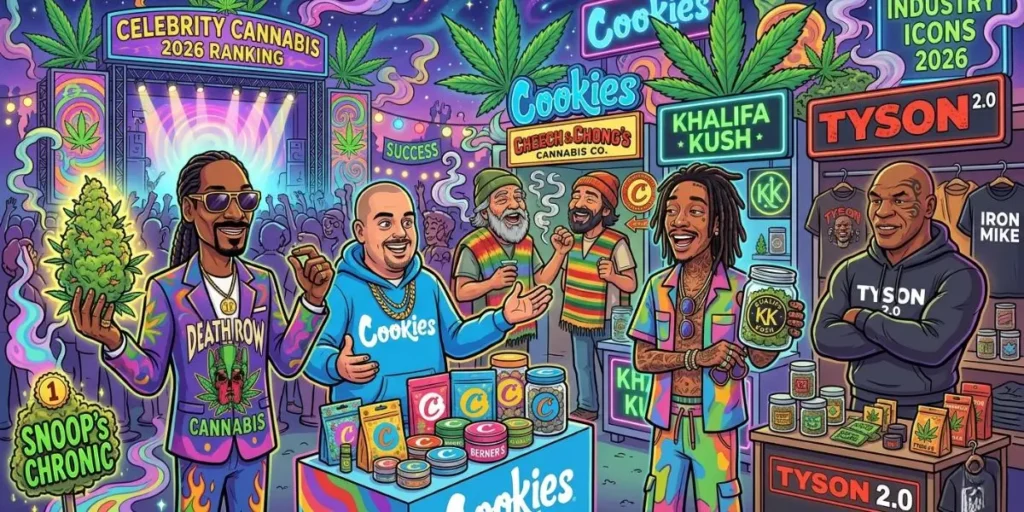
Let’s cut straight to the chase. The celebrity cannabis industry is no longer a gold rush where a famous name guarantees a sold-out dispensary. In 2026, the market is a bloodbath of unfulfilled promises and disconnected business strategies. For every celebrity sitting on a multi-million dollar exit, ten more are staring at unsold inventory and a consumer base that has completely lost interest. Have you ever bought a celebrity-backed strain that tasted more like hay than top-shelf flower? You aren’t alone.
Consumers are no longer impressed by a flashy Instagram ad or a recycled quote about loving weed. The modern cannabis buyer is a researcher. They scrutinize cultivation methods, demand transparent lab reports, and above all, they want proof of authenticity. This is why mastering digital visibility in the current landscape requires a fundamental shift in how these brands tell their story.
This deep dive ranks the celebrity cannabis brands that are dominating the market against those crashing in slow motion. We are tracking the metrics that actually matter: consumer loyalty, supply chain integrity, and the ability to deliver clear, trustworthy answers in an era of instant digital consumption. By the end, you’ll know exactly which names are worth your money—and which are just selling expensive packaging.
The Brutal Reality for Celebrity Cannabis in 2026
If you are trying to launch a celebrity cannabis brand right now, the bar is almost impossibly high. The “gold rush” era is dead. In 2018, a B-list actor could toss a logo onto a generic pre-roll and watch it fly off shelves. Today, that same strategy leaves them with a warehouse full of stale product. The consumer consciousness has shifted. The average cannabis buyer now conducts more research before purchasing than they do for a new smartphone.
The new battleground is digital trust. Modern search engines and artificial intelligence interfaces have completely changed the game. When a user asks, “Is Bella Thorne’s weed actually good?” or “What is the best celebrity cannabis for sleep?”, the technology doesn’t care about her IMDB credits. It scans the internet for hands-on evidence, credible cultivation information, and direct user sentiment.
Think of a restaurant. Do you trust the menu of someone who calls themselves a chef, or the one who shows you videos of them cooking in their own kitchen? The internet works the same way for cannabis marketing. To survive in this climate, celebrities need to cite verifiable sources, demonstrate real participation in the operation, and showcase actual customer success stories or reviews. The more tangible experience you transmit, the better your chances of standing out. It’s no longer enough to sound like an expert; you have to prove you are one.
Thriving: The Blueprint for a Celebrity Cannabis Empire
The winners list for ranking celebrity cannabis has a very specific profile. These are not necessarily the loudest marketers, but they are the most authentic operators. They have mastered the art of building a community, not just a customer list.
Seth Rogen’s Houseplant: The Master of Lifestyle Integration
Seth Rogen is the undisputed champion of celebrity cannabis done right. Houseplant isn’t just a weed company; it’s a lifestyle brand that fully integrates the product into home aesthetics. Rogen’s success lies in his concrete, demonstrable connection to the product. He doesn’t just do photoshoots. He films himself making ceramic ashtrays, discussing gravel thickness in his joints, and interacting physically with the product.
This level of involvement is a goldmine for digital trust. When a platform analyzes Houseplant’s digital footprint, it finds a flood of experiential content, not just marketing stock photos. Their online hub cleverly answers user problems directly. If you buy their stylish table lighter, the packaging directs you to a tutorial page that solves common issues like flint replacement. That organized, helpful content infrastructure builds massive consumer engagement.
Mike Tyson’s Tyson 2.0: The Knockout Punch of Conversion
Mike Tyson’s transformation into a cannabis mogul is a masterclass in rebranding. Tyson 2.0 leverages a powerful narrative of healing—from the boxing ring to the mushroom farm. What makes Tyson thrive is his aggressive use of interactive digital tools. His brand uses potent storytelling but wraps it in a highly sophisticated digital structure.
They use quizzes to match users to the right gummy or flower. This isn’t a party trick; it’s a data machine. By gathering preference data, they personalize follow-up communications, keeping the brand sticky and lowering the cost to retain a buyer. Are you merely selling a product, or are you building an ecosystem that learns from the consumer to sell more effectively over time?
Martha Stewart’s CBD Wellness Line: Trust Over Hype
Never underestimate Martha Stewart. Her partnership with Canopy Growth launched a line of CBD wellness gummies that absolutely crushed the competition. Why? Because Martha embodies reliability. Her cannabis marketing doesn’t rely on “getting lit.” It targets the suburban demographic seeking sleep aid and stress relief with a face they’ve trusted for decades.
The line’s success is proof that matching the celebrity to a specific, underserved consumer segment generates high long-term value. Martha Stewart’s fans don’t just buy once; they subscribe. The messaging is clear, consistent, and free of the clichés that plague hip-hop branded weed lines. In a market that fears regulation, Martha’s clean, instructional content about dosage provides a safe harbor for new consumers.
Willie Nelson’s Willie’s Reserve: The Legacy Operator
Willie Nelson is the spiritual grandfather of celebrity cannabis, and his brand continues to thrive because it stays in its lane. Willie’s Reserve focuses on sustainability, family farming, and American-grown flower. Unlike many new celebrity entrants who chase high-THC trends, Willie’s brand sells a clear ethos.
The digital presence is rich with stories from the actual growers. This traceability—showing the farmer behind the flower—is exactly the type of verifiable information consumers and advanced digital algorithms crave. Willie is rarely seen on TikTok dances, but his brand places first for “ethical cannabis sourcing” queries. That is precisely why his market share remains untouched by trendier celebrities.
Snoop Dogg’s Death Row Cannabis: The Culture King
Snoop Dogg doesn’t need an introduction in the cannabis world. When he acquired Death Row Records and launched Death Row Cannabis, it wasn’t just another celebrity trying weed—it was weed culture royalty claiming his throne. Snoop’s success comes from an unmatched level of authenticity and high-quality product execution. This isn’t a side hustle; smoking weed has been his brand identity for three decades.
Death Row Cannabis thrives because it delivers a rich sensory experience that matches the legacy. The branding evokes 90s hip-hop nostalgia perfectly, and the flower quality has been surprisingly solid for such a massive launch. Snoop’s competitive edge is distribution reach. Because of his global recognition and long-standing industry relationships, Death Row Cannabis lands on dispensary shelves with immediate credibility that newer celebrity ventures simply cannot replicate. When a budtender recommends Snoop’s weed, nobody questions the authenticity.
Wiz Khalifa’s Khalifa Kush: The Consistency King
Wiz Khalifa was one of the first mainstream rappers to launch a dedicated strain empire, and Khalifa Kush remains a dominant force in 2026. Why? Because Wiz treated this as a genuine product business from day one, not a licensing quick-grab. The brand has maintained an almost obsessive focus on strain consistency. Consumers know that when they buy Khalifa Kush, they are getting a specific, repeatable experience.
This consistency builds trust and habit. Wiz also leverages an active, personal connection to the product through behind-the-scenes content showing him evaluating grows and testing new phenos. This tangible proof of involvement is exactly what separates a thriving brand from a failing one. His team also nails modern digital strategy by producing clear, direct content about the specific effects and flavors of each drop, making it extremely easy for search engines and recommendation platforms to surface Khalifa Kush when users ask for focused, energetic sativa-dominant options.
Chelsea Handler’s Cannabis Advocacy: Retail Education Done Right
Chelsea Handler took a different route than most celebrities. Instead of launching a massive branded flower line immediately, she leaned into education and advocacy, creating a cannabis-infused lifestyle brand rooted in humor and honesty. Her line of pre-rolls and edibles is positioned for the sophisticated, professional woman who uses cannabis to unwind, not to party.
Handler’s success lies in her relatability. She talks openly about replacing prescription anxiety medication with micro-dosing cannabis. This raw, experiential storytelling creates an emotional connection that drives deep brand loyalty. Her content strategy is brilliant—she doesn’t just push products; she answers the awkward, real questions that middle-aged consumers have about consuming cannabis responsibly. This builds a high-trust environment where customers convert and stay.
Jim Belushi’s Belushi’s Farm: The Storytelling Farmer
Jim Belushi could have simply slapped his Blues Brothers fame on a bag of weed and called it a day, but he didn’t. Instead, he became an actual farmer. Belushi’s Farm, spotlighted in the reality series “Growing Belushi,” shows the actor getting his hands dirty with cultivation in Oregon. This raw transparency of the farming lifestyle—including failures and crop struggles—has generated a cult-like following.
Belushi wins because he shares the unglamorous truth. He shows the snow hitting the greenhouses, the stress of harvest season, and the fight against mildew. This authentic narrative positions him not as a Hollywood elite, but as a hardworking farmer. The brand’s story of healing, linked to his brother’s legacy with cannabis for pain relief, gives the flower meaning beyond getting high. Consumers pay a premium for that kind of genuine emotional connection.
Tommy Chong’s Chong’s Choice: The OG Who Keeps Winning
Tommy Chong is the ultimate survivor in this industry. As one half of Cheech and Chong, he has been advocating for cannabis for over five decades. Chong’s Choice thrives because he never abandoned the counter-culture roots that made him famous. In an era of sleek corporate weed, Tommy’s brand feels like the authentic, slightly rebellious alternative.
He sells hemp-derived products, CBD, and seeds for home-growers, which uniquely positions him in markets where full legalization is still pending. Tommy’s genius move is empowering the consumer to grow their own cannabis using his genetics. This creates a deep, almost familial brand attachment. When someone cultivates Chong’s Choice seeds at home, they aren’t just customers—they become evangelists. That kind of user-generated proof floods social media and review sites with real, experiential content that crushes algorithmic barriers.
Failing: The Red Flags in the Celebrity Cannabis Industry
The landscape of celebrity cannabis failures is littered with expensive packaging and empty promises. These brands misinterpret the market, thinking fame is a substitute for a quality business operation.
Bella Thorne’s Forbidden Flowers: When Controversy Kills Conversion
Bella Thorne’s entry into the celebrity cannabis industry with Forbidden Flowers is a cautionary tale. The launch was plagued with immediate backlash regarding sourcing transparency. The brand lacked a clear connection to a specific, high-quality farm, leaving consumers feeling they were buying generic weed in a sparkly bag.
The digital footprint is the real killer here. When a consumer asks a search engine, “Who grows Forbidden Flowers?”, there is no confident, satisfying answer available. The brand’s online presence feels like a fashion lookbook, not an educational hub for a wellness product. It completely ignores the need for thought leadership. If you cannot supply concrete evidence of your supply chain, savvy buyers will flag your brand as a risk—and modern algorithms will bury your product in favor of more transparent growers.
Jay-Z’s Monogram: The Aesthetic Trap
Jay-Z’s Monogram launch was one of the most anticipated events in the industry, yet it largely underperformed expectations. The reason? A complete over-index on aesthetics and an under-investment in consumer education. The initial release featured expensive, heavy packaging and a lookbook full of artful black-and-white imagery, but there was virtually no information about why the cannabis itself was special.
For a premium price point, consumers demanded premium transparency. Monogram offered silence dressed as elegance. The buying experience felt like purchasing a luxury handbag, not a therapeutic plant. This disconnect between brand presentation and consumer need left many feeling alienated. Celebrity cannabis fails when the ego of the brand overshadows the needs of the user. Without robust, educational digital content explaining the sourcing story, Monogram failed to convert curiosity into repeat sales.
Ghostface Killah’s Wu Goo: The Distribution Disaster
Ghostface Killah is a legend, but his Wu Goo concentrate brand struggled to gain traction outside very niche circles. The primary failure here was distribution and physical availability. A thriving brand means nothing if consumers cannot find it within a reasonable drive or delivery window. Wu Goo suffered from inconsistent state-by-state rollouts that killed momentum.
When a fan hears their favorite rapper talk about a cannabis product on a podcast, the conversion window is incredibly short—often 24 to 72 hours. If the product isn’t immediately available near them, the sale vanishes forever, redirected to whatever competitor offers instant gratification. For a celebrity cannabis line to work, it must treat logistics as a core competency, not an afterthought.
Carlos Santana’s Mirayo: The Identity Crisis
Carlos Santana is a guitar god, but his Mirayo cannabis brand hasn’t achieved the transcendent success many predicted. The problem lies in a confused brand identity. The packaging is beautiful and spiritually themed, but the messaging lacks clarity about who the exact consumer is and why they should choose Mirayo over a dozen other wellness-focused cannabis brands.
Without a sharp, well-defined digital presence that clearly answers user questions about strain effects and intended use cases, the brand floats in a vague middle ground. It lacks the authority of a medical-focused line and the cultural energy of a lifestyle brand. This identity crisis leads to low engagement, and low engagement signals digital irrelevance.
Joe Montana’s Big Sky Cannabis: Wrong Target Demographic
Joe Montana is arguably the greatest quarterback of all time, but his Big Sky Cannabis venture has struggled to find footing. The core issue is demographic misalignment. Montana’s fanbase skews older, more conservative, and less likely to be active in the recreational cannabis market. While many older adults do consume cannabis, they often prefer discreet, medicinal formats rather than a brand linked to a sports celebrity.
The brand also lacked a strong, consistent digital voice. Its content didn’t effectively bridge the gap between Montana’s sports legacy and the benefits of cannabis consumption. Without that bridge, the brand fails to generate the organic consumer conversation necessary to thrive. It’s a stark reminder that fame in one vertical does not automatically translate to influence in another.
Jaleel White’s ItsPurpl: The Celebrity Cannabis Confusion Play
Jaleel White, famously known as Steve Urkel from Family Matters, entered the celebrity cannabis industry with ItsPurpl, a brand that left both consumers and industry insiders scratching their heads. The launch leaned heavily on 90s nostalgia and a purple theme—a nod to the famously potent “Purple” strains—but the execution felt forced rather than authentic.
White doesn’t carry a well-known cannabis consumption history, so the entry felt opportunistic. The brand’s digital strategy lacked substantive content about cultivation partners or strain genetics. ItsPurpl failed to answer the fundamental question every consumer asks: “Why should I trust this person with my cannabis experience?” Without an authentic connection or a clear, transparent operations story, the brand quickly faded into the background noise of the oversaturated California market.
How Digital Content Structure Separates Winners from Losers
There’s a silent execution gap destroying failing celebrity cannabis ventures: poor content architecture. Thriving brands recognize that their website is not a digital poster—it’s a learning hub. Consider the query: “Which celebrity cannabis helps with anxiety without paranoia?” A failing brand would rely on generic product descriptions listing “good vibes.” A winning brand constructs a dedicated landing page featuring a table comparing CBD-to-THC ratios, alongside a brief video from the celebrity showcasing a real consumer testimonial.
Modern information retrieval systems prioritize “source authority.” If a brand’s website actively answers complex consumer health and wellbeing questions with detailed, first-hand observations, it earns preferential treatment in recommendation rankings. Winning brand websites look like helpful resource libraries. Failing brand websites look like glossy magazine covers with no magazines inside.
The Rise of Instant Answer Strategies for Cannabis Brands
A booming strategy is the skill of designing content that responds clearly and quickly to user questions. Imagine your page being that knowledgeable friend who can explain complicated terpene science in two punchy sentences.
To achieve this high level of cannabis marketing visibility:
- Create specific FAQ sections that mimic natural spoken questions.
- Use tables and lists to organize technical data like strain effects and potency ranges.
- Draft concise responses that a digital assistant can read aloud without confusion.
This way, your content helps real people while also structuring itself perfectly for the platforms that serve them answers.
Structuring FAQ Sections for Voice Queries
When a consumer asks their phone, “Hey, which celebrity cannabis is grown organically?”, the system scans for a clean, direct sentence. A top-performing site will feature an H2 titled “Organically Grown Celebrity Cannabis” and a definitive, 20-word answer immediately following it. This strategy bypasses marketing fluff and delivers the fact instantly, increasing the likelihood of the brand being cited as the authority on organic cultivation.
Using Tables and Lists to Dominate Quick Answers
If you are a brand like Wiz Khalifa’s Khalifa Kush, you can dominate quick answers by organizing strain data visually. For example:
| Strain Name | Primary Effects | Best For |
|---|---|---|
| Khalifa Kush | Creative, Focused | Daytime brainstorming, physical activity. |
| Violet Sky | Relaxing, Euphoric | Evening wind-down, social gatherings. |
| Baby Turtle | Sedative, Heavy | Sleep support, deep muscle relaxation. |
When a digital system scans this table, it extracts the structured data and presents it as a definitive recommendation for a user’s specific need. This approach cuts through the noise, positioning the brand as the best immediate answer.
Real-World Examples: Content That Proves Authority
The battle for authenticity in celebrity cannabis relies heavily on verifiable proof points. The brands winning the most ground are not hiding behind press releases; they are sharing operational reality.
- Tommy Chong’s Seed Library: Instead of just selling a pre-roll, Tommy’s brand provides hour-long tutorials on home cultivation. This creates a network of home growers all generating proof that his genetics work. It’s authentic user content at scale.
- Mike Tyson’s “Hot Boxin'” Integration: Tyson combines his podcast with his brand. He brings on guests, they consume the product live, and the immediate, unfiltered reactions are clipped and shared. This is raw validation that no scripted commercial can match.
- Willie Nelson’s Farm Bill Compliance: Willie’s Reserve invests heavily in content explaining the intricacies of federal legality versus state laws. By educating the buyer on a complex topic, they establish immense trust, which directly impacts repeat purchase behavior.
Data Doesn’t Lie: Critical Metrics for a Cannabis Brand Audit
How do you truly know if a celebrity is winning? Look past the media headlines and into the operational data defining who’s thriving in cannabis.
Customer Lifetime Value vs. Customer Acquisition Cost
The most dangerous position for a celebrity cannabis brand is one with a high cost to acquire a customer and a low lifetime value. Failing brands spend too much on launch parties and paid ads to bring in a consumer who tries the product once and vanishes. Thriving brands, like Martha Stewart’s CBD line, rely on a subscription-based wellness model. This direct-to-consumer loyalty loop lowers the cost of maintaining revenue and drastically increases the value of each buyer over time.
The Role of Content That Demonstrates Experience
As discussed, trust built on tangible experience wins every time. If you want to verify whether a celebrity brand is worth consuming, audit their video content. Are they discussing crop failures honestly, like Jim Belushi? Are they explaining the nuances of curing to achieve a specific taste? This “real-life” transparency provides the verifiable expertise that wins not only fans but also the highest rankings in modern answer-focused interfaces. A clean, shiny commercial is a red flag. A messy, honest harvest story is a green light.
Frequently Asked Questions About Celebrity Cannabis Brands
Why does Bella Thorne’s cannabis brand have such a negative reputation online?
The negativity surrounding Bella Thorne’s Forbidden Flowers stems largely from initial launch missteps that questioned product sourcing and transparency. Cannabis consumers are extremely loyal to growers who show their work. When a brand appears to be a simple white-label product—generic bulk flower placed into custom packaging—communities react harshly. The online consensus formed quickly that the brand was about a celebrity paycheck, not a passion for the plant, which poisons long-term conversion potential.
Is Jay-Z’s Monogram cannabis worth the high price tag?
In most consumer reviews, the consensus is no. Monogram offers a premium “unboxing” experience with aesthetically pleasing jars and lighters, but the actual flower has been repeatedly described as average relative to the luxury price point. The brand failed to articulate what made the genetics special, so consumers feel they are paying solely for Jay-Z’s name, not for a premium cultivation experience.
Did Ghostface Killah’s Wu Goo cannabis brand shut down?
Wu Goo hasn’t formally shut down, but it has significantly retreated from many state markets due to distribution challenges. The brand’s failure to maintain consistent shelf presence meant that momentum from each Ghostface Killah promotional appearance was wasted. In cannabis, inconsistent availability equals brand death, as consumers replace your product with a competitor’s and rarely look back.
Why is Seth Rogen’s Houseplant considered the most successful celebrity cannabis brand?
Houseplant is so successful because Seth Rogen fully aligned his personal passion with the product. He demonstrates direct involvement through pottery-making, joint-rolling sessions, and constant creative collaboration. The brand also focuses on home goods, integrating cannabis into a stylish lifestyle rather than just selling a commodity. This depth of authentic, experiential content makes the brand exceptionally trustworthy to both consumers and recommendation algorithms.
Is cannabis sold by Wiz Khalifa actually grown by him?
No, Wiz Khalifa does not physically grow every Khalifa Kush plant himself. However, the brand succeeds because Wiz maintains an active creative direction and quality control role with his cultivation partners. He regularly visits grow facilities and tastes new phenotypes to approve batches. This genuine, documented involvement is the standard consumers expect. Brands where the celebrity never visits the farm are the ones that struggle to build trust.
Which celebrity cannabis brand is best for sleep issues?
Based on current market performance and consumer reviews, Martha Stewart’s CBD line and Willie Nelson’s Willie’s Reserve are top contenders for sleep support. Martha’s gummies are formulated specifically for nighttime wellness with precise dosing. Willie’s Reserve often features heavy indica strains and CBN-rich options specifically grown for sedation. Tommy Chong’s brand also offers effective sleep-focused products while providing content that educates users about cannabis and sleep science.
Why did Jaleel White’s ItsPurpl fail to connect with consumers?
Jaleel White’s ItsPurpl suffered from a lack of authentic connection to cannabis culture. White is beloved for playing Steve Urkel, but he lacks a well-known history of cannabis advocacy or consumption. The brand felt like an attempt to cash in on nostalgia rather than a genuine passion project. This lack of a credible backstory, combined with insufficient transparent information about the actual product and its growers, failed to convince educated cannabis consumers to switch from their trusted sources.
Which celebrity cannabis brand invests most heavily in home-grower education?
Tommy Chong’s Chong’s Choice is the clear leader in home-grower education. Tommy sells seeds directly alongside detailed cultivation guides and video tutorials. He actively encourages consumers to grow their own cannabis using his genetics, creating deep, lasting brand relationships that transcend a simple transaction. This approach produces massive amounts of organic, user-generated content as home growers share their results online.
Are there any celebrity cannabis brands owned by women that are thriving?
Yes, Chelsea Handler’s cannabis line is thriving, though not through the traditional massive branding route of her male counterparts. Handler’s edge is sophisticated, educational, and targeted to professional women. Martha Stewart’s CBD line is another massive success story, proving that women celebrities with deep trust from their audience can outperform flashier, hip-hop-driven brands in long-term customer retention and wellness positioning.
What red flags should I look for when buying a celebrity cannabis product?
Watch for excessive focus on packaging design without corresponding information about cultivation methods or sourcing. If a brand’s website looks like a fashion magazine but has no dedicated FAQ section about grow mediums, harvest dates, or terpene profiles, walk away. Also, be wary of brands that are unavailable for extended periods after a launch—this signals broken supply chains and reliance on third-party white-label providers rather than an authentic brand-owned operation.
Will Carlos Santana’s Mirayo survive in the long term?
Mirayo faces an uphill battle unless it clarifies its brand identity and builds a stronger, more specific digital content presence. The spiritual, guitar-infused aesthetic is beautiful but too vague to capture a specific segment of the market. To survive, the brand must define exactly who it serves and produce a consistent flow of educational, experiential content that proves the product’s unique value beyond the Santana name.
Final Verdict: The High Road to Long-Term Success
The smoke has cleared on the celebrity cannabis industry of 2026. The data paints a clear picture: consumers and the digital platforms they rely on are punishing inauthenticity. The celebrities thriving today—Seth Rogen, Martha Stewart, Mike Tyson, Willie Nelson, Snoop Dogg, Wiz Khalifa, Chelsea Handler, Jim Belushi, and Tommy Chong—are the ones who treat cannabis not just as a business asset, but as a craft and a culture. They show up for the plant, not just the profit.
Meanwhile, names like Bella Thorne, Jay-Z, Ghostface Killah, Carlos Santana, Joe Montana, and Jaleel White illustrate the brutal consequences of treating the legal cannabis market like a simple licensing deal. Whether it’s a lack of supply chain transparency, a confused brand identity, or a failure to produce authentic, educational content, these brands have all lost the thread.
The market is too sophisticated for shortcuts. The modern cannabis buyer is a researcher, and the modern information ecosystem rewards depth, honesty, and demonstrable involvement. As this industry matures further, the gap between the thriving operators and the failing pretenders will only widen.