
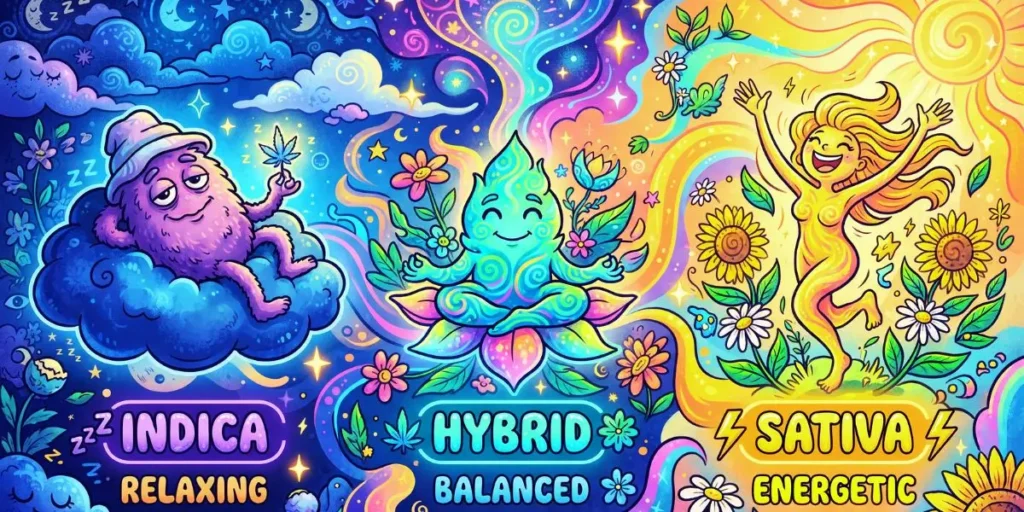
If you’re new to cannabis or just curious about the different types available, you’ve probably heard the terms “indica,” “sativa,” and “hybrid” thrown around. But what do they actually mean? Don’t worry – I’m here to break it down for you in a way that makes sense. Think of these three categories as the three main personalities of the cannabis world, each with its own unique vibe, effects, and characteristics. By the end of this guide, you’ll have a solid understanding of what sets them apart and which one might be right for you.
Cannabis can feel overwhelming when you first walk into a dispensary or browse an online menu. Budtenders toss around terms like “sativa,” “indica,” and “hybrid” as if everyone already knows the difference. But if you are new to cannabis, or even if you have been consuming for years, understanding the real meaning behind these labels can help you make better choices.
This guide breaks down indica vs sativa vs hybrid in plain language. You will learn what the 3 types of cannabis are, how they differ in effects, which one might feel stronger, and how to navigate cannabis strain names, cannabis strains database listings, and popular varieties like classic cannabis strains and hybrid strain names. We will also cover indica vs sativa vs hybrid gummies and answer common questions such as what is stronger sativa or indica.
By the end, you will have a practical framework for choosing the right strain—whether you want energy, relaxation, creativity, or sleep support.
What Are the 3 Types of Cannabis?
When people talk about the 3 types of cannabis, they usually mean:
- Cannabis sativa
- Cannabis indica
- Hybrid cannabis
Botanically, the picture is more nuanced. Many scientists argue that most cannabis plants are technically Cannabis sativa L., with indica and ruderalis as subspecies or varieties. However, in the consumer market, the sativa/indica/hybrid classification remains the most common shorthand for describing expected effects, growth patterns, and physical characteristics.
Sativa
Sativa plants are often tall, thin, and have narrow leaves. They typically originate from warmer climates near the equator, such as Southeast Asia, Central America, and parts of Africa. These plants usually have longer flowering cycles.
Consumers often associate sativa with daytime use. The reported effects include:
- Uplifting and euphoric feelings
- Increased energy and focus
- Creativity and sociability
- A more cerebral or heady high
Indica
Indica plants are shorter, bushier, and have broad leaves. They are thought to have originated in mountainous regions of Central and South Asia, including the Hindu Kush mountains. Indica plants generally have shorter flowering times, which made them attractive to growers.
Consumers often associate indica with evening or nighttime use. Reported effects include:
- Deep body relaxation
- Calming and sedating feelings
- Reduced physical tension
- “Couch-lock” or sleepy sensations
Hybrid
Hybrids are crossbreeds of sativa and indica genetics. They are grown to combine specific traits, such as the uplifting head high of a sativa with the relaxing body high of an indica. Many modern strains are hybrids, even if they are marketed as sativa or indica based on their dominant effects.
Understanding the 3 types of cannabis is the starting point, but the real difference comes down to chemistry—cannabinoids, terpenes, and your own body’s response.
Sativa vs Indica: The Classic Differences
The sativa vs indica debate has been around for decades. In the past, cannabis was classified almost entirely by plant shape and geographic origin. Sativa was seen as energetic and daytime-friendly. Indica was seen as relaxing and better for night. This simple model made it easy for consumers to choose.
But modern cannabis is more complex. Most strains available today are hybrids, and their effects do not always follow the old rules. A sativa-dominant hybrid can still produce relaxation if it contains high levels of myrcene, a terpene associated with sedative effects. An indica-dominant hybrid can feel uplifting if it is rich in limonene or pinene.
Still, the sativa vs indica framework remains useful as a general guide. It gives you a starting point when reading a menu or talking to a budtender. Just remember that labels are not guarantees.
Indica vs Sativa vs Hybrid: A Simple Guide to Cannabis Strains
If you’re new to cannabis or just curious about the different types available, you’ve probably heard the terms “indica,” “sativa,” and “hybrid” thrown around. But what do they actually mean? Don’t worry – I’m here to break it down for you in a way that makes sense. Think of these three categories as the three main personalities of the cannabis world, each with its own unique vibe, effects, and characteristics. By the end of this guide, you’ll have a solid understanding of what sets them apart and which one might be right for you.
Understanding the Cannabis Plant Basics
What Makes Cannabis Strains Different?
Cannabis is incredibly diverse, kind of like how there are so many dog breeds, but they’re all still dogs. The cannabis plant comes in different varieties, and these varieties – called strains – have been cultivated over centuries to highlight specific characteristics. Each strain has its own unique combination of cannabinoids (the active compounds in cannabis), terpenes (which give cannabis its flavor and aroma), and physical traits.
The main differences you’ll notice between strains come down to three factors: how the plant grows physically, what kind of effects it produces, and its chemical profile. Some strains make you feel relaxed and sleepy, while others energize you like you’ve had five cups of coffee. It’s wild how different the same plant can be, right?
Why Does Strain Classification Matter?
Understanding strain classifications is super important because it helps you predict what kind of experience you’re going to have. Imagine going to a restaurant without knowing whether you ordered spicy food or dessert – that’s what choosing cannabis without knowing its strain type is like. Knowing whether you’re grabbing an indica, sativa, or hybrid helps you set expectations and choose something that fits your lifestyle and needs.
Whether you want to unwind after a stressful day, boost your creativity for a project, or find something in between, knowing these categories is your roadmap. It’s the difference between a pleasant experience and wondering why you made the choices you did.
Indica Strains: Your Chill Companion
What Are Indica Strains?
Indica strains are like the cozy blanket of the cannabis world. These strains originated from the Hindu Kush mountains in Central Asia, and they’ve become famous for their relaxing, body-focused effects. When people talk about cannabis that makes them feel “locked to the couch,” they’re usually talking about indicas. But that doesn’t mean they’re boring – they’re perfect for specific situations and preferences.
The name “indica” actually comes from India, where these plants were originally discovered and cultivated. Over time, breeders have refined indicas to enhance their relaxing properties, making them a favorite among people looking to decompress.
What Are the Physical Characteristics of Indica Plants?
Here’s something cool: you can actually spot an indica plant just by looking at it. Indica plants are typically shorter and bushier compared to their sativa cousins. They usually have wider leaves and a more compact structure, which makes them easier to grow indoors. The buds tend to be dense and chunky, kind of like little nuggets of relaxation.
Because they’re naturally shorter, indicas finish their growing cycle faster than sativas – usually around 8 to 9 weeks. This makes them popular with growers who want to harvest sooner.
Effects and Benefits You’ll Experience
If you smoke or consume an indica strain, you’re going to feel a heavy, body-focused effect that most people describe as deeply relaxing. Many users report feeling:
- A warm, tingly sensation throughout their body
- Deep relaxation and muscle tension relief
- Increased appetite (yes, the munchies are real!)
- Improved sleep quality
- Reduced anxiety and stress
- Pain relief
The high from indica is typically more sedative, which is why people love using it in the evenings or before bed. It’s like your body is saying, “Hey, let’s chill out and take it easy.”
Popular Indica Strains Worth Trying
Some of the most beloved indica strains include:
- Granddaddy Purple: Known for its beautiful purple color and sweet flavor, this strain is a classic for relaxation
- Northern Lights: A legendary strain that delivers consistent, peaceful effects
- Bubba Kush: Famous for its potent body high and sweet, earthy flavor
- Afghan Kush: An OG strain that’s pure relaxation in plant form
- Blueberry: Sweet, fruity, and incredibly calming
Sativa Strains: The Energizer Bunny of Cannabis
What Are Sativa Strains?
Sativa strains are basically the opposite of indicas – they’re your go-to when you want to feel energized, creative, and social. These strains originated in equatorial regions like Central America, Southeast Asia, and Africa, where the long growing season allowed them to develop their characteristic tall, lanky structure.
If indicas are your evening companion, sativas are your daytime friend. They’re known for producing more cerebral, uplifting effects that many users describe as a “head high” rather than a body high.
What Are the Physical Characteristics of Sativa Plants?
Sativa plants are like the basketball players of the cannabis world – they’re tall, lean, and elegant. These plants can grow quite large, sometimes reaching impressive heights, which is why they’re often grown outdoors. The leaves are typically narrower and more delicate than indica leaves, and the buds are usually airier and less dense.
Because sativas love warmth and need longer to mature, they typically take 10 to 16 weeks to finish flowering. This longer growing period allows the plant to develop its unique, uplifting cannabinoid and terpene profile.
Effects and Benefits You’ll Experience
When you use a sativa strain, you’re going to feel more of a cerebral, uplifting effect. Users typically report:
- Increased energy and motivation
- Enhanced creativity and focus
- Uplifted mood and euphoria
- Increased sociability and talkativeness
- Mental clarity
- Reduced fatigue
- Better daytime productivity
Sativas are perfect for daytime use when you need to get stuff done or hang out with friends. The effects are more mental than physical, making you feel alert and engaged rather than sedated.
Popular Sativa Strains Worth Trying
Some fantastic sativa strains that users love include:
- Sour Diesel: A legendary strain known for its energizing effects and diesel-like aroma
- Jack Herer: Named after a cannabis activist, this strain delivers creative, uplifting vibes
- Green Crack: Despite its name, it’s just super energizing and mood-boosting
- Durban Poison: A pure sativa from South Africa with sweet, spicy notes
- Lemon Haze: Citrusy and uplifting, perfect for creative projects
Hybrid Strains: The Best of Both Worlds
What Are Hybrid Strains?
Hybrid strains are the middle ground – they’re created by crossing indica and sativa plants to combine the best traits of both. Think of them as the Goldilocks option: not too sedating, not too energizing, but juuust right for many people. Hybrids have become incredibly popular because they offer versatility and balanced effects.
The beauty of hybrids is that breeders can create strains tailored to specific desired effects. Want something relaxing but still mentally engaging? There’s a hybrid for that. Want something energizing but still a little body-focused? You got it.
How Hybridization Works
Creating a hybrid is basically controlled breeding – growers take pollen from a sativa plant and fertilize an indica plant (or vice versa), then grow the resulting seeds. The offspring will have characteristics from both parents, though some traits might be more dominant than others.
Over generations of breeding, cultivators can fine-tune exactly what they want. Some hybrids lean more “indica-dominant,” meaning they have more relaxing effects with a touch of energy. Others are “sativa-dominant,” offering more uplifting effects with a hint of body relaxation. Then there are perfectly “balanced” hybrids that split the difference right down the middle.
Balanced Effects and Unique Benefits
The genius of hybrid strains is that they let you customize your experience. Depending on which hybrid you choose, you might get:
- A gentle uplift without overwhelming energy
- Relaxation without complete sedation
- Improved mood and focus simultaneously
- Pain relief with mental clarity
- Stress reduction with motivation
- Enhanced creativity with body comfort
Hybrids are perfect for people who want to use cannabis during the day but still feel relaxed, or those who want evening use without complete couch-lock. They’re also great for people with different preferences at different times.
🔥 Stack your savings. Elevate your session. 10% off $100, up to 25% off $450.
🔥 Roll into the menu and start saving. CLICK HERE!
Popular Hybrid Strains Worth Trying
The hybrid market is exploding with options, but here are some standouts:
- Girl Scout Cookies: A perfectly balanced hybrid with sweet flavors and reliable effects
- OG Kush: A legendary hybrid with both relaxing and uplifting properties
- Blue Dream: Sativa-dominant but with enough body relaxation to keep you grounded
- Wedding Cake: Known for its sweet flavor and balanced, euphoric effects
- Gelato: A newer favorite with creamy flavors and perfectly balanced effects
Indica vs Sativa vs Hybrid Effects: What to Expect
When exploring indica vs sativa vs hybrid effects, it helps to separate the traditional expectations from modern reality.
Indica Effects
Most consumers describe indica-dominant strains as:
- Relaxing the muscles and mind
- Easing tension and promoting rest
- Supporting sleep and appetite
- Producing a heavy body sensation
These effects make indica-leaning strains popular for evening use, watching movies, or unwinding after a long day. Some people use them for temporary relief from physical discomfort or insomnia, though individual results vary.
Sativa Effects
Sativa-dominant strains are often described as:
- Energizing and motivating
- Mood-boosting and euphoric
- Enhancing focus and creativity
- Producing a light, cerebral high
People often choose sativa-leaning strains for daytime activities, social gatherings, exercise, or creative projects. However, some users find sativas too stimulating or anxiety-inducing, especially at high doses.
Hybrid Effects
Hybrid strains aim to balance or blend these effects. A balanced hybrid might offer gentle relaxation without heavy sedation, or mild euphoria without racing thoughts. The specific effect depends on the parent genetics and the dominant terpene profile.
Some common hybrid experiences include:
- Calm focus
- Relaxed sociability
- Mild pain relief with mental clarity
- A gradual transition from uplifting to relaxing
Because hybrid effects vary so much, reading the strain description and lab results is more helpful than relying on the label alone.
Indica vs Sativa vs Hybrid Which Is Stronger?
One of the most common questions consumers ask is indica vs sativa vs hybrid which is stronger. The short answer: strength has little to do with the sativa or indica label.
“Stronger” usually refers to potency, which is determined mainly by:
- THC content — the primary psychoactive compound
- CBD content — non-intoxicating and can modulate THC’s effects
- Terpene profile — aromatic compounds that influence the experience
- Dose and consumption method — smoking, vaping, edibles, etc.
- Your tolerance and body chemistry
A high-THC sativa can be extremely potent, just as a high-THC indica can knock you out. A hybrid with 25% THC may feel stronger than an indica with 15% THC. In other words, what is stronger sativa or indica is not a question of type but of potency and personal response.
For some people, indica feels stronger because the physical sedation is more noticeable. For others, sativa feels stronger because the cerebral effects are more intense or anxiety-inducing. Hybrids can feel strong too, especially if they combine high THC with a wide range of terpenes.
If you are concerned about potency, check the lab-tested THC and CBD percentages rather than asking whether the strain is sativa or indica.
Indica vs Sativa Effects: The Role of Terpenes and Cannabinoids
To truly understand indica vs sativa effects, you need to look beyond the label. Cannabis contains more than 100 cannabinoids and over 150 terpenes. These compounds work together in what scientists call the “entourage effect.”
Key terpenes that influence the experience include:
- Myrcene — often associated with sedation and relaxation; found in many indica-leaning strains
- Limonene — citrusy, uplifting, and mood-enhancing; common in sativa-leaning strains
- Caryophyllene — spicy and potentially calming; found in many hybrids
- Pinene — piney, focus-enhancing, and may counteract some THC side effects
- Linalool — floral and calming; often found in relaxing strains
A strain labeled “indica” that is high in limonene may feel less sedating than expected. A “sativa” with lots of myrcene may produce unexpected couch-lock. This is why modern consumers increasingly ask for terpene profiles rather than relying solely on sativa or indica labels.
Indica vs Sativa vs Hybrid Gummies: Choosing the Right Edible
Edibles add another layer to the indica vs sativa vs hybrid discussion. When you eat indica vs sativa vs hybrid gummies, the effects are processed differently by your body.
How Edibles Differ
When you smoke or vape cannabis, cannabinoids enter the bloodstream quickly through the lungs. Effects can be felt within minutes. Edibles, however, must pass through the digestive system and liver. This process converts THC into a more potent metabolite called 11-hydroxy-THC, which can produce stronger and longer-lasting effects.
The same principles apply:
- Indica gummies — marketed for relaxation, sleep, and body calm
- Sativa gummies — marketed for energy, focus, and daytime use
- Hybrid gummies — marketed for balanced effects
But remember, the sativa/indica distinction in edibles is often less pronounced because the liver converts THC in a way that affects everyone similarly. The terpenes may still play a role, but the primary driver is the dose and your metabolism.
Tips for Choosing Gummies
- Start with a low dose, especially if you are new to edibles
- Wait at least 60–90 minutes before taking more
- Choose indica-leaning gummies for evening relaxation
- Choose sativa-leaning gummies for daytime activities, but be cautious with caffeine
- Choose hybrid gummies if you want a middle-ground experience
Always read the label for THC/CBD content and third-party lab testing.
Cannabis Strain Names, Databases, and Top 50 Strains
Navigating cannabis strain names can feel like learning a new language. Names like Blue Dream, Sour Diesel, Girl Scout Cookies, and Wedding Cake are everywhere. But where do these names come from?
Why Strain Names Matter
Strain names often reflect:
- Aroma and flavor — e.g., Lemon Haze, Cherry Pie
- Lineage — e.g., OG Kush, Northern Lights
- Effects — e.g., Green Crack, Trainwreck
- Appearance — e.g., Purple Punch, White Widow
- Pop culture or brand identity — e.g., Runtz, Gelato
A good cannabis strains database can help you look up a strain’s lineage, reported effects, THC/CBD percentages, and terpene profile. Databases like Leafly, AllBud, and seed bank catalogs are popular resources. They often organize strains into categories such as:
- Classic cannabis strains
- Modern hybrids
- High-CBD strains
- Landrace strains
Top 50 Strains and Classic Cannabis Strains
Many consumers search for top 50 strains lists to find reliable, well-known genetics. While “top” is subjective, certain names appear again and again because they have earned a reputation for consistency and popularity.
Some classic cannabis strains that have stood the test of time include:
- Blue Dream — a sativa-dominant hybrid known for balanced euphoria
- OG Kush — a potent hybrid with earthy, pine notes
- Sour Diesel — a fast-acting sativa with fuel-like aroma
- Northern Lights — a pure indica famous for deep relaxation
- White Widow — a balanced hybrid with frosty buds
- Jack Herer — a sativa-leaning strain named after the cannabis activist
- Granddaddy Purple — an indica with grape and berry flavors
- Skunk #1 — a foundational hybrid that influenced countless modern strains
Hybrid Strain Names and Cannabis Names Slang
Hybrid strain names often blend the names of their parent strains to signal lineage. Examples include:
- Wedding Cake — a cross of Triangle Kush and Animal Mints
- Gorilla Glue — also known as GG4, a potent hybrid
- Gelato — a sweet, dessert-like hybrid
- Runtz — a cross of Zkittlez and Gelato
- Apple Fritter — a balanced hybrid with pastry-like aroma
Cannabis names slang also appears frequently. Slang terms for cannabis itself include:
- Weed
- Bud
- Flower
- Herb
- Mary Jane
- Ganja
- Pot
For specific strains, consumers often shorten names:
- GSC for Girl Scout Cookies
- GG4 for Gorilla Glue #4
- GDP for Granddaddy Purple
- SD for Sour Diesel
Understanding cannabis names slang can help you decode menus and online reviews.
Using a Cannabis Strains Database
A cannabis strains database is one of the most useful tools for modern consumers. Instead of relying only on sativa or indica labels, you can search a database for:
- Strain lineage and breeder
- THC and CBD percentages
- Dominant terpenes
- Reported effects and side effects
- Flavor and aroma profiles
- Growing difficulty and flowering time
When you browse a top 50 strains list or database, pay attention to the chemotype—the chemical profile—rather than just the name. Two strains with the same name can have different effects depending on how they were grown and cured.
How to Choose the Right Strain for You
With so many options, choosing the right strain can feel overwhelming. Here is a simple step-by-step approach:
- Decide on your desired experience. Do you want energy, relaxation, creativity, sleep support, or pain relief?
- Consider the time of day. Sativa-leaning strains are often better for daytime; indica-leaning strains are often better for evening.
- Check the THC and CBD content. If you are sensitive to THC, choose lower-THC or balanced CBD:THC strains.
- Look at the terpene profile. If you want relaxation, look for myrcene and linalool. If you want focus, look for pinene and limonene.
- Start low and go slow. Especially with edibles or high-THC flower, begin with a small dose.
- Keep a journal. Note the strain name, dose, and how you felt. Over time, you will learn what works for you.
🔥 Stack your savings. Elevate your session. 10% off $100, up to 25% off $450.
🔥 Roll into the menu and start saving. CLICK HERE!
Conclusion: Finding Your Perfect Match
Choosing between indica, sativa, and hybrid strains doesn’t have to be complicated. You’ve got three main personalities to choose from, each with its own superpower. Indicas are your relaxation specialists, sativas are your creativity and energy boosters, and hybrids are your flexible friends who can adapt to whatever you need.
The key is understanding what each type offers and being honest about what you’re looking for. Start with one, pay attention to how it makes you feel, and use that information to guide your next choice. Over time, you’ll figure out your personal preferences and favorite strains. Remember, cannabis affects everyone differently, so what works for your friend might not be your perfect match – and that’s okay. The cannabis world is diverse and exciting, and there’s definitely a strain out there that’s perfect for you. Happy exploring!
Frequently Asked Questions
1. Can I use indica during the day?
Absolutely! While indicas are typically more relaxing, many people use them during the day if they don’t need to be super productive. Just be aware that you might feel more sedated, so plan accordingly. If you have daytime responsibilities, you might want to save indicas for evening use.
2. Are sativas always energizing?
Most sativas are uplifting and energizing, but some can still have relaxing properties depending on their specific terpene profile and cannabinoid content. The individual strain matters more than just the category, so it’s always good to research specific strains.
3. What’s the difference between indica-dominant and sativa-dominant hybrids?
Indica-dominant hybrids lean more toward relaxing effects with a touch of mental uplift, while sativa-dominant hybrids are more energizing with just a hint of body relaxation. The percentage (like 60% indica/40% sativa) tells you how much each parent plant influences the effects.
4. Do all strains within a category have the same effects?
No! While strains in the same category share general characteristics, individual strains can vary significantly. Two different indicas might have different effects, flavors, and potencies. This is why trying different strains and paying attention to how you feel is so important.
5. How do I know which strain is right for my medical condition?
If you’re using cannabis for medical purposes, talk to your doctor or a healthcare professional familiar with cannabis. They can recommend strains and types that are appropriate for your specific condition. Dispensary staff can also provide guidance, but professional medical advice is always the best starting point.
Disclaimer: This article is for educational purposes only. Cannabis laws vary by location, and cannabis affects everyone differently. Always consult local regulations and a healthcare professional before using cannabis.