
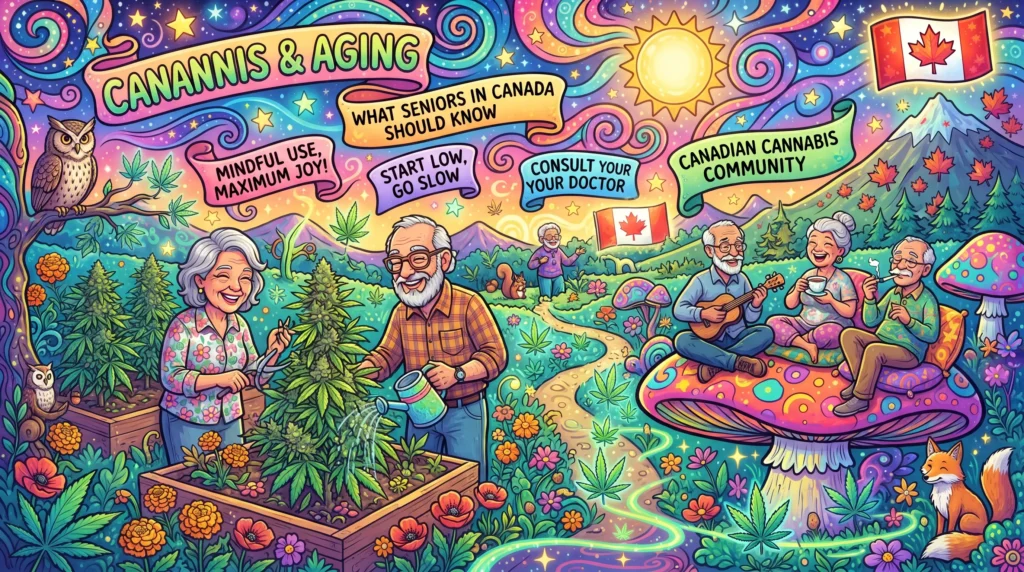
The landscape of cannabis in Canada has shifted dramatically over the last few years. Once a taboo subject whispered about in counterculture circles, cannabis is now a mainstream wellness topic discussed openly in retirement communities, bridge clubs, and doctors’ offices. As the demographic of users diversifies, one group stands out as the fastest-growing segment of consumers: seniors.
Often referred to affectionately as the “Senior Stoners” generation, Canadians aged 65 and older are turning to cannabis for relief from chronic pain, insomnia, and anxiety. However, with this surge in popularity comes a wave of questions. Is cannabis safe as you age? What are the actual cannabis benefits for seniors, and where do the risks lie?
Whether you are looking to manage arthritis pain or simply curious about what the fuss is about, this guide will walk you through everything you need to know about using cannabis responsibly in your later years.
Why More Canadian Seniors Are Exploring Cannabis
The stereotype of the cannabis user as a young person is outdated. Health Canada data and provincial sales reports consistently show that Canadians aged 55 and older are one of the most rapidly expanding consumer demographics. The reasons are as varied as the individuals themselves, but several common themes emerge.
First, many seniors are managing chronic conditions that traditional pharmaceuticals address imperfectly. Arthritis, neuropathy, lower back pain, and inflammation can severely limit mobility and quality of life. Standard treatments like non-steroidal anti-inflammatory drugs (NSAIDs) or opioids carry risks of gastrointestinal bleeding, dependency, or cognitive fog. For some, cannabis represents a complementary option worth investigating.
Second, sleep disorders and anxiety become more prevalent with age. Whether caused by hormonal shifts, chronic illness, or the psychological weight of life transitions, these issues send many seniors searching for alternatives to benzodiazepines or sleeping pills, which are linked to falls and memory impairment in older adults.
Finally, there is a cultural shift. The boomer generation that once viewed cannabis with suspicion now lives in a country where it is legally regulated, quality-controlled, and discussed openly in medical circles. That change in legal status has made exploration feel safer and more socially acceptable.
THC vs. CBD: What Seniors Actually Need to Understand
Walk into any cannabis retailer in Toronto, Vancouver, or Calgary, and you will encounter two acronyms repeatedly: THC and CBD. Understanding the difference is not optional—it is the foundation of safe senior use.
THC (tetrahydrocannabinol) is the compound responsible for the intoxicating effects commonly associated with cannabis. It can alter perception, elevate mood, and impair short-term memory and coordination. For seniors, THC carries additional considerations. It may increase heart rate, cause dizziness, or elevate the risk of falls—already a leading cause of injury among older Canadians. That does not make THC inherently dangerous, but it does mean it requires careful dosing and respect.
CBD (cannabidiol), on the other hand, is non-intoxicating. It does not produce a “high” and is generally well-tolerated by older adults. Many seniors start with CBD-dominant products to address inflammation, anxiety, or mild sleep disturbances without the psychoactive effects of THC. Some find that a balanced product containing both compounds works best, leveraging what researchers call the “entourage effect,” where cannabinoids work synergistically.
The key takeaway for aging consumers is this: You do not need to get high to potentially benefit from cannabis. Many seniors find relief using primarily CBD, or very low doses of THC, tailored carefully to their physiology and goals.
Common Health Conditions Seniors Address with Cannabis
While research is still evolving—particularly for older populations—anecdotal reports and preliminary clinical studies suggest Canadian seniors use cannabis for several age-related concerns. It is important to frame these as areas of interest rather than guaranteed cures, and always under medical guidance.
Chronic Pain and Arthritis: Topical cannabis preparations and oral CBD oils are frequently explored by seniors dealing with osteoarthritis and rheumatoid arthritis. The goal is often localized relief or reduced reliance on oral painkillers.
Sleep Disturbances: Insomnia affects a significant portion of Canadians over 65. Certain indica-dominant strains and CBN-rich products are marketed for sleep, though individual responses vary widely.
Neuropathic Pain: Conditions like diabetic neuropathy or post-shingles pain (postherpetic neuralgia) can be notoriously difficult to treat. Some seniors report that low-dose THC helps modulate nerve pain when conventional medications fall short.
Appetite Stimulation: Unintended weight loss is a serious concern in geriatric care. THC is known to stimulate appetite, which may benefit seniors undergoing chemotherapy or those with cachexia.
Anxiety and Social Isolation: The mental health of Canadian seniors deserves more attention than it often receives. Some older adults find that low doses of CBD help ease social anxiety or the low-grade depression that can accompany isolation, particularly during harsh winters or after the loss of a spouse.
The “Grey Wave”: Why Seniors Are Turning to Cannabis
For many seniors, the motivation to try cannabis stems from a desire to reduce their reliance on pharmaceuticals. It is no secret that many older Canadians manage a “cocktail” of pills daily. Opioids for pain, benzodiazepines for sleep, and SSRIs for mood disorders often come with side effects that can reduce quality of life, such as brain fog, constipation, and dependence.
Cannabis is increasingly viewed as a plant-based alternative. Many seniors report that they are looking for a natural way to feel better without feeling “doped up.” Whether it is to stimulate appetite, ease the stiffness of rheumatoid arthritis, or simply get a good night’s rest, the plant offers a versatility that appeals to an aging body.
Cannabis Benefits for Seniors: More Than Just a Buzz
When discussing cannabis for seniors, we must move beyond the stereotype of getting “high.” The therapeutic potential is vast, largely due to the endocannabinoid system (ECS), which remains active throughout our lives.
1. Chronic Pain Management
This is the number one reason seniors cite for using medical cannabis. Neuropathy, joint pain, and back issues are rampant in older populations. Cannabinoids like THC and CBD interact with receptors in the brain and immune system to reduce inflammation and alter pain perception.
2. CBD for Seniors with Anxiety
Mental health is a critical concern for the elderly, particularly those facing isolation or the loss of loved ones. Many are seeking out CBD for seniors with anxiety. Unlike THC, CBD is non-intoxicating and has been shown in preliminary studies to have anxiolytic (anti-anxiety) effects. For a senior who wants relief from racing thoughts without feeling disoriented, CBD oil is often the preferred entry point.
3. Sleep Regulation
Insomnia is incredibly common as we age. While THC can help you fall asleep faster, it is important to note that heavy use may suppress REM sleep. However, for those suffering from chronic pain that keeps them awake, a low-dose edible or oil before bed can be a game-changer for achieving deep, restorative rest.
4. Bone Health and Glaucoma
Emerging research suggests that the endocannabinoid system plays a role in bone density and healing. Additionally, cannabis has long been known to reduce intraocular pressure, though the duration of relief for glaucoma is short-lived compared to traditional eye drops.
Is Cannabis Safe as You Age? Addressing the Risks
While the benefits are compelling, the question remains: Is cannabis safe as you age? The answer is nuanced. As we get older, our bodies process substances differently.
Metabolism and Potency
Our liver function slows down, and our body fat percentage tends to increase. Since THC is fat-soluble, it stays in a senior’s system longer than it would in a 20-year-old. This means the effects—especially the psychoactive ones—can last longer and feel more intense.
Cognitive Considerations
The brain of a senior is not the same as that of a younger adult. While cannabis does not cause Alzheimer’s, heavy use of high-THC products can cause short-term memory impairment and confusion. This is a major concern for those asking: Are edibles safe for seniors with dementia?
The general consensus among geriatric specialists is that THC should be avoided or used with extreme caution in patients with dementia. THC is psychoactive and can exacerbate confusion, agitation, and delirium. In such cases, high-CBD, low-THC formulations are usually recommended if used at all, but only under strict medical supervision.
Blood Pressure and Heart Health
A common query among older adults is: Does cannabis lower blood pressure in older adults?
The short answer is yes, but it is complicated. Immediately after consuming cannabis, THC often causes a slight increase in heart rate and a drop in blood pressure (postural hypotension). For a senior, this sudden drop can lead to dizziness or lightheadedness, increasing the risk of falls. However, some long-term users report stabilized blood pressure. If you have cardiovascular issues, it is crucial to discuss this with a doctor before starting.
The Edible Dilemma: Dosing and Safety
One of the most significant shifts in the Canadian legal market has been the popularity of edibles. For seniors, they are attractive because they involve no smoke or vapor, which protects the lungs. However, edibles come with their own set of challenges.
Are Edibles Safe for Seniors in the Elderly?
When executed correctly, yes, edibles can be the safest consumption method for the lungs. When executed poorly, they can lead to an incredibly uncomfortable experience. The problem lies in the “delayed onset.” A senior might eat a gummy, feel nothing for 45 minutes, and decide to eat another one. Two hours later, the full effect hits them like a truck, leading to panic, rapid heart rate, and extreme sedation.
For seniors, the rule must be: “Start low and go slow.” The Canadian government recommends starting with a dose of 2.5mg of THC or less.
🔥 Stack your savings. Elevate your session. 10% off $100, up to 25% off $450.
🔥 Roll into the menu and start saving. CLICK HERE!
How to Choose the Right Product
Navigating the legal cannabis market in Canada (often available through provincial retailers like the OCS in Ontario or SQDC in Quebec) can be intimidating. Here is a cheat sheet for seniors:
- Oils and Tinctures: These are often the best starting point. They allow for precise micro-dosing (starting with 1mg-2.5mg) and are easy to administer under the tongue.
- Topicals: Creams and balms infused with CBD and THC are excellent for localized arthritis pain. They do not enter the bloodstream, meaning you won’t feel “high.”
- Vaporizers vs. Smoking: If you need immediate relief for breakthrough pain, a vaporizer heats the flower without combustion, reducing the intake of tar and carcinogens compared to a joint.
- CBD-Dominant Products: For seniors new to cannabis, starting with CBD isolate or broad-spectrum products is wise. You can test the waters of cannabis benefits for seniors without the anxiety that THC can induce.
Drug Interactions: A Critical Warning
One of the most under-discussed risks of cannabis for seniors is how it interacts with prescription drugs. Cannabis inhibits certain liver enzymes (specifically the cytochrome P450 family). This means cannabis can change how your body metabolizes common medications like blood thinners (Warfarin), thyroid medications, and anti-seizure drugs.
If you take Warfarin, for example, introducing cannabis can cause your blood to thin too much. Always, without exception, disclose your cannabis use to your pharmacist and doctor.
A Note on Legalities in Canada
For Canadian seniors, there is a sense of freedom knowing that cannabis is legal federally. You can possess up to 30 grams of dried flower in public, and you can grow up to four plants per household (though check provincial regulations, as Quebec and Manitoba have restrictions). You do not need a “medical card” to purchase, but if you use it for medical purposes, you may be able to claim it as a medical expense on your taxes.
How Aging Changes the Way Your Body Processes Cannabis
Here is a truth that rarely gets enough emphasis: Your body at 70 is not your body at 30. As we age, several physiological changes alter how substances are metabolized.
Liver function gradually declines, affecting how THC and CBD are processed. Body composition shifts toward less muscle and more fat, which changes how cannabinoids are stored and released. Kidney function may slow, extending the duration a substance stays in your system. Perhaps most critically, the blood-brain barrier becomes more permeable, meaning psychoactive compounds may have stronger or longer-lasting effects than they would in a younger person.
This biological reality gives rise to the golden rule of senior cannabis use: Start low, go slow, and stay low. A dose that barely affects a 25-year-old may produce pronounced effects in a 75-year-old. First-time senior users should begin with the smallest possible amount—often 1 to 2.5 milligrams of THC—and wait a full 24 hours before considering any increase. Patience prevents panic.
Legal Access in Canada: What the Rules Actually Mean for You
Canada’s Cannabis Act makes it legal for adults to possess and purchase cannabis, but the system is not a free-for-all. Seniors should understand the framework to stay safe and legal.
Recreational vs. Medical: Adults 18 or 19 and older, depending on the province, can purchase cannabis from government-run or licensed private retailers for recreational use. However, seniors with specific health conditions may benefit from registering with Health Canada for medical cannabis through a licensed producer. This route requires a medical document (similar to a prescription) from an authorized healthcare practitioner.
Why go medical? Medical registration offers several advantages for older Canadians. It provides access to a wider range of products, including higher-potency options in some cases. It allows you to claim cannabis as a medical expense on your tax return through the Medical Expense Tax Credit. And it creates a structured relationship with a licensed producer who can offer consistent product sourcing and educational support.
Provincial Differences: Each province manages retail differently. Ontario operates through the Ontario Cannabis Store and licensed private retailers. British Columbia and Alberta have mixed models. Quebec’s SQDC maintains tighter control. Seniors should familiarize themselves with their specific provincial regulations, as possession limits, public consumption laws, and retail access vary.
Never buy from the unregulated market. Illicit cannabis may contain mold, pesticides, or synthetic contaminants. Licensed producers in Canada are subject to strict testing and quality control. For seniors, particularly those with compromised immune systems, this safety standard is non-negotiable.
Safety First: Side Effects and Critical Drug Interactions
Cannabis is generally considered safe, but “natural” does not mean “risk-free,” especially when prescription medications enter the picture. Canadian seniors are among the highest prescription drug users in the world, often managing five or more daily medications. Polypharmacy creates real interaction risks.
Sedatives and Central Nervous System Depressants: If you take benzodiazepines, opioids, sleep aids, or certain anti-anxiety medications, adding THC can amplify drowsiness and respiratory depression. This combination increases fall risk—a major concern, given that falls are the leading cause of hospitalization for injury among Canadian seniors.
Blood Thinners: There is emerging evidence that CBD may interact with warfarin and other anticoagulants by affecting liver enzymes (specifically the CYP450 system). Any senior on blood thinners must consult their physician before using CBD products.
Blood Pressure Medications: Cannabis can cause temporary drops in blood pressure upon standing, leading to dizziness or fainting. If you already manage hypotension or take antihypertensives, this effect may be compounded.
Other CYP450 Interactions: Both THC and CBD are metabolized by liver enzymes that also process many common drugs, including certain statins, antiarrhythmics, and antidepressants. Your pharmacist or doctor can review your medication list for potential conflicts.
Common side effects to watch for: Dry mouth, dizziness, confusion, increased heart rate, and mood changes. If any of these occur, stop use and consult your healthcare provider.
Choosing the Right Product: A Senior-Friendly Breakdown
The variety of legal cannabis products in Canada can baffle even experienced consumers. For seniors, certain formats make more sense than others.
Oils and Tinctures: These offer precise dosing, which is essential for older adults. Drops can be measured in exact milligrams and taken sublingually (under the tongue) for relatively fast absorption. Oils also avoid the respiratory risks associated with smoking.
Edibles: Gummies, chocolates, and capsules are discreet and familiar. However, they come with a critical warning: onset is delayed, often 60 to 120 minutes. Many first-time users make the mistake of taking a second dose because they do not feel immediate effects, leading to an overwhelming experience several hours later. If you choose edibles, wait a full two hours before even considering more.
Topicals: Creams, balms, and transdermal patches applied to the skin are excellent for localized joint or muscle pain. Most topicals do not enter the bloodstream in significant amounts, meaning they typically do not produce psychoactive effects. This makes them one of the lowest-risk entry points for curious seniors.
Vaporization: While less harmful than combustion, vaping still introduces compounds into the lungs. Seniors with COPD, asthma, or cardiovascular conditions should approach this method with extreme caution or avoid it entirely.
Avoid Smoking Flower: Combustion produces tar and carcinogens. Given that respiratory health often declines with age, smoking is the least recommended method for older adults.
How to Talk to Your Doctor About Cannabis
Despite growing acceptance, many seniors feel awkward bringing up cannabis with their family physician. Do not let that hesitation stop you. Canadian healthcare providers are increasingly familiar with the Cannabis Act and patient inquiries.
Frame the conversation around your goals, not a specific product. For example: “I have been struggling with sleep despite my current medication. I have read that some seniors use CBD under medical supervision. Is that something we could discuss for my situation?”
Bring a complete list of your medications, including over-the-counter supplements. Ask specifically about drug interactions. If your doctor is dismissive or uninformed, you have the right to seek a second opinion or consult a cannabis-educated clinician. Some telehealth services in Canada now specialize in medical cannabis authorization for seniors who lack local resources.
If you proceed with medical registration, your doctor will provide a medical document that allows you to register with a licensed producer of your choice. That producer then ships product directly and legally to your home—a significant benefit for seniors with limited mobility.
Financial Realities: Costs, Coverage, and Tax Credits
Cannabis is not covered by most provincial drug plans in Canada, and private insurance coverage for medical cannabis remains limited, though it is slowly expanding for specific conditions like epilepsy or cancer-related symptoms. For most seniors, cannabis represents an out-of-pocket expense.
However, there is a meaningful financial offset. The Canada Revenue Agency allows eligible medical cannabis expenses to be claimed as part of the Medical Expense Tax Credit. To qualify, you must have a valid medical document, purchase from a licensed producer, and keep all receipts. For seniors on fixed incomes, this tax relief can make a meaningful difference.
Compare prices across licensed producers and provincial retailers. Medical clients sometimes access compassionate pricing programs offering discounts for low-income seniors or veterans. Do not hesitate to ask.
Avoiding Scams and Misinformation
The legal market has not eliminated bad actors. Seniors are frequently targeted by unregulated online sellers promising miracle cures, or by wellness influencers blending cannabis with unproven health claims.
Protect yourself with three simple rules. First, verify that any product you buy carries a Health Canada excise stamp and comes from a licensed producer. Second, be deeply skeptical of anyone claiming cannabis cures cancer, dementia, or diabetes. While research is promising in some areas, these claims are not scientifically established and are illegal under Canadian advertising regulations. Third, avoid products marketed as “synthetic CBD” or “cannabis alternatives” from gas stations or unverified websites. These have been linked to poisonings and adverse events.
If a deal seems too good to be true, it almost certainly is.
Practical Tips for First-Time Senior Users
If you are considering cannabis for the first time in your later years, preparation makes all the difference between a positive experience and a regrettable one.
Begin in a safe environment. Use your first dose at home, in the evening, with no obligations to drive or operate machinery. Have water, light snacks, and a comfortable place to rest nearby.
Keep a journal. Track the product name, cannabinoid content, dose, time of consumption, and effects. This record helps you and your doctor identify what works and what does not.
Have a sober contact. Tell a trusted friend, family member, or caregiver that you are trying cannabis for the first time. Having someone to call provides peace of mind.
Do not mix with alcohol. The combination amplifies impairment and increases the likelihood of nausea, dizziness, and accidents.
Be patient with yourself. Finding the right product and dose is a process, not a single event. What works for your neighbour may not work for you.
If you are a senior dipping your toes into the cannabis pool for the first time, consider this your safety checklist:
- Consult Your Doctor: Even if you are hesitant, tell your GP. They need to know for your safety regarding drug interactions.
- Set the Scene: Your first time trying THC should be in a comfortable, safe environment. Put on your favorite music, make a cup of tea, and relax. Do not try it before driving or operating machinery.
- Bring a Friend: It helps to have a trusted friend or family member around who understands what you are doing.
- Hydrate: Dry mouth is a universal side effect. Keep water nearby.
- Have CBD on Hand: If you accidentally consume too much THC, taking a dose of CBD can help counteract the psychoactive effects.
🔥 Stack your savings. Elevate your session. 10% off $100, up to 25% off $450.
🔥 Roll into the menu and start saving. CLICK HERE!
Conclusion
The conversation around cannabis for seniors in Canada has evolved from stigma to science. While it is not a panacea, the potential for improving the quality of life for aging adults is undeniable. From managing anxiety with CBD to reducing chronic pain, the plant offers hope where traditional medicine has sometimes fallen short.
However, being a member of the “Senior Stoners” club requires responsibility. Is cannabis safe as you age? It can be, provided you are honest with your healthcare providers, respect the potency of modern products, and choose the right methods of consumption. Whether you are concerned about blood pressure, dementia, or simply want to sleep through the night, the key is education and moderation.
As you navigate this new world, remember: you are never too old to learn a new trick, especially one that might just help you enjoy your golden years a little more comfortably.
Frequently Asked Questions (FAQs)
Q1: Are edibles safe for seniors with dementia?
No, generally they are not recommended. Edibles containing THC can cause confusion, agitation, and increase the risk of falls in dementia patients. The psychoactive component interferes with already fragile neural pathways. If cannabis is considered for dementia-related agitation, it must be under the strict supervision of a specialist, typically favoring CBD over THC.
Q2: Are edibles safe for seniors in the elderly population generally?
Yes, they can be, provided the senior is not suffering from cognitive decline and follows strict dosing protocols. Edibles are safe for the lungs but risky for the mind if dosed incorrectly. Seniors should start with 2.5mg of THC or less and wait at least 2 hours before considering another dose.
Q3: What are the main cannabis benefits for seniors?
The primary benefits include relief from chronic pain and inflammation, improved sleep quality, reduced anxiety (especially with CBD), and appetite stimulation. It is often used as a substitute for opioids or sleeping pills.
Q4: Is cannabis safe as you age?
Cannabis can be safe if you adjust the dosage and method to account for your slower metabolism. The risks increase if you have heart conditions or are taking blood thinners or sedatives. “Start low and go slow” is the golden rule for aging users.
Q5: Can CBD help seniors with anxiety?
Yes. CBD for seniors with anxiety is widely used because it is non-psychoactive and generally well-tolerated. It interacts with serotonin receptors in the brain, which regulate mood and social behavior, offering a calm feeling without the “high” of THC.
Q6: Does cannabis lower blood pressure in older adults?
Cannabis can cause a temporary drop in blood pressure immediately after use, which can make you feel dizzy when standing up. While some long-term users experience stabilized blood pressure, seniors with hypotension or on blood pressure medication should monitor their levels closely and consult a doctor.
Q7: Will using cannabis make me forgetful?
High doses of THC can impair short-term memory. If you are concerned about cognitive decline, opt for CBD-dominant products or very low doses of THC. The impairment is usually temporary and resolves when the intoxication wears off.
Q8: Can I drive after taking CBD oil?
If the CBD oil is an isolate (0% THC), it should not impair your driving. However, if it is a “full-spectrum” oil, it may contain small amounts of THC. Seniors should always wait several hours after consuming any cannabis product before driving to ensure they are not impaired.