
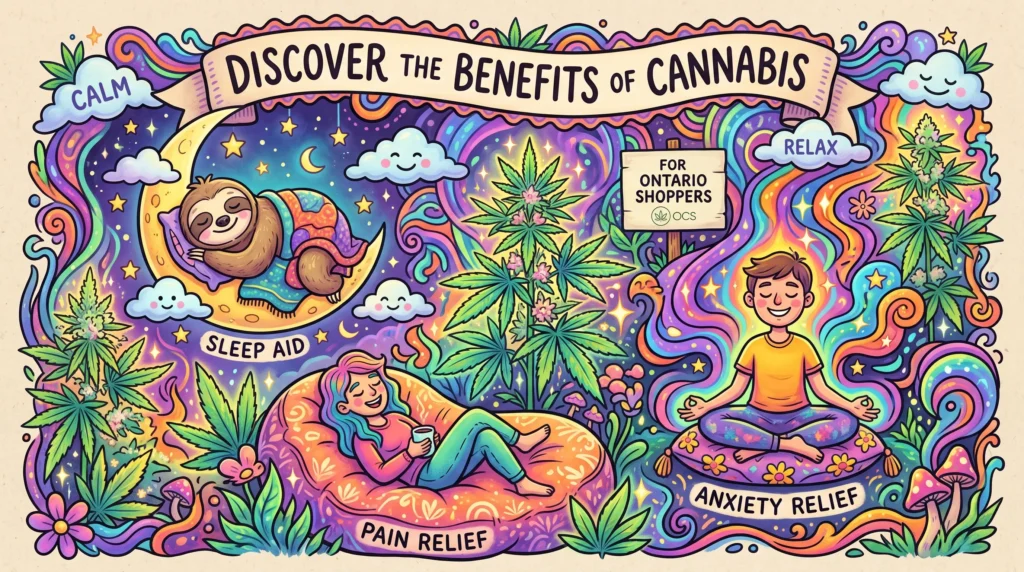
If you are one of the millions of Ontarians lying awake at 3 a.m. staring at the ceiling, or if you find yourself rubbing a sore shoulder after a long shift, you have likely considered the potential of cannabis. The stigma is fading, the science is growing, and the shelves of the Ontario Cannabis Store (OCS) and licensed retailers are stocked.
But with such a vast selection—tinctures, oils, vapes, flowers, and edibles—the process can feel overwhelming.
This guide is designed to cut through the noise. We are going to look specifically at how cannabis, and particularly CBD (cannabidiol) and CBN (cannabinol), interacts with the body to manage sleep, chronic pain, and anxiety. We will provide you with the knowledge you need to make an informed purchase in the Ontario legal market, ensuring you buy safe, tested products that actually suit your goals.
The Science of Cannabinoids: More Than Just THC
When most people think of cannabis, they think of THC (tetrahydrocannabinol), the psychoactive compound that produces the “high.” While THC has therapeutic value, the non-intoxicating compounds are often more relevant for those seeking relief without impairment.
CBD: The Balancer
CBD does not get you high. Instead, it interacts with the body’s Endocannabinoid System (ECS), a complex network of receptors that helps regulate homeostasis—keeping your body in balance. This system influences mood, pain signaling, sleep cycles, and immune response. By supporting the ECS, CBD can act as a “dimmer switch” on overactive nerve signals, which is why it is frequently used for CBD for anxiety and depression and inflammatory pain.
CBN: The Sleepy Cannabinoid
If you are specifically looking for sedation, you should look beyond CBD. CBN (cannabinol) is a minor cannabinoid that forms when THC degrades over time. Anecdotal evidence and early research suggest that CBN possesses mild psychoactive properties but strong sedative effects. Many of the best sleep oils in Canada now combine CBD with a touch of CBN to induce a deep, restorative rest without the intense “stoned” feeling of high-THC products.
The Entourage Effect
You will often hear the term “full spectrum.” This refers to extracts that retain all the minor cannabinoids, terpenes (aromatic oils), and flavonoids from the plant. These compounds work together synergistically—a phenomenon known as the “entourage effect.” Many experts argue that Best CBD full spectrum Canada products are more effective than “isolates” because the compounds amplify each other’s therapeutic properties.
Cannabis for Sleep: Finding the Right Strain and Product
Sleep is the foundation of health, yet stress and screen time often rob us of it. In Ontario, sleep aids are one of the top reasons people visit cannabis retailers.
The Problem with High THC
A common misconception is that “more THC equals better sleep.” While THC can reduce the time it takes to fall asleep (sleep onset latency), high doses actually suppress REM sleep—the dreaming stage crucial for cognitive function and emotional processing. You might sleep through the night, but you wake up feeling groggy and unrested.
The Better Approach: CBN and Indica Terpenes
For a true night’s rest, look for oils or edibles that feature:
- CBN: As mentioned, this is the heavy-lifting sleep aid.
- Myrcene: A terpene found in mangoes and hops; it is known for its “couch-lock” sedative properties. It is the dominant terpene in many “Indica” strains.
- Linalool: A floral terpene (found in lavender) that reduces anxiety and promotes calmness.
When searching for the Best CBD oil for sleep Canada, prioritize products that are “full spectrum” and list either CBN content or high levels of Myrcene. These products are designed to quiet the racing mind without disrupting your sleep architecture.
🔥 Stack your savings. Elevate your session. 10% off $100, up to 25% off $450.
🔥 Roll into the menu and start saving. CLICK HERE!
Cannabis for Pain Management
Chronic pain is debilitating, and many Ontarians are looking to move away from over-the-counter anti-inflammatories (NSAIDs) or prescription opioids. Cannabis offers a promising alternative for specific types of pain.
Neuropathic vs. Inflammatory Pain
Cannabis is particularly effective for neuropathic pain (nerve pain, sciatica, fibromyalgia) which often responds poorly to traditional painkillers. CBD and THC both desensitize the pain receptors (TRPV1) involved in this signaling.
For inflammatory pain (arthritis, muscle soreness), CBD is a powerhouse. It is a potent anti-inflammatory, reducing the swelling that causes the pain in the first place.
Application Methods
- Topicals: Creams and balms applied directly to the skin. These are excellent for localized joint pain (e.g., a sore knee). They do not enter the bloodstream, so they will not make you feel high, even if they contain THC.
- Oils/Tinctures: Best for systemic, full-body relief. The Strongest CBD oil Canada is usually a high-potency tincture (e.g., 2000mg to 4000mg per bottle) used sublingually (under the tongue) for fast absorption.
Cannabis for Anxiety: Dosing is Everything
Anxiety is where cannabis becomes a double-edged sword. A little can calm you down; too much can trigger paranoia and panic.
The “Goldilocks” Zone
For anxiety relief, especially social anxiety or generalized anxiety disorder (GAD), low to moderate doses of CBD are the safest and most effective route. CBD increases signaling at serotonin receptors (similar to how some antidepressants work) and reduces blood flow to the amygdala (the brain’s fear center).
Microdosing THC
If you want to include THC for anxiety, “microdosing” is the strategy. This involves taking a very small amount (e.g., 1mg to 2.5mg) that is just enough to engage the endocannabinoid system but not enough to cause impairment or racing thoughts. Products like balanced oils (1:1 THC to CBD) are excellent for this, as the CBD buffers the psychoactive effects of the THC.
Warning: Avoid high-THC “sativa” strains if you are prone to anxiety. These often contain high levels of terpenes like Limonene or Pinene which, while energizing for some, can increase heart rate and exacerbate panic in others.
How to Choose a Product in Ontario
When you decide to buy CBD in Canada or purchase THC products, you must navigate the legal framework. Ontario has a robust system of regulation through the OCS and Authorized Retailers.
1. Decide on the Format
- Oils: Best for accurate dosing and long-lasting effects (4-6 hours).
- Edibles/Gummies: Convenient and discreet, but onset takes 45-90 minutes. Do not “double dose” if you don’t feel it right away.
- Vapes: Fastest onset (minutes), ideal for acute anxiety or sudden pain spikes, but shorter duration.
- Flower: The traditional method. Offers the full entourage effect but is harsh on the lungs.
2. Read the Certificate of Analysis (COA)
This is the most important step. In Ontario, legal products must be tested. The label will show:
- THC/CBD Content: Usually in mg/g or mg/unit.
- Terpene Profile: Look for the terpenes matching your goal (Myrcene for sleep, Caryophyllene for pain, etc.).
3. Finding the Best Value
The Best CBD oil in Canada is not necessarily the most expensive. It is the one that offers the highest bioavailability and the right concentration. Look for oils that list the “Carrier Oil” (MCT oil is preferred for absorption). If you are looking for where to buy CBD in Canada, always prioritize Licensed Producers (LPs) over unregulated “grey market” shops. Licensed producers are subject to Health Canada testing for pesticides, mold, and heavy metals.
Conclusion
Cannabis is not a magic bullet, but it is a remarkably versatile tool for the wellness arsenal of any Ontario resident. Whether you are grappling with chronic pain, crippling anxiety, or frustrating insomnia, there is a formulation that can likely help.
The key is to start low and go slow. Begin with a CBD-dominant or balanced product, understand your terpenes, and always purchase from the legal market to ensure safety and potency. By treating cannabis with the same respect you would give any pharmaceutical, you can unlock its therapeutic potential safely and effectively.
🔥 Stack your savings. Elevate your session. 10% off $100, up to 25% off $450.
🔥 Roll into the menu and start saving. CLICK HERE!
Frequently Asked Questions (FAQ)
1. What is the best CBD oil for sleep in Canada?
The best sleep oils usually contain a combination of full-spectrum CBD and CBN (cannabinol). Look for products that include the terpene Myrcene, which promotes sedation. Oils are often preferred over gummies for sleep because the effects last longer through the night.
2. Can I buy CBD without a prescription in Ontario?
Yes. You do not need a medical document or prescription to buy CBD in Ontario. You can purchase it legally as long as you are 19 years of age or older, either online through the OCS or at a licensed Authorized Cannabis Retailer.
3. Will CBD get me high?
No. CBD is non-intoxicating. If you buy a product that is strictly CBD isolate or broad-spectrum (with THC removed), you will not experience a psychoactive “high.” You may feel a sense of relaxation and calm.
4. How long does it take for CBD oil to work for anxiety?
If taken sublingually (dropped under the tongue and held for 60-90 seconds), effects can typically be felt within 15 to 30 minutes. If swallowed immediately, it goes through the digestive tract and may take 45 to 90 minutes to kick in, similar to an edible.
5. Is it legal to drive after taking CBD oil?
While CBD is not intoxicating, even trace amounts of THC (0.3% or less in full-spectrum oils) could potentially show up on a roadside oral fluid test. However, impairment is the key factor. If you feel sleepy, dizzy, or impaired in any way, do not drive. For those concerned about trace THC, choose “Broad Spectrum” or “Isolate” CBD products.
6. What is the difference between Full Spectrum and Isolate?
Full Spectrum contains all the plant’s compounds including terpenes and trace amounts of THC (under 0.3%). This offers the “entourage effect.” Isolate is 99% pure CBD with no other compounds. Full spectrum is generally considered more effective for pain and sleep, while isolate is safer for those who must avoid THC entirely.
7. Can I use cannabis for pain if I take other medications?
Cannabis, specifically CBD, can interact with the liver enzyme CYP450, which metabolizes many pharmaceuticals (including blood thinners and some antidepressants). You must consult with a healthcare provider or pharmacist to ensure there are no adverse interactions.