
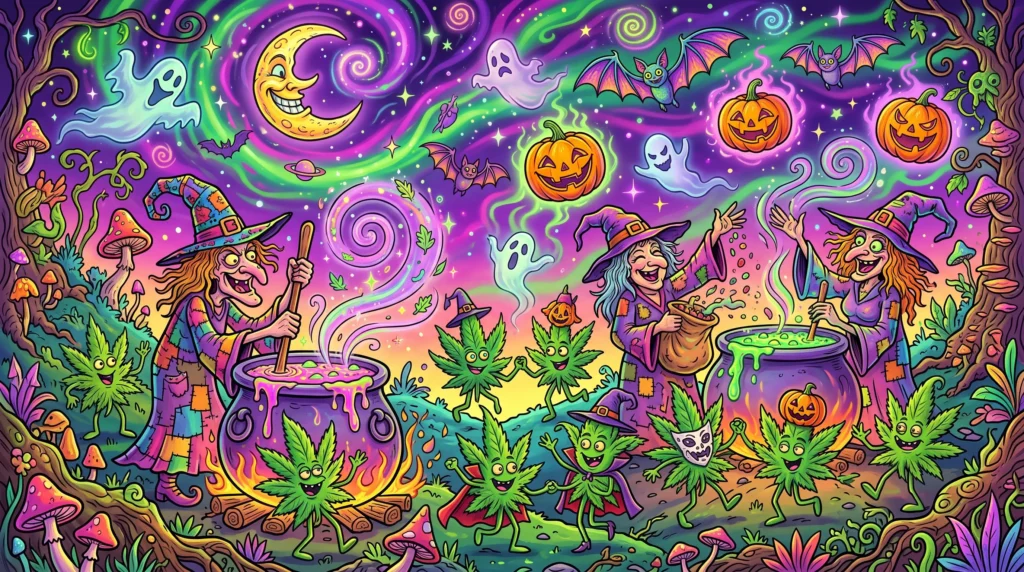
Quick answer: Halloween and cannabis are linked less by ancient ritual than by shared cultural symbols: autumn thresholds, herbal folklore, outsider medicine, rebellion, stigma, and modern seasonal marketing. Today, that overlap often appears as Weedoween, a playful label for cannabis-themed Halloween parties, products, and promotions in legal markets.
October 31 has a strange habit of mixing the sacred, the silly, and the suspicious. Porches fill with orange light. Black cats perch on windowsills. Witch hats lean beside plastic skeletons. In places where adult cannabis use is legal, another image joins the season: green leaves, themed jars, dispensary flyers, and adult-only parties that borrow Halloween’s masks and mischief.
At first glance, the pairing feels forced. Halloween is a holiday of costumes, candy, and ghosts. Cannabis is a plant with a complicated legal history, medical uses, recreational culture, and persistent stigma. Yet the two have brushed against each other for longer than most people realize—not because medieval villagers were passing joints around bonfires, but because both occupy a cultural zone where society asks: What is forbidden, what is medicinal, what is magical, and who gets to decide?
This article explains the real connection between Halloween and cannabis, separates folklore from marketing, defines weedoween in context, and offers practical guidance for exploring the topic responsibly.
🔥REFER A FRIEND
THEY GET 10% OFF THEIR FIRST ORDER🔥
What Is the Historical Connection Between Halloween and Cannabis?
The connection is indirect but understandable: Halloween grew from autumn rituals about thresholds and spirits, while cannabis moved through Western culture as fiber, medicine, prohibition target, and counterculture symbol.
Halloween’s deepest roots are usually traced to Samhain, a Gaelic festival marking the end of harvest and the approach of winter. In folk belief, the boundary between the living world and the spirit world grew thin. People lit fires, wore disguises, left offerings, and told stories designed to manage uncertainty. Later, Christian tradition placed All Hallows’ Eve before All Saints’ Day, blending older seasonal customs with religious observance.
Cannabis did not sit at the center of Samhain. That claim is too tidy, and probably wrong. Ancient and medieval Europeans used cannabis mainly for fiber, seed oil, and occasional medicinal preparations. The plant was useful, not mystical in the way Halloween marketing might suggest. Still, autumn was a season of herb gathering, drying, charms, and folk healing. Plants carried practical power—and suspicion.
When Irish and Scottish immigrants brought Halloween customs to North America in the 19th century, the holiday slowly changed. Victorian spiritualism, costume parties, and community gatherings gave Halloween a theatrical edge. By the 20th century, it had become a broadly secular night of fear, fun, and candy.
Cannabis followed a different path. In the 1800s, cannabis preparations appeared in Western pharmacies. Physicians used extracts for pain, spasms, insomnia, and nervous conditions. Then prohibition reframed the plant as dangerous, foreign, and morally threatening. The 1937 Marihuana Tax Act in the United States did not simply regulate cannabis; it helped create a cultural mythology around it. Cannabis became associated with jazz clubs, rebel youth, hidden dens, and social panic.
That is where the strange link begins to feel less strange. Halloween had already become the annual night when normal rules softened. People wore masks. Children demanded treats with a wink of threat. Adults tolerated spooky transgression. Cannabis, once criminalized, acquired its own transgressive aura. Both became symbols of the borderline: not fully respectable, not entirely evil, always commercially useful.
Table: How Halloween and Cannabis Converged Over Time
| Era | Halloween Context | Cannabis Context | Modern Takeaway |
|---|---|---|---|
| Gaelic/medieval Europe | Samhain and All Hallows’ Eve emphasized thinning boundaries, spirits, and seasonal uncertainty | Cannabis used for fiber, seed, and limited folk medicine | Shared autumn plant culture, but no direct ritual link |
| 18th–19th century America | Halloween spread through immigrant customs and Victorian entertainment | Hemp was economically important; cannabis appeared in pharmacies | The plant was familiar, but not yet a counterculture icon |
| Early 20th century | Halloween became more community-centered and commercial | Prohibition turned cannabis into a scandalized substance | Both began absorbing moral panic and spectacle |
| 1960s–1990s | Horror films, costumes, and subversive play expanded | Counterculture embraced cannabis as rebellion | Shared identity as “outside” culture |
| Legalization era | Retailers use seasonal themes and adult events | Dispensaries market Halloween products and parties | Weedoween becomes a branding and community phenomenon |
Why Do Witches and Weed Share the Same Cultural Shelf?
They share that shelf because both have been treated as suspicious plant knowledge, outsider medicine, and seasonal rebellion against respectable order.
Witches, in popular imagination, are not merely villains. They are healers, hedge riders, kitchen alchemists, and inconvenient women. Historically, many people accused of witchcraft were connected to herbalism, midwifery, fortune telling, or local disputes over health and luck. Their “power” often looked like practical knowledge held outside official institutions.
Cannabis occupies a similar symbolic space. It has been called medicine, drug, weed, fiber crop, gateway, sacrament, nuisance, and cash crop—sometimes in the same decade. Its meaning changes depending on who is speaking: a farmer, a doctor, a prohibition agent, a bohemian poet, a dispensary owner, or a concerned parent.
This is why witches and weed fit together so easily in modern visuals. Both are associated with:
- Plants with potency
- Knowledge that outsiders control
- Stigma from authorities
- Reclamation by subcultures
- Commercial repackaging
- Seasonal or ritual framing
A witch’s cauldron and a cannabis edible package both promise transformation. One turns herbs into potion; the other turns flower into brownie. The metaphor is not historically precise, but it is culturally sticky.
Expert Insight: Historians of magic and medicine usually warn against collapsing all “witch plants” into one story. Some speculative theories connect flying ointments to tropane alkaloids such as belladonna, henbane, or datura. Cannabis may appear in modern occult aesthetics, but old trial records do not support the idea that European witches routinely used marijuana as part of flight rituals.
That nuance matters. The link between witches and weed is stronger in symbolism than in documented practice. Still, symbols shape behavior. They influence product design, party themes, memes, and consumer expectations.
How Did Prohibition and Counterculture Reshape the Link?
Prohibition pushed cannabis out of polite medicine and into outlaw symbolism, while counterculture artists borrowed Halloween’s masks, monsters, and irony to critique authority.
Before the 20th century, cannabis had a complicated but relatively visible role in Western commerce and health. It was not universally loved, but it was not yet a cartoon villain. Then came organized prohibition. Public campaigns linked cannabis to racialized fear, immigration panic, and moral decline. The plant became a stand-in for everything authorities claimed was corrupting the social order.
Halloween, meanwhile, was becoming more domesticated. Cities tried to tame pranks. Families bought candy. Schools hosted dances. Horror became entertainment rather than genuine spiritual anxiety. Yet Halloween never fully lost its edge. It remained the one night when socially acceptable people could enjoy being grotesque, childish, or uncanny.
The 1960s and 1970s brought the paths closer. Counterculture movements rejected buttoned-up conformity. They embraced psychedelic art, folk magic, anti-authority humor, and botanical curiosity. Cannabis became part of that rebellion. Halloween became part of the same theatrical landscape: costumes, subversion, parody, and the celebration of the怪 weird.
This does not mean cannabis caused Halloween, or vice versa. It means both became useful containers for cultural tension. One offered seasonal permission to be frightening. The other offered ideological permission to be illegal—or at least unofficial.
Pro Tip: When evaluating claims about “ancient cannabis magic,” ask what evidence exists. Folklore, pharmacology, legal history, and marketing are four different things. A strong article keeps them separate.
What Is Weedoween and Why Does It Matter?
Weedoween is a playful portmanteau combining “weed” and “Halloween,” used to describe cannabis-themed Halloween parties, products, memes, and retail promotions, especially in legal adult-use markets.
If you search weedoween, results tend to split into three categories: jokes, event listings, and branded content. Some are harmless puns. Others reflect a real commercial trend. As cannabis legalization expands, retailers look for calendar moments that align with adult consumption, gifting, and community events. Halloween works well because it already encourages costumes, themed food, nighttime socializing, and limited-edition products.
🔥 Stack your savings. Elevate your session. 10% off $100, up to 25% off $450.
🔥 Roll into the menu and start saving. CLICK HERE!
Weedoween matters for three reasons.
First, it shows normalization. Cannabis is no longer only a counterculture symbol. It is a regulated consumer category with marketing departments, loyalty programs, and seasonal merchandising.
Second, it reveals tension. Halloween has a large child audience. Cannabis is for adults. Blending the two requires careful boundaries. A dispensary event that feels like a family trick-or-treat route creates legal and ethical problems.
Third, it creates educational opportunity. Responsible Weedoween promotions can include age verification, consumption guidance, impaired-driving warnings, and clear labeling. Done poorly, the same trend can encourage overconsumption or accidental exposure.
What Weedoween Usually Includes
- Adult-only cannabis social events
- Costume contests with spooky or stoner themes
- Limited-edition packaged products
- Themed pre-rolls, vapes, edibles, or topicals where legal
- Dispensary workshops on cannabinoids, terpenes, or responsible use
- Social media memes blending jack-o’-lanterns and cannabis leaves
None of this is inherently sinister. Seasonal marketing is how many consumer categories operate. But cannabis carries higher safety stakes than pumpkin spice lattes. The product can impair judgment. It can be mistaken for candy. It can interact with medications. It can affect developing brains.
Expert Insight: In mature legal markets, compliance teams often treat Halloween as a high-risk promotional window. The concern is not simply whether adults can buy cannabis. The concern is whether packaging, placement, sampling, and event design keep minors away and prevent confused consumption.
How Can Readers Explore the Halloween-Cannabis Link Responsibly?
Readers can explore it responsibly by separating folklore from fact, obeying local law, choosing adult-only settings, and treating cannabis like any regulated psychoactive substance.
This topic sits at the intersection of history, pop culture, retail, and public health. That means curiosity is fine, but carelessness is not. If you want to engage with Weedoween culture—whether as a consumer, writer, marketer, or party host—use a framework that protects people and respects the law.
Step-by-Step Guide
- Check your local laws first.
Cannabis rules vary by country, state, province, and municipality. Adult-use legality does not guarantee public consumption, home delivery, event hosting, or driving-after-use permissions. - Separate myth from marketing.
Not every green leaf beside a witch hat represents ancient tradition. Some imagery is simply brand design. Enjoy the aesthetic without mistaking it for history. - Choose adult-only environments.
If attending or hosting a Weedoween event, verify age restrictions. Keep cannabis products away from minors, including teenage guests who may appear “mature” but are still legally protected. - Use labeled, regulated products where legal.
In regulated markets, packaging should show THC/CBD content, batch testing, ingredients, and dosing information. Avoid unlicensed products, especially edibles that resemble candy. - Start low and wait.
Edibles can take longer to produce effects than smoked or vaporized cannabis. Impatience increases the risk of overconsumption. Follow package directions and avoid mixing with alcohol. - Never drive after using cannabis.
Halloween night already brings more pedestrians, costumed drivers, and distracted traffic. Impairment raises the danger for everyone. - Secure products around children and pets.
Gummies, chocolates, baked goods, and liquids can be attractive. Store them in original child-resistant packaging and out of sight. - Respect cultural history.
Halloween’s roots include Gaelic, Christian, and immigrant traditions. Reducing them to stoner jokes flattens a rich cultural story.
Case Study: A Compliance-First Halloween Activation
Imagine a licensed dispensary in an adult-use market planning a late-October event. Instead of handing out candy-like samples, the team designs an adult-only evening with wristband age verification, clear signage, and no open consumption near entrances. Products on display use matte black and orange packaging, not cartoon characters. Staff explain THC limits, recommend transportation options, and keep edibles sealed behind counters.
The business still benefits from seasonal traffic. Customers enjoy costumes, educational booths, and limited releases. But the event avoids the biggest risks: youth exposure, confusing packaging, and impaired driving. This is what responsible Weedoween looks like when commerce meets public safety.
🔥REFER A FRIEND
THEY GET 10% OFF THEIR FIRST ORDER🔥
What Misconceptions Distort the Halloween-Cannabis Story?
The biggest misconceptions arise when people confuse symbolic overlap with historical proof, or assume that legalization makes cannabis harmless.
Several false ideas circulate easily:
- “Witches used cannabis to fly.”
There is little evidence for this in early modern witch trial records. Speculative theories more often involve belladonna, henbane, mandrake, or datura. - “Halloween was originally a cannabis holiday.”
No. Samhain and All Hallows’ Eve were not built around marijuana. The link is modern and cultural. - “Hemp and marijuana are the same thing, so historical hemp use proves cannabis ritual.”
Hemp and marijuana refer to cannabis plants with different legal and chemical contexts. Historical fiber use does not equal psychoactive celebration. - “Legal cannabis means safe for everyone.”
Legality reduces some harms, such as untested products and criminal exposure, but does not remove impairment, dependency risk, youth vulnerability, or drug interactions. - “Weedoween is just a meme.”
It is also a market signal. Memes shape consumer expectations, and consumer expectations shape retail behavior.
Accuracy matters here because the topic touches real policy, real health decisions, and real children. A playful holiday comparison becomes irresponsible if it encourages careless consumption or erases legal boundaries.
What Should You Remember About Halloween and Cannabis?
The lasting takeaway is simple: Halloween and cannabis meet at the crossroads of threshold culture, plant symbolism, social rebellion, and seasonal commerce.
Halloween gives societies an annual excuse to explore fear, disguise, and inversion. Cannabis gives societies an ongoing argument about medicine, pleasure, prohibition, and personal freedom. When those themes collide, the result is not ancient mystery. It is modern meaning-making.
Weedoween is not proof that witches smoked joints. It is evidence that legal cannabis culture has found a holiday already comfortable with masks, mischief, and moral ambiguity. That makes it fascinating. It also makes it worth handling with eyes open.
Next steps: If the topic interests you, read one credible source on Samhain, one on cannabis prohibition history, and your local adult-use regulations. If you plan to celebrate, keep the event adult-only, label everything clearly, and make safety part of the costume.
🔥 Stack your savings. Elevate your session. 10% off $100, up to 25% off $450.
🔥 Roll into the menu and start saving. CLICK HERE!
FAQ Section
Did witches actually use cannabis?
Most historical evidence does not support routine cannabis use in European witchcraft. Accused cunning folk used many herbs, and some flying-ointment theories involve belladonna or henbane. Cannabis may appear in modern occult symbolism, but old trial records rarely center it.
Is Weedoween a real thing?
Yes. Weedoween blends “weed” and “Halloween.” It describes cannabis-themed parties, dispensary promotions, costumes, memes, and seasonal products in legal markets. The term is informal, but its commercial use is real enough to raise age-gating, labeling, and public-consumption questions.
Why are plants linked to Halloween magic?
Autumn was a time of harvest, decay, and preparation for winter. Folk communities gathered herbs, made charms, and told stories about spirits crossing thresholds. Plants symbolized hidden knowledge, healing, and danger, which later merged with witch and monster imagery.
Can I celebrate Weedoween legally?
It depends where you live. Adult-use laws may allow private consumption, licensed events, and purchase from regulated retailers, but public use, impaired driving, and youth access remain restricted. Check local rules before hosting, attending, or buying cannabis-themed Halloween items.
Are cannabis edibles a Halloween safety concern?
Yes, especially around candy. Edibles can look festive, delay effects, and cause accidental ingestion by children or pets. Store them in original child-resistant packaging, label doses clearly, keep them separate from treats, and never drive after consuming.