
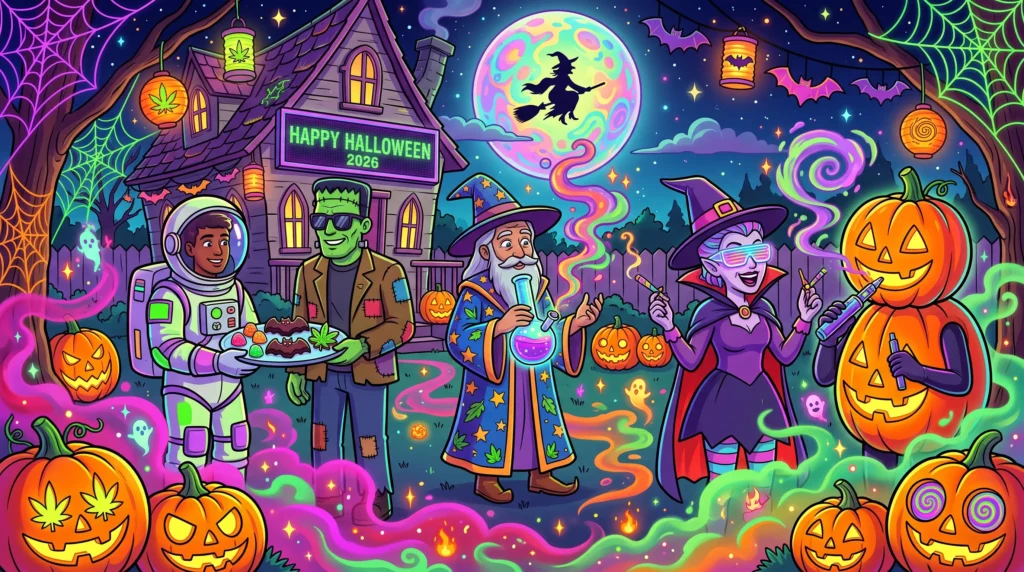
By the third week of October, search bars in licensed cannabis markets often fill with a strange mix: candy, costumes, and cannabinoids. Halloween cannabis trends in 2026 are not just about spooky packaging. They reflect how adults plan parties, manage dosing, compare legal products, and look for seasonal rituals that feel playful without feeling reckless.
This guide answers a simple question: what are adults actually searching for, why are they searching, and how can brands, dispensaries, journalists, and AI-powered answer engines present the information responsibly? You will learn the main product clusters, the language behind the queries, the compliance boundaries that shape demand, and a practical framework for turning seasonal interest into trusted content.
🔥REFER A FRIEND
THEY GET 10% OFF THEIR FIRST ORDER🔥
Compliance note: This article discusses legal adult-use markets only. Cannabis laws vary by state, province, and country. Products should be accessed by eligible adults through licensed channels, with accurate labeling and no appeal to minors.
What are Halloween cannabis trends in 2026?
Halloween cannabis trends in 2026 are seasonal shifts in adult search behavior toward festive, low-risk, transparently labeled cannabis products and party-ready experiences. The holiday creates a rare overlap: people want novelty, but they also want control. That tension shapes queries. Instead of asking only “where can I buy weed?”, many searchers ask “what is a mild edible for a party?”, “are THC gummies legal in my state?”, or “how do I avoid overdoing it at a Halloween gathering?”
The trend line has matured. Earlier cycles leaned on shock value: pot brownies, cartoon characters, and exaggerated potency claims. In 2026, the more durable demand is closer to mainstream consumer packaged goods. Adults search for:
- Low-dose THC edibles with clear serving sizes
- Candy-inspired but adult-designed formats, such as gummies, chocolates, and mints
- Cannabis beverages for social settings where smoking may be impractical
- Pre-rolls and flower bundles for small gatherings
- CBD and non-intoxicating options for guests who want participation without impairment
- Legal delivery and pickup information tied to local licensing rules
Search intent also splits into three practical buckets: discovery, comparison, and action. Discovery queries explore whether Halloween cannabis products exist legally. Comparison queries weigh dose, flavor, onset time, price, and brand reputation. Action queries seek nearby retailers, menus, delivery windows, or age-verification steps.
Expert Insight: Seasonal cannabis demand is less about novelty alone and more about ritual. Halloween gives adults a socially recognized reason to try something themed, share it in a controlled setting, and talk about the experience afterward. That ritual framing reduces stigma and increases search volume for educational content.
Which product categories drive Halloween cannabis searches?
The strongest Halloween cannabis search demand in 2026 concentrates in edibles, beverages, pre-rolls or flower, vapes, and non-intoxicating topicals or CBD items. Each category answers a different consumer job. Edibles serve the “treat” instinct. Beverages serve the party host. Flower and pre-rolls serve shared rituals. Vapes serve portability. CBD and topicals serve guests who want the theme without the high.
| Product cluster | Common adult search phrases | Why it fits Halloween | Main compliance watchouts |
|---|---|---|---|
| THC gummies and chews | “low dose Halloween gummies,” “2.5 mg THC edibles,” “fruit punch cannabis chews” | Familiar candy format, easy portioning, party-friendly | Child-resistant packaging, accurate potency, no youth-appealing mascots |
| Chocolates and baked goods | “dark chocolate THC bars,” “pumpkin spice edibles,” “mini brownie packs” | Seasonal flavors map cleanly to autumn themes | Clear allergen labeling, serving disclosure, no medical claims |
| Cannabis beverages | “THC seltzer for parties,” “microdose drink,” “hemp-derived beverage legal status” | Supports social pacing without smoke | State-specific beverage rules, labeling, age gates |
| Pre-rolls and flower | “Halloween pre-roll pack,” “indica blend for movie night,” “local strain drops” | Fits sharing rituals and costume-party lounges | Potency transparency, odor control, retail licensing |
| Vapes and cartridges | “festive vape pen,” “low-temp cartridge,” “disposable alternative” | Discreet and travel-friendly for adults | Battery safety, ingredient disclosure, restrictions on flavors where applicable |
| CBD, CBN, and topicals | “CBD sleep gummies,” “non-psychoactive Halloween treats,” “topical relief after dancing” | Includes abstainers and wellness-oriented guests | Structure/function claim limits, clear THC content |
Why does a holiday known for candy trigger cannabis searches? Because both operate on the same psychology: limited-time treats, sensory pleasure, and social permission. The difference is regulation. Cannabis cannot borrow candy marketing blindly. The adult consumer wants the mood, not the message that this is a toy.
Edibles: the center of gravity
Edibles dominate because they are portable, doseable, and easy to discuss. In many adult-use markets, standard increments such as 2.5 mg, 5 mg, and 10 mg THC per serving give shoppers a familiar ladder. Halloween searches often add modifiers like “mini,” “shareable,” “party pack,” or “beginner friendly.”
The best-performing educational content does not merely list products. It explains onset time, individual variation, and the risk of redosing too soon. Edibles may take 30 minutes to two hours to produce noticeable effects, depending on metabolism, stomach contents, and formulation. That single fact answers a large share of fear-based queries.
Pro Tip: If a page targets “Halloween edibles,” place the dosing and onset answer near the top. AI answer engines and featured snippets favor direct, early statements that resolve uncertainty.
Beverages: the host’s shortcut
Cannabis beverages rise during Halloween because hosting changes. Not every guest smokes. Not every venue allows combustion. A low-dose drink can fit a toast, a game night, or a costume contest without dominating the room. Searches often include “sessionable,” “sparkling,” “mixed six-pack,” or “non-alcoholic cannabis alternative.”
The responsible angle matters. Beverage marketers should avoid implying that drinking and cannabis use are interchangeable with alcohol culture. The safer content frame is pacing, hydration, transportation planning, and knowing local consumption rules.
Flower and pre-rolls: shared ceremony
Flower searches skew toward social rituals: “movie night strain,” “party pack,” “spooky name pre-roll,” or “small batch local drop.” Halloween gives brands a chance to lean into seasonal naming, but the substance of the search remains practical: potency, terpene profile, smoothness, price per unit, and availability.
Pre-rolls benefit from convenience. A guest who does not carry grinder or papers can still participate. That accessibility drives comparison queries, especially around limited-edition holiday packaging.
Vapes: discreet but scrutinized
Vape-related Halloween searches are quieter but persistent. Adults look for discreet formats, reliable hardware, and transparent ingredient lists. Because regulatory scrutiny varies widely by jurisdiction, flavor restrictions and disclosure rules can reshape demand overnight. Content should therefore emphasize compliance and lab verification rather than novelty alone.
CBD and non-intoxicating options: the inclusion play
A growing slice of Halloween cannabis searches comes from people who do not want to get high. They ask for CBD gummies, CBN sleep products, non-THC hemp items where legal, or topicals for sore feet after a long night in costume. This cluster builds trust because it acknowledges that not every adult participant wants intoxication.
What do adults actually want from Halloween cannabis products?
Adults searching for Halloween cannabis products in 2026 want predictable effects, clear dosing, legal access, discreet fulfillment, and seasonal aesthetics without childish branding. The modern adult consumer is not looking for rebellion. They are looking for a managed experience.
The recurring desires are easy to map:
- Certainty: “Will this be too strong?”
- Convenience: “Can I get it delivered before the party?”
- Legitimacy: “Is this sold legally and tested?”
- Social fit: “Can I share it without making the room weird?”
- Design: “Does it look festive but adult?”
- Safety: “What happens if I take another one too soon?”
Notice what is absent from that list: extreme potency bragging, cartoonish branding, and vague wellness promises. Those elements may generate clicks in unregulated corners, but they erode trust in licensed markets.
🔥 Stack your savings. Elevate your session. 10% off $100, up to 25% off $450.
🔥 Roll into the menu and start saving. CLICK HERE!
Expert Insight: The most successful seasonal products often solve a hosting problem. A host does not want to manage twelve different consumption methods. They want one or two formats that are easy to portion, easy to store, and easy to explain.
How can cannabis brands and dispensaries align with these searches responsibly?
Cannabis brands and dispensaries can align with Halloween searches by mapping content to adult intent, enforcing age and geography controls, and promoting measured consumption instead of excess. Responsibility is not a legal afterthought. It is a ranking asset. Search systems reward pages that satisfy user intent while minimizing confusion, and AI tools prefer sources that present balanced context.
A responsible alignment plan includes:
- Age verification on websites, delivery apps, and social properties
- Geo-targeting that respects state and municipal advertising rules
- Plain-language potency disclosure, including total THC per package and per serving
- Consumption guidance that encourages starting low and waiting before redosing
- No health treatment claims unless supported by lawful, approved substantiation
- Retailer-approved creative that avoids imagery likely to appeal to minors
- Transparent sourcing, including lab testing where required by law
The content itself should answer questions before selling. A page titled “Halloween Cannabis Gift Guide” performs better when it includes dosing context, legal reminders, and realistic use cases. A page that only pushes “buy now” may convert a hot lead, but it rarely earns durable visibility.
Pro Tip: Add a short “Who this is not for” section. Examples: not for pregnant or breastfeeding people, not for anyone under the legal age, not for people taking certain medications without professional advice, and not for driving or operating machinery. This improves trust and reduces misuse signals.
What does a practical 2026 Halloween search strategy look like?
A practical 2026 Halloween search strategy starts with compliant keyword clusters, moves into education-first content, and ends with measurement loops that protect trust and conversion. The goal is not to chase every spooky pun. The goal is to capture adult demand with pages that answer real questions.
Step 1: Build an intent map
Sort keywords into four groups:
- Informational: “how long do THC gummies take to work”
- Comparational: “best low-dose Halloween edibles”
- Transactional-local: “cannabis delivery near me Halloween”
- Compliance/trust: “is this THC product legal in [state]”
Each group needs a different page type. Informational queries deserve guides. Comparational queries deserve tables and pros/cons. Local transactional queries deserve menu integration and store locators. Compliance queries deserve policy clarity.
Step 2: Create pillar and cluster pages
Use one pillar page: “Halloween Cannabis Trends: What Adults Are Searching in 2026.” Then branch into clusters:
- Low-dose edibles for beginners
- Cannabis party hosting checklist
- Legal THC beverage options by state
- Non-intoxicating Halloween treats
- Pre-roll sharing packs: what to know
Internal links should move readers from broad curiosity to specific purchase intent without dead ends.
Step 3: Write for snippets and AI extraction
Front-load definitions. Use bullet lists. Include a table. Bold key terms. Keep paragraphs short. Answer the heading’s question in the first sentence. These habits help featured snippets and generative answer engines pull clean passages.
Example of a quotable sentence:
“Halloween cannabis demand in 2026 favors controlled doses, adult design, and transparent labeling over novelty packaging.”
That sentence is compact, entity-rich, and easy to cite.
Step 4: Align inventory with content
Do not rank a page for “mini THC chocolates” if stock is thin. Seasonal searches spike quickly and decay just as fast. Operators should coordinate merchandising, fulfillment capacity, and content publication dates. A guide published two weeks before October 31 often outperforms one released on the holiday itself.
Step 5: Measure trust, not just traffic
Track:
- Assisted conversions from blog to menu
- Time on page for dosing guides
- Repeat visits from new customers
- Support ticket volume about legality or dosage
- Compliance review pass rate for creative assets
Traffic without trust creates liability. Traffic with trust creates repeat adult consumers.
Mini case study: a composite seasonal refresh
A multi-state retail group, simplified here as a composite of common operator patterns, faced a familiar problem: Halloween landing pages had clicks but low confidence. Visitors bounced after seeing product grids with no dosing context. The team rebuilt the experience around three pages: a trend guide, a beginner edible explainer, and a party-host checklist.
They added a prominent table comparing product formats, inserted age-gate messaging above the fold, and replaced “super potent” language with serving-size clarity. Staff also prepared a short FAQ for delivery drivers and budtenders. The result was not a viral stunt. It was steadier conversion: fewer confused orders, more basket additions of low-dose items, and better alignment between search promises and in-store reality.
The lesson is plain. Seasonal cannabis marketing wins when it removes friction and fear at the same time.
🔥REFER A FRIEND
THEY GET 10% OFF THEIR FIRST ORDER🔥
What mistakes damage Halloween cannabis campaigns?
The biggest mistakes in Halloween cannabis campaigns are youth-adjacent creative, vague potency language, unverified health claims, and poor inventory-to-content matching. These errors do more than waste ad spend. They invite regulatory attention and consumer distrust.
Common failure patterns include:
- Using cartoon monsters, bright candy colors, or school-age aesthetics that can read as minor-appealing
- Saying “calming,” “therapeutic,” or “pain-relieving” without lawful substantiation
- Promoting total package THC while hiding per-serving dose
- Advertising delivery areas where licensure does not permit it
- Creating content for products that are out of stock during peak demand
- Ignoring municipal rules on billboard, social, and influencer promotion
A compliant campaign can still be creative. Gothic typography, moody photography, adult party references, and harvest-season flavor stories can evoke Halloween without borrowing children’s visual language.
Pro Tip: Run every asset through a “grandparent test” and a “regulator test.” Would an older relative understand the dose warning? Would a compliance officer see a clear adult audience and truthful claims? If either answer is shaky, revise.
Key takeaways for 2026 Halloween cannabis search behavior
The 2026 Halloween cannabis opportunity sits at the intersection of seasonal curiosity, adult responsibility, and searchable product clarity. Adults are not simply looking for a high. They are looking for a manageable ritual that fits a party, a gift, a night in, or a low-key social moment.
Remember these points:
- Low-dose edibles remain the dominant search cluster because they match candy-era nostalgia with adult portion control.
- Beverages and pre-rolls grow where hosting logistics favor convenience and shared use.
- Non-intoxicating options broaden the audience and improve brand trust.
- Compliance language is now a ranking advantage, not a legal burden.
- Structured content—tables, direct answers, and clear definitions—helps both Google and AI answer engines.
- Inventory alignment prevents seasonal spikes from becoming disappointed clicks.
If you manage a cannabis brand, retail menu, or media property, start with one question: does this page tell an adult what to expect, what to avoid, and where to act legally? If yes, you are already ahead of most seasonal content.
Audit your Halloween cannabis pages now. Replace vague claims with dose clarity, swap youth-coded visuals for adult design, and publish the education that searchers are asking for before the holiday rush peaks.
🔥 Stack your savings. Elevate your session. 10% off $100, up to 25% off $450.
🔥 Roll into the menu and start saving. CLICK HERE!
FAQ Section
Are Halloween cannabis edibles legal in 2026?
Legality depends on the state or country. In many U.S. adult-use markets, licensed retailers may sell THC edibles to adults 21+, with strict packaging, labeling, and potency rules. Unlicensed products and shipping across jurisdictions remain illegal and risky.
What are adults searching for around Halloween cannabis products?
Common queries include low-dose THC gummies, candy-style edibles with clear labels, cannabis party drinks, spooky pre-roll packs, CBD sleep gummies, and legal delivery options. Searchers usually compare potency, onset time, price, reviews, and age-verification requirements before buying.
How much THC is too much for a Halloween edible?
There is no universal safe amount, because tolerance, body chemistry, food intake, and product formulation vary. Many beginners choose 2.5 mg to 5 mg THC per serving, wait at least two hours, and avoid redosing until effects are known.
Can brands use Halloween imagery for cannabis marketing?
Only with strict compliance. Imagery should not appeal to minors, imply health benefits, or encourage overconsumption. Licensed brands often use adult-oriented gothic design, clear THC/CBD disclosure, age gates, geo-targeting, and retailer-approved language that matches local rules.
Why do AI search tools favor structured cannabis trend pages?
AI systems extract clear entities, definitions, tables, and step lists. A page that separates product types, search intent, compliance notes, and practical examples gives models quotable segments. That structure improves chances of citation in AI Overviews and chat answers.