
The global legal cannabis market is undergoing a seismic transformation, evolving from a niche sector into a mainstream economic powerhouse driven by shifting consumer preferences, major regulatory changes, and relentless product innovation. This comprehensive analysis reveals the key forces reshaping the industry:
- Market Growth Trajectory: The global legal marijuana market is projected to reach between $102.2 billion and $212.39 billion by 2030-2035, growing at a compound annual growth rate (CAGR) of 19.4% to 25.4% .
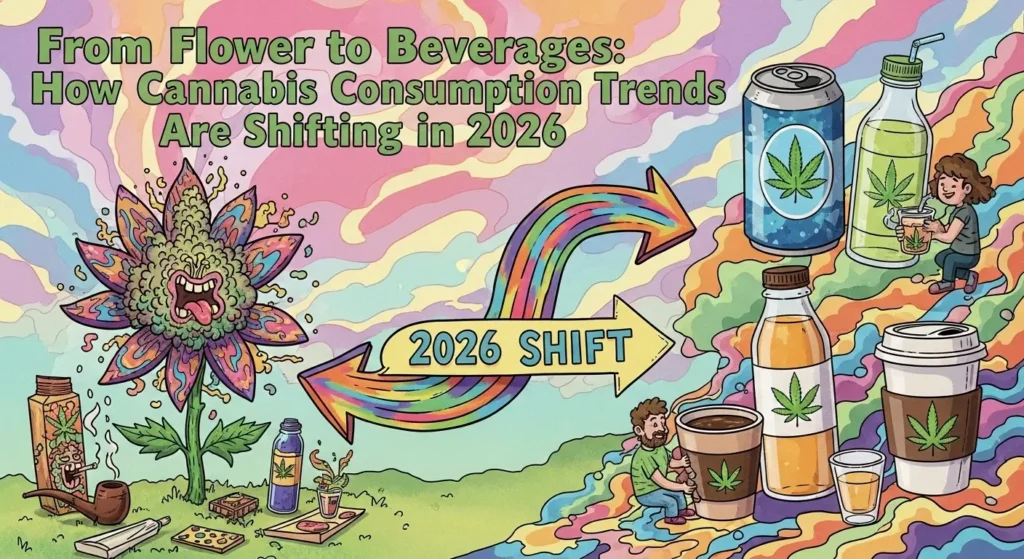
- Consumption Shift: While traditional flower and pre-rolls maintain market dominance (over 50% share), the fastest growth is in cannabis beverages, oils, and edibles, fueled by health-conscious consumers and the “sober-curious” movement .
- Demographic Evolution: Consumption is surging among new demographics, including older adults (up 46% from 2021-2023), women (over 1 in 3 consume), and high-income professionals .
- Regulatory Tipping Point: Landmark changes like the 2025 U.S. federal rescheduling and Germany’s 2024 adult-use legalization are stabilizing markets and attracting institutional investment .
- Medical Market Leadership: Medical applications dominate revenue (71%-81% share), but adult-use segments are growing fastest as legalization expands .
Introduction: The End of the “Stoner” Stereotype
Gone are the days when cannabis consumption was synonymous with counterculture. In 2026, the cannabis industry represents one of the world’s fastest-growing economic sectors, where Wall Street investors, Silicon Valley biohackers, and grandmothers managing arthritis pain are equally likely to be consumers. The market has matured beyond simple flower products into a sophisticated landscape of pharmaceutical-grade medicines, wellness beverages, and “function-first” formulations.
What’s driving this extraordinary transformation? A powerful convergence of regulatory normalization, scientific validation, and consumer demand for alternatives to alcohol and pharmaceuticals. With the legal cannabis market projected to surpass $100 billion before 2030 and potentially reach $212 billion by 2035, understanding these shifts isn’t just academic—it’s essential for anyone involved in healthcare, consumer goods, or investment . Let’s explore how cannabis consumption trends are fundamentally reshaping markets, products, and consumer behavior in 2026.
Section 1: The State of the Global Cannabis Market in 2026
1.1 Market Size, Value, and Explosive Growth Projections
The cannabis sector has transitioned from underground to mainstream with staggering velocity. Recent analyses present a consistent picture of explosive growth:
- Current Market Valuation: The global legal cannabis market was valued at approximately $38.7 billion in 2025, with expectations to reach $36.0-$47.0 billion in 2026 .
- Future Projections: Cannabis market projections indicate the sector will expand to between $102.2 billion (by 2030) and $212.39 billion (by 2035), representing a compound annual growth rate (CAGR) of 19.4% to 25.4% .
- Regional Leadership: North America dominates, accounting for 68%-76% of the global market share, driven by the U.S. where the industry is expected to reach nearly $47 billion in 2026 alone . Europe represents the fastest-growing region, with Germany’s 2024 adult-use legalization creating a market expected to surpass $944 million in sales .
What does this growth mean for investors and entrepreneurs? The cannabis industry growth chart shows not just expansion but maturation, with the market shifting from speculative ventures to established businesses with sustainable models.
1.2 Key Drivers: Regulation, Investment, and Consumer Acceptance
Several interconnected factors are propelling this unprecedented expansion:
Regulatory Normalization
- U.S. Federal Rescheduling: The 2025 executive order to move cannabis to Schedule III represents the most significant federal policy shift in decades, promising relief from the crippling 280E tax provision that has historically prevented profitability .
- Global Legalization Wave: 24 U.S. states have legalized adult-use cannabis, while 40 states allow medical use . In Europe, Germany, Malta, Luxembourg, and the Czech Republic have legalized adult-use, with medical programs active in at least 28 EU countries .
- Economic Rationalization: Governments increasingly recognize cannabis as a revenue source. In 2025, cannabis tax revenue in the U.S. reached $25 billion—nearly double that of alcohol—while the industry added approximately $149 billion to the economy .
Investment and Institutional Capital
- Mainstream Financial Interest: As regulatory uncertainty decreases, institutional investors are entering the space. Europe, with its “fully legal framework,” is particularly attractive to private equity, with firms like Artemis Growth Partners raising hundreds of millions specifically for European cannabis investments .
- Corporate Consolidation: The market is characterized by increasing merger and acquisition activity as major players like Canopy Growth, Curaleaf, and Tilray expand their footprints through strategic acquisitions .
Unprecedented Consumer Acceptance
- Record Support: 87% of Americans now support legalization of recreational and/or medical marijuana, representing a seismic shift in public opinion .
- Normalization of Use: 47% of Americans have tried cannabis, with 15% identifying as current users. For the first time in history, there are more daily cannabis users than daily alcohol drinkers .
Section 2: The Changing Cannabis Consumer: Who’s Consuming and Why
2.1 Demographic Shifts: Beyond Young Male Consumers
The stereotypical cannabis consumer has been permanently replaced by a diverse demographic profile:
The Rise of Older Consumers
- Cannabis use among adults 65+ surged nearly 46% from 2021 to 2023, with 7% reporting past-month use .
- This demographic increasingly consists of college-educated, married individuals with higher incomes using cannabis for pain management, sleep, and quality of life enhancement .
Women as a Dominant Consumer Segment
- More than 1 in 3 American women now consume cannabis, surpassing men of the same age for the first time in 2023 .
- Consumption patterns differ significantly: while 27% of men prefer flower, only 19% of women do. Women show stronger preference for alternative products like topicals, edibles, tinctures, and beverages .
Generation Z and Millennials: The Tech-Savvy Consumers
- Younger consumers (Gen Z and Millennials) dominate vapor pen sales, preferring familiar consumption methods and discretion .
- This demographic is driving the “sober-curious” movement, with 34% of 21-24-year-olds replacing alcohol with cannabis during initiatives like Dry January .
2.2 Consumption Motivations: From Recreation to Wellness and Function
*What are people actually using cannabis for in 2026? The answers reveal a fundamental shift toward intentional, benefit-driven consumption.*
Wellness and Medical Applications Dominate
- Relaxation and Mental Health: 64% of consumers use cannabis for relaxation, while 52% use it to reduce anxiety .
- Pain Management: 48% of consumers turn to cannabis for pain relief, with studies showing 45% of patients experience clinically meaningful improvements in pain interference .
- Sleep Enhancement: 16% of adults use cannabis as a sleep aid, surpassing both prescription sleep aids (12%) and alcohol (11%) for this purpose .
Performance and “Function-First” Use Cases
A surprising 14% of consumers now use cannabis in relation to exercise:
- 47% say it helps with pre-workout motivation
- 56% use it for greater relaxation and enjoyment during workouts
- 47% believe it aids post-workout recovery
Replacement for Alcohol and Pharmaceuticals
- 62% of consumers choose cannabis over alcohol when given the choice
- 57% have replaced some drinking with cannabis
- Among medical users, 51% have replaced at least some prescription medications with cannabis
Section 3: Product Evolution: From Flower Dominance to Diverse Formats
3.1 The Changing Product Landscape
The cannabis inventory on dispensary shelves in 2026 looks dramatically different than it did just five years ago. While flower maintains its market leadership, its dominance is gradually yielding to innovative formats.
Current Market Share by Product Type
- Flower and Pre-Rolls: Still command over 50% of market share globally, with pre-roll sales increasing 12% year-over-year to over $4.1 billion .
- Oils and Tinctures: Represent the largest revenue share in some markets and are projected to grow fastest, particularly for medical applications .
- Edibles and Beverages: Though starting from a smaller base (beverages at ~1% dollar share), these categories show explosive growth, with beverages increasing 15% year-over-year in Q1 2025 .
3.2 The Beverage Revolution: Cannabis as a Social and Wellness Product
Why are cannabis beverages closing in on pre-rolls as the industry’s growth champion? The answer lies in changing social habits and health consciousness.
Explosive Growth Metrics
- Beverage sales reached $54.6 million in Q1 2025 alone, with states like Michigan and Ohio experiencing 112% and 79% growth respectively .
- This aligns with the “sober-curious” movement, where consumers seek social lubricants without alcohol’s negative effects.
Product Innovation Driving Adoption
- Low-Dose, Sessionable Formats: Unlike traditional edibles with unpredictable effects, beverages offer controlled, consistent dosing.
- Functional Formulations: Companies are blending cannabinoids with adaptogens like turmeric, reishi mushroom, and ashwagandha for targeted benefits .
- Nano-Emulsification: Cutting-edge technology breaks cannabinoids into microscopic particles for faster onset (minutes instead of 90+ minutes with traditional edibles) .
3.3 The Medicalization of Cannabis Products
The medical segment, representing 71%-81% of market revenue, drives pharmaceutical-grade innovation .
Precision Therapeutics
- Companies are developing specific THC:CBD ratios, terpene combinations, and minor cannabinoid blends (CBG, CBN, THCV) for distinct conditions .
- Germany’s medical program allows multiple extract formulations, enabling targeted treatments for epilepsy, chronic pain, and other conditions .
Alternative Delivery Systems
- Beyond smoking, patients increasingly prefer oral formulations (extracts, edibles) over inhalation products, particularly those high in CBD and low in THC .
- Nano-formulations, sprays, soft gels, and dissolvable strips improve bioavailability and controlled release .
Section 4: Regional Hotspots and Regulatory Landscapes
4.1 North America: Maturation and Market Correction
The North American market, particularly the United States, is experiencing a paradoxical phase of simultaneous growth and consolidation.
United States: Growth Amid Challenges
- Sales Growth: The U.S. market is expected to reach nearly $47 billion in 2026, with 25% of all sales now occurring online .
- Licensing Contraction: Total active cannabis business licenses declined 13% over two years, with cultivation licenses dropping 24% as the market corrects oversupply .
- Pricing Pressure: Intense competition has led to discounting, with Washington state retailers discounting flower by 39% on average and Arizona by 35% .
Canada: Stabilization and Export Focus
- Canada maintains a more balanced 4:1 retail-to-cultivation license ratio compared to the U.S.’s approximately 1.4:1 ratio .
- The market is diversifying beyond dried flower into edibles and concentrates while positioning as an exporter to international markets .
4.2 Europe: The World’s Fastest-Growing Cannabis Market
Is Europe poised to surpass North America in cannabis market growth? While starting from a smaller base, Europe’s growth trajectory is unprecedented.
Germany: The European Engine
- Germany’s adult-use legalization in April 2024 created Europe’s largest market, with sales reaching $944 million in 2025 .
- The medical market continues expanding rapidly, with patient numbers growing almost fourfold in a year .
- The “cannabis social club” model (non-profit member organizations) represents a uniquely European approach to adult-use distribution .
United Kingdom: Steady Medical Expansion
- The UK medical market generates approximately $322 million annually with around 80,000 patients, primarily through private clinics .
- Regulatory scrutiny is increasing as patient numbers grow, particularly around telemedicine prescriptions and workplace drug testing .
Legalization Spectrum Across Europe
- Adult-Use: Germany, Malta, Luxembourg, and Czech Republic (2026)
- Medical Programs: At least 15 European countries have active medical cannabis programs
- Decriminalization: Spain, Netherlands, Slovenia, and Estonia have decriminalized possession
4.3 Asia Pacific: Early-Stage Growth with Regulatory Caution
- Thailand: After initial liberalization, Thailand reversed course in 2025, reclassifying cannabis buds as controlled herbs and restricting sales to medical patients with prescriptions .
- Australia: Experiencing sharp increases in medical cannabis prescriptions while positioning as a quality exporter .
Section 5: Future Trends Shaping the Cannabis Industry Beyond 2026
5.1 Technological Integration and “Smart Cannabis”
Silicon Valley’s influence is creating what industry observers call “smart cannabis”—the integration of technology with consumption.
Data-Driven Consumption
- Apps and wearable tech will track terpene preferences, suggest dosages, and monitor physiological responses like cortisol levels .
- AI-powered platforms may eventually provide personalized cannabinoid and terpene recommendations based on biometric data.
Supply Chain Innovation
- Blockchain technology enhances seed-to-sale tracking, addressing regulatory requirements for transparency .
- AI and machine learning optimize cultivation conditions, predict yields, and manage cannabis inventory with unprecedented precision.
5.2 Pharmaceutical Convergence and Biosynthesis
Mainstream Pharmaceutical Adoption
- The FDA has already approved cannabinoid-based drugs like Epidiolex® for epilepsy and dronabinol for chemotherapy-induced nausea .
- Pharmaceutical companies are increasingly investing in cannabis research, with over 200 clinical trials underway globally .
Biosynthetic Production
- Engineered yeast and microbes can produce rare cannabinoids (CBG, CBN, THCV) more efficiently than plant extraction .
- This technology promises consistent, scalable production of minor cannabinoids for pharmaceutical applications.
5.3 Regulatory Evolution and Global Harmonization
Tax and Banking Reform
- U.S. rescheduling to Schedule III will alleviate the 280E tax burden, which currently costs retailers $400,000-$800,000 per store annually .
- Banking access will improve as regulatory risk decreases, allowing traditional lending and financial services.
International Standards Development
- ISO and other standards bodies are developing cannabis testing and quality standards.
- Cross-border trade will increase as regulations harmonize, particularly within the European Union.
Social Equity Integration
- More jurisdictions are incorporating social equity provisions into licensing frameworks.
- Expungement of cannabis convictions is gaining momentum alongside commercial legalization.
Section 6: Strategic Implications for Businesses and Investors
6.1 Investment Considerations in a Maturing Market
Where are the smartest places to allocate capital in today’s cannabis sector? The opportunities have shifted from pure cultivation to value-added segments.
High-Growth Segments
- Technology and Ancillary Services: Companies providing compliance software, testing technology, and delivery platforms often face fewer regulatory hurdles than plant-touching businesses.
- Branded Products with IP: Formulations with patented delivery systems or unique cannabinoid blends command premium pricing.
- International Expansion: European markets, particularly Germany and the UK, offer growth rates exceeding North America’s maturing markets .
Risk Factors to Monitor
- Regulatory Uncertainty: Despite progress, regulatory changes can be unpredictable, as seen in Thailand’s 2025 reversal .
- Supply-Demand Imbalances: Oversupply continues to pressure prices in mature markets like California and Colorado.
- Financial System Integration: Limited banking access remains a constraint despite improving conditions.
6.2 Consumer Engagement in a Crowded Marketplace
Building Trust Through Transparency
- Consumers increasingly demand lab testing results, sourcing information, and production standards.
- Brands that provide this transparency are winning market share.
Education as Marketing
- With 64% of consumers using cannabis for specific outcomes, education on product selection becomes crucial .
- Content marketing that addresses specific use cases (sleep, pain, focus) outperforms traditional lifestyle marketing.
Demographic-Specific Product Development
- Products for women, older adults, and athletes require different formulations, packaging, and messaging.
- The one-size-fits-all approach is becoming obsolete.
Conclusion: The Mainstreaming of Cannabis Accelerates
The cannabis industry in 2026 stands at an inflection point between its contentious past and its promising future. The data reveals an unmistakable trend: cannabis consumption is becoming normalized, diversified, and integrated into mainstream wellness, healthcare, and social routines. From flower to beverages, from medical applications to functional use, the market is expanding in both scope and sophistication.
Several key takeaways define this moment:
- The market is real and substantial: With projections exceeding $100 billion before 2030, cannabis has moved beyond speculation to established economic sector status.
- Consumer demographics have permanently broadened: Older adults, women, and professionals represent growth segments that defy historical stereotypes.
- Product innovation is driving adoption: Beverages, nano-formulations, and precision therapeutics are creating markets that didn’t exist five years ago.
- Global expansion is accelerating: Europe’s rapid legalization creates new opportunities beyond North America’s maturing markets.
- Integration with mainstream industries is underway: Pharmaceutical, beverage, and wellness companies are increasingly engaging with the cannabis sector.
The future of cannabis is one of continued normalization, increased product sophistication, and deeper integration into global healthcare and consumer goods markets. While regulatory challenges persist, the direction is unmistakable: cannabis has transitioned from counterculture to mainstream, with profound implications for investors, entrepreneurs, healthcare providers, and consumers worldwide.
Frequently Asked Questions (FAQs)
What is the current size of the global legal cannabis market?
The global legal cannabis market was valued at approximately $38.7 billion in 2025 and is projected to reach between $47 billion and $102.2 billion by 2026-2030, eventually expanding to as much as $212.39 billion by 2035 according to various market analyses .
Which cannabis product categories are growing the fastest?
While traditional flower products still dominate market share, the fastest-growing categories are cannabis beverages (increasing 15% year-over-year), oils and tinctures, and edibles. Beverages, though starting from a smaller base, show particularly explosive growth in markets like Michigan (112% growth) and Ohio (79% growth) .
How has the demographic profile of cannabis consumers changed?
The stereotype of young male consumers has been replaced by a diverse demographic profile. Key changes include: surging use among adults 65+ (up 46% from 2021-2023), women now consuming at higher rates than men in some age groups, and increasing use among college-educated professionals with higher incomes .
What are the primary reasons people use cannabis today?
The majority of consumers now use cannabis for specific wellness and functional purposes: 64% for relaxation, 52% to reduce anxiety, 48% for pain management, 45% to improve sleep, and 16% specifically as a sleep aid. A significant segment (14%) even uses cannabis in relation to exercise for motivation, focus, or recovery .
Which regions show the most growth potential for cannabis markets?
North America currently dominates (68%-76% market share), but Europe represents the fastest-growing region with Germany’s adult-use legalization driving a market that reached $944 million in 2025. The Asia-Pacific region shows early-stage potential, though with more regulatory caution .
How is cannabis consumption affecting alcohol sales?
There’s a significant substitution effect: 62% of consumers choose cannabis over alcohol when given a choice, 57% have replaced some drinking with cannabis, and 21% of people participating in Dry January replace alcohol with cannabis or CBD. This “sober-curious” movement is particularly strong among younger adults .
What impact will U.S. federal rescheduling have on the industry?
The 2025 executive order to reschedule cannabis to Schedule III promises significant tax relief by removing the 280E provision, which currently costs retailers $400,000-$800,000 per store annually. This will improve profitability and potentially attract more institutional investment, though it won’t create a federally legal commercial market .