
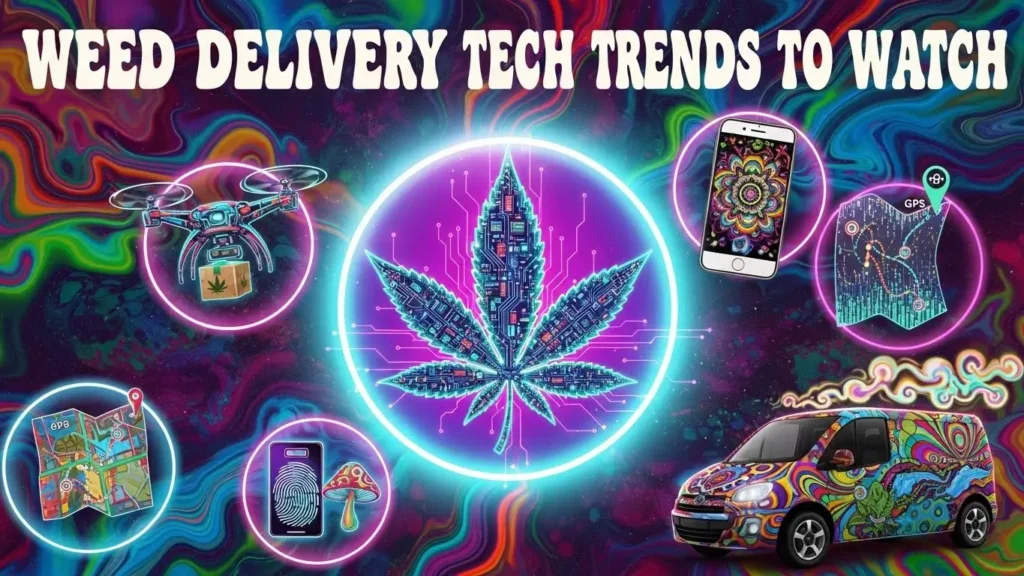
Imagine your cannabis order arriving not just quickly, but anticipating your needs—packaged in compostable materials that tell a digital story, delivered by a driverless vehicle, and recommended to you by an artificial intelligence that understands your wellness goals. This isn’t science fiction; it’s the doorstep reality taking shape for weed delivery in 2026. The sector is undergoing a seismic shift, propelled by fierce competition, savvy consumers, and groundbreaking technology.
For businesses, ignoring these trends means falling behind. For consumers, it heralds an era of unprecedented convenience, personalization, and experience. This deep dive explores the pivotal tech trends that will define the next generation of cannabis delivery, ensuring you know exactly what to expect at your doorstep in the coming year.
The Engine of Change: Why 2026 is a Pivotal Year
The cannabis delivery landscape is maturing at a breakneck pace. The convenience of on-demand access, which became a necessity during the pandemic, is now a baseline consumer expectation. Industry data suggests that a significant majority of consumers not only browse menus online before purchasing but expect seamless delivery options. Furthermore, the market itself is expanding rapidly, driven by new state legalizations and a cultural shift where cannabis is increasingly viewed through a wellness, rather than purely recreational, lens.
This perfect storm of demand, normalization, and competition is forcing weed delivery services to innovate or perish. The focus is no longer just on moving a product from point A to point B. It’s about owning the entire delivery experience—from the digital storefront and intelligent recommendation engine to the unboxing ritual and post-consumption engagement. The technology investments made now will separate the market leaders from the also-rans in 2026 and beyond.
1. Hyper-Personalization: AI and Data Become Your Digital Budtender
The one-size-fits-all approach is obsolete. In 2026, weed delivery platforms will leverage artificial intelligence (AI) and rich customer data to create intensely personalized shopping journeys. This trend addresses a key consumer pain point: feeling overwhelmed by choice. Nearly half of all consumers report that personalized recommendations would make them shop more, yet only 29% feel they currently receive them.
How It’s Transforming Delivery:
- AI-Powered Recommendation Engines: Moving beyond “customers who bought this also bought,” advanced AI will analyze your purchase history, browsing behavior, stated wellness goals (e.g., “help with sleep” or “daytime focus”), and even the time of day to suggest the perfect product.
- Predictive Logistics and Dynamic Subscriptions: Your delivery schedule will adapt to you. Platforms will learn your consumption patterns and proactively suggest refills or modify your subscription box before you even realize you’re running low, ensuring you never face an empty stash.
- Mood-Based Matching: Future apps may incorporate simple quizzes or integrate with wellness apps to recommend specific cannabinoid and terpene profiles suited for your current needs, effectively acting as a virtual consultant.
For Operators: Investing in a unified data platform that connects online behavior, purchase history, and feedback is no longer optional. The brands that thrive will use this data to make every customer feel uniquely understood, fostering fierce loyalty in a competitive marketplace.
2. The Logistics Revolution: Drones, Hubs, and Real-Time Everything
The promise of “within an hour” is evolving into a precise, transparent, and technologically sophisticated logistics operation. The old model of drivers carrying inventory in their cars is giving way to optimized, compliant systems designed for reliability over raw speed.
Key Innovations on the Horizon:
- Advanced Hub-and-Spoke Models: To comply with safety regulations, most legal markets now require drivers to dispatch from a central hub for each order. In 2026, software will optimize this further using real-time traffic data, order density, and driver location to slash wait times.
- Drone Delivery Pilots: While still in nascent stages, pilot programs for drone delivery are underway in select regions. This technology promises unparalleled speed for urgent orders and access to hard-to-reach areas, though regulatory hurdles remain significant.
- Blockchain for Transparency: From seed to sale to doorstep, blockchain technology will provide an immutable ledger for your product. Scanning a code on your delivery could reveal the flower’s harvest date, lab results, and every step of its journey, building immense trust.
- Real-Time Transparency: GPS tracking will become more granular. Instead of just watching a car icon move, you might receive notifications like “Your order is being prepared,” “The driver has completed their previous stop,” or “Please have your ID ready for scanning in 5 minutes”.
Comparing 2026 Delivery Logistics Models
| Feature | Traditional Driver-Managed | 2026 Tech-Optimized Hub & Spoke | Future-State Drone Delivery |
|---|---|---|---|
| Core Tech | Basic GPS, phone calls | AI Route Optimization, Real-Time App Tracking | Autonomous Flight Systems, Geofencing |
| Speed | Variable, often slower | Predictable, efficient windows | Extremely fast for last mile |
| Transparency | Low (call the driver) | High (live tracking, ETA updates) | Very High (precise flight path) |
| Primary Challenge | Compliance, safety risks | High upfront tech investment | Regulation, payload limits, weather |
| Best For | Small-scale operations | Dense urban/suburban markets | Urgent needs, remote areas |
3. Smart & Interactive Packaging: The Box That Talks Back
In weed delivery, the package is your brand’s main physical touchpoint. By 2026, packaging will evolve from a passive container to an interactive brand portal, especially crucial when there’s no budtender to explain the product.
Trends Defining the Unboxing Experience:
- QR Codes & NFC Tags: A simple scan will unlock a world of information: lab results (certificates of analysis), recommended dosing, terpene profiles, strain lineage, and even suggested music playlists or pairing ideas. This turns compliance (showing lab results) into a value-added experience.
- Tamper-Evidence and Freshness Sensors: Smart labels that change color if a seal is broken or if the internal environment (like humidity for flower) falls outside an ideal range will become more common, guaranteeing product integrity upon delivery.
- Augmented Reality (AR) Experiences: Point your phone at your delivery box to see the brand’s story come to life—a virtual tour of the grow facility, a message from the founder, or animated artwork. This creates a deeply memorable, shareable moment that extends brand loyalty far beyond the transaction.
4. Sustainability as a Service Feature
Eco-consciousness is now a baseline demand. Consumers, particularly in a plant-based industry, expect delivery to align with their environmental values. Sustainable practices are becoming a core service differentiator.
The Green Delivery Stack:
- Regenerative & Compostable Materials: The shift is moving beyond recycled paper to packaging made from mushroom mycelium, seaweed, or other plant-based materials that can be composted at home. This extends to shipping mailers and plant-based ice packs for temperature-sensitive items.
- Carbon-Neutral Delivery Options: Leading weed delivery apps may offer customers a choice at checkout: “Standard Delivery” or “Carbon-Neutral Delivery” for a small fee, which invests in verified carbon offset projects. This empowers the consumer to participate in the brand’s sustainability mission.
- Optimized Routing for Fuel Efficiency: The same AI that speeds up delivery will also be used to plot the most fuel-efficient routes, minimizing the carbon footprint of every order placed.
5. Navigating the Maze: Compliance Technology
The regulatory landscape for cannabis is a complex, state-by-state patchwork. In 2026, technology will be the essential tool for navigating this maze efficiently and at scale.
Tech Solutions for Regulatory Hurdles:
- Integrated Age Verification: Seamless, front-end identity checks will link directly to state databases. Upon delivery, drivers will use robust scanning apps that instantly verify ID authenticity and age, creating a secure, frictionless chain of custody.
- “RegTech” for Operations: Software will automatically update menu items, tax calculations, and purchase limits based on the delivery address’s local regulations. This prevents costly human errors and ensures compliance is baked into every transaction.
- Seed-to-Sale Meets Doorstep: Full integration between state-mandated seed-to-sale tracking systems and delivery driver apps will provide regulators with real-time visibility, building trust and simplifying audits.
Top Weed Delivery Tech Trends for 2026
The convergence of market demand and technological capability is birthing exciting new trends. Here are the key innovations that will shape your cannabis delivery experience in 2026.
1. AI and Hyper-Personalization: Your Digital Budtender
Artificial Intelligence is moving from a buzzword to the brain of the delivery ecosystem. In 2026, AI-powered recommendation engines will become standard, analyzing your past purchases, consumption patterns, and even the time of day or week to suggest products. Imagine an app that knows your preference for a specific CBN tincture for sleep on Sunday nights or recommends a new, uplifting sativa-dominated pre-roll for a Friday afternoon.
Platforms like Jane Technologies are already pioneering this space . This goes beyond simple “customers also bought” prompts. Advanced AI will consider desired outcomes (e.g., “focus,” “pain relief,” “social relaxation”), cross-reference them with vast product databases, and deliver highly accurate suggestions. This reduces the overwhelming choice paralysis many consumers feel and builds incredible loyalty—nearly 9 in 10 consumers are more likely to return to brands that offer personalized recommendations .
2. Smarter Dispensary Software: The Backbone of Reliability
For a delivery to be fast and accurate, the behind-the-scenes operations must be flawless. Modern dispensaries are moving away from patching together disparate systems and adopting fully integrated, intelligent software platforms. Solutions like IndicaOnline provide a central nervous system for delivery, combining point-of-sale (POS), inventory management, delivery logistics, and compliance into one dashboard .
Key features defining this trend in 2026 will include:
- Centralized Dispatcher Controls: Managing drivers, orders, and route changes in real-time from a single screen.
- Driver Apps with Live Optimization: Apps that provide drivers with the most efficient routes using live traffic data, not just static maps.
- Smart Order Assignment: Systems that automatically group orders by location and promised delivery window, maximizing driver efficiency and customer satisfaction .
This operational tech is invisible to the consumer but directly translates to faster delivery times, fewer errors, and a more reliable service.
3. The Dawn of Autonomous and Drone Delivery
This is where the future feels most like science fiction, but it’s quickly becoming science fact. Companies are actively piloting drone delivery programs, particularly for serving rural areas or medical patients who lack easy access to dispensaries . Drones promise ultra-fast delivery times and can navigate tricky geographies.
Simultaneously, ground-based autonomous solutions are emerging. These include delivery robots for urban neighborhoods and self-driving vehicles equipped with secure, temperature-controlled compartments. These technologies offer the potential for 24/7 service, contactless transactions, and reduced labor costs.
However, significant regulatory hurdles remain. Federal aviation rules strictly limit drone operations, especially for a substance that is still federally illegal. Widespread adoption will require not just technological maturity, but coordinated legal reform .
4. Blockchain for Transparency and Trust
As consumers become more discerning, proving a product’s authenticity and journey from seed to sale is a powerful trust signal. Blockchain technology is poised to play a major role here. By creating a secure, immutable ledger for product tracking, every step of a cannabis product’s lifecycle—cultivation, testing, processing, and delivery—can be verified .
For the delivery customer, this could mean scanning a QR code on your product package to see its full history: the farm it came from, the dates of lab tests for potency and contaminants, and the secure chain of custody that brought it to your door. This level of transparency addresses quality concerns and strengthens compliance for businesses.
5. Cashless Payments and Financial Integration
One of the most persistent headaches for cannabis delivery is the reliance on cash, stemming from federal banking restrictions. This poses security risks and inconvenience for drivers and customers alike. The trend for 2026 is toward secure, compliant digital payment solutions.
Innovative platforms are integrating cashless online bank payments specifically designed for cannabis, like sweedePay, which works within delivery and e-commerce systems . While sweeping federal banking reform may still be on the horizon, these specialized fintech solutions are making transactions safer, faster, and more professional today.
Which of these tech trends are you most excited to see become mainstream? The personalized touch of AI, or the futuristic convenience of drone delivery? The industry is betting on all of them.
Navigating the Legal and Operational Maze
Innovation doesn’t happen in a vacuum. Every tech trend must navigate a complex web of regulations and operational challenges.
- The Patchwork Problem: Perhaps the biggest hurdle is inconsistent regulation. Cannabis delivery rules can differ not just from state to state, but from city to city within a state. For example, California permits statewide delivery, but local bans can block it in certain areas, while Oregon allows cities to “opt-in” to delivery services . This creates a compliance nightmare for multi-state operators (MSOs) trying to scale.
- Advertising in the Dark: Marketing these advanced services is its own challenge. Cannabis advertising compliance is a minefield of conflicting state laws and restrictive platform policies (e.g., Google and Meta). In 2026, successful companies will leverage compliant channels like programmatic advertising and Connected TV (CTV), which allow for precise geo-targeting and age-gating .
- Federal Limbo: The elephant in the room remains federal prohibition. It restricts interstate commerce, complicates banking, and stymies the national deployment of technologies like drone networks. Any discussion of long-term tech trends is tethered to the pace of federal reform, such as potential rescheduling .
The Road Ahead: Predictions for a Maturing Market
Synthesizing these trends and challenges, we can forecast the shape of the cannabis delivery landscape in 2026 and beyond:
- Consolidation and Specialization: The market will see continued consolidation among larger operators who can afford the tech and compliance overhead. Simultaneously, we’ll see niche specialists thrive—brands that use superior delivery tech and hyper-personalization to serve specific consumer segments (e.g., wellness-focused millennials, medical patients) .
- Experience Over Transaction: The winning platforms won’t just deliver a product; they will deliver an experience. This includes educational content, integrated wellness tracking, loyalty programs that offer real value, and seamless subscription models for regularly used products.
- Sustainability as a Standard: As delivery scales, its environmental impact will be scrutinized. Leaders will adopt electric delivery vehicles, optimize routes for fuel efficiency, and offer carbon-neutral delivery options, turning an operational necessity into a brand virtue .
- Blurring Lines with Healthcare: For medical patients, delivery will become more integrated with telemedicine and digital health tools. We may see platforms that allow doctors to send prescriptions directly to a delivery service or that sync dosing schedules with patient apps.
Conclusion: The Future is at Your Doorstep
The weed delivery tech trends shaping 2026 paint a picture of a smarter, smoother, and more sustainable future. It’s a future where technology removes friction—be it through personalized recommendations, transparent logistics, or seamless compliance—and elevates the entire experience into something meaningful and connected.
For consumers, this means more power, choice, and trust in what arrives at your home. For businesses, it represents both a formidable challenge and an incredible opportunity. The winning cannabis delivery services of 2026 won’t just be logistics companies; they will be tech-driven experience platforms that understand their customers on a profound level.
The question is no longer if these technologies will arrive, but which weed delivery services will implement them most effectively to win your loyalty. The race to your doorstep is on.
Frequently Asked Questions (FAQs)
Are drone deliveries for cannabis really going to happen in 2026?
While active, widespread drone delivery networks are likely still a few years away, 2026 will see expanded pilot programs and significant investment in the technology. The main barriers are regulatory approval from aviation authorities (like the FAA) and crafting secure protocols for controlled substance delivery. Expect to see limited pilots in specific, friendly jurisdictions first.
How can I be sure a weed delivery service using all this tech is still legitimate and compliant?
Always verify a service’s license through your state’s official cannabis regulatory website. High-tech features should complement, not replace, fundamental compliance. A legitimate service will prominently display its license number and use traceable, professional payment processors—never peer-to-peer apps like Venmo.
With all this personalization, is my data safe with cannabis delivery apps?
Reputable services invest heavily in data security and privacy compliance. Look for clear privacy policies and opt-in choices for data sharing. The industry uses state-of-the-art encryption to protect your information, which is also essential for their own regulatory compliance.
Will high-tech, sustainable packaging make delivery more expensive?
Initially, there may be a slight cost premium as the technology scales. However, many brands are absorbing this as a cost of doing business and customer acquisition. Furthermore, efficient, automated logistics driven by AI can reduce operational costs elsewhere, potentially offsetting packaging expenses.
As a consumer, what’s the first sign of these new tech trends I might see?
The most immediate change you’ll notice is in the delivery app experience itself. Look for more intelligent product recommendations, far more precise and communicative tracking (beyond a moving car icon), and detailed digital content unlocked via QR codes on your packaging. These are the foundational steps toward the more advanced future of cannabis delivery.
Are weed delivery apps legal everywhere in the U.S.?
No, legality varies dramatically. It depends on state laws and sometimes local city or county regulations. Some states allow recreational delivery, others only medical, and some prohibit it entirely. Always check your local laws before attempting to order .
How do delivery services ensure my privacy and security?
Reputable services use a multi-layered approach: encrypted transactions, verified login systems, discreet packaging, and GPS-tracked deliveries. Drivers undergo background checks and are trained in compliance protocols. Advanced software also ensures your data is protected in accordance with privacy laws .
What’s the biggest barrier to nationwide drone delivery for cannabis?
The single largest barrier is federal law. Since cannabis is still federally illegal, using airspace (governed by federal agencies like the FAA) for cross-state or even extensive intra-state delivery is prohibited. Drone trials are currently limited to very specific, approved areas and face major regulatory hurdles .
I own a small dispensary. Is investing in advanced delivery software worth the cost?
Data suggests yes. Integrated delivery software can reduce operational costs through route optimization, increase order volume by improving reliability, and boost average order value via better customer experience. It also future-proofs your business against compliance audits. The ROI often comes from increased efficiency and customer retention, not just direct sales .
With AI recommendations, will I lose the personal touch of a human budtender?
The goal of AI is to augment, not replace. The ideal model uses AI to handle initial browsing and personalized suggestions, freeing up human budtenders (available via chat or video call within apps) to answer complex, nuanced questions. This combines scalable personalization with expert human insight .