
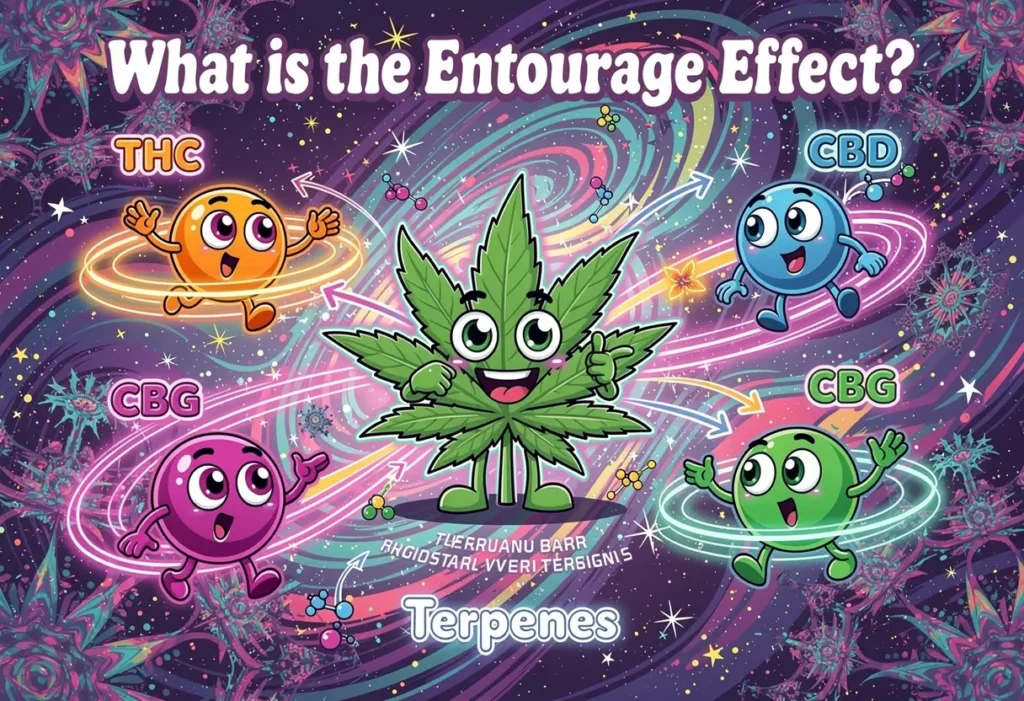
Have you ever wondered why consuming a cannabis flower feels different than taking a THC pill, even when the THC content is identical? Or why some cannabis users report better therapeutic outcomes with certain strains despite similar cannabinoid profiles? The answer may lie in a fascinating phenomenon known as the entourage effect, a concept revolutionizing how we understand cannabis therapeutics and consumer experiences.
The entourage effect represents one of the most compelling and debated concepts in cannabis science today. At its core, this theory suggests that cannabis compounds—including cannabinoids, terpenes, flavonoids, and other phytochemicals—work better together than in isolation. Just as an orchestra produces richer music than any single instrument, the cannabis plant’s complete chemical profile creates effects and benefits that isolated compounds cannot replicate. This comprehensive guide will explore what the entourage effect is, examine the scientific evidence behind it, and reveal why entourage effect edibles and other full-spectrum delivery methods may offer superior benefits compared to traditional flower consumption.
What Exactly is the Entourage Effect?
The entourage effect refers to the synergistic interaction between the numerous compounds found in cannabis that enhances their overall therapeutic potential. Coined in 1998 by researchers exploring endogenous cannabis compounds, the term originally described how inactive metabolites could enhance the activity of the endocannabinoid 2-arachidonoylglycerol (2-AG). This concept has since evolved to explain why many patients report better results with full-spectrum cannabis products containing multiple plant compounds compared to isolated cannabinoids like pure THC or CBD.
Think of it this way: if THC is the star actor, then terpenes, minor cannabinoids, and flavonoids are the supporting cast, director, and cinematographer—all working together to create a cinematic experience far greater than any one contributor could achieve alone. This synergy isn’t just theoretical; emerging research suggests these interactions can enhance pain relief, reduce seizure frequency, mitigate anxiety, and potentially minimize unwanted side effects. But before we dive deeper into the science, let’s address a fundamental question many consumers ask: What does the entourage effect feel like in practical terms?
The Science Behind the Magic: Is the Entourage Effect Real?
The question “Is the entourage effect real” has sparked considerable debate within the scientific community. Critics argue the term is primarily a marketing tool lacking robust clinical validation, while proponents point to growing preclinical evidence and patient reports. Let’s examine what current research reveals about this controversial phenomenon.
Clinical Evidence Supporting the Entourage Effect
A landmark study published in April 2024 provided some of the first clinical evidence for the entourage effect. Researchers from Johns Hopkins University and the University of Colorado conducted a double-blind, placebo-controlled crossover study with 20 participants. They found that d-limonene, a common cannabis terpene, when combined with THC, significantly reduced anxiety that THC alone can exacerbate.
Table: Key Clinical Findings on the Entourage Effect
Perhaps most intriguing was the optional test in this study that combined 30mg THC with 15mg d-limonene, which yielded “the most promising results in reducing anxiety, nervousness, and paranoia”. The authors noted this as one of “the first clinical studies that demonstrate the validity of the entourage effect” theory.
Pharmacological Mechanisms: How Synergy Works
From a pharmacological perspective, the entourage effect involves complex interactions between cannabis compounds. These can be categorized as:
- Pharmacokinetic interactions: Affecting how compounds are absorbed, distributed, metabolized, and excreted in the body
- Pharmacodynamic interactions: Influencing how compounds interact with receptors and cellular targets
- Bioenhancement: Where certain compounds increase the bioavailability or activity of others
Two distinct types of entourage effects have been defined: intra-entourage (interactions between cannabinoids or between terpenes) and inter-entourage (interactions between cannabinoids and terpenes). For example, the terpene β-caryophyllene directly activates the body’s CB2 receptors—an unusual property for a non-cannabinoid compound. Meanwhile, limonene may enhance cannabinoid absorption by making the blood-brain barrier more permeable.
Key Players in the Entourage: More Than Just THC and CBD
Understanding the entourage effect requires familiarity with the main chemical classes in cannabis that contribute to this synergy. While over 500 compounds have been identified in cannabis, several key groups play crucial roles in creating the entourage effect.
Cannabinoids: Beyond THC and CBD
While THC and CBD dominate discussions, they’re just two of approximately 150 cannabinoids identified in cannabis. Minor cannabinoids—present in smaller quantities but potentially significant effects—include:
- CBG (Cannabigerol): Often called the “mother cannabinoid” as it’s a precursor to others
- CBC (Cannabichromene): Showing anti-inflammatory and analgesic properties
- CBN (Cannabinol): Mildly psychoactive, potentially sedating
- THCV (Tetrahydrocannabivarin): May suppress appetite, unlike THC
Research suggests these minor cannabinoids contribute significantly to the overall effects of cannabis. For instance, one study found whole cannabis extracts were more effective against breast cancer cells than pure THC alone, with researchers attributing this enhanced activity to minor cannabinoids like CBG and THCA.
Terpenes: The Aromatic Powerhouses
Terpenes are aromatic compounds responsible for cannabis’s distinctive scents—from citrusy limonene to earthy myrcene. But they’re more than just fragrance; terpenes may significantly influence cannabis effects through various mechanisms:
Table: Common Cannabis Terpenes and Their Potential Effects
A 2020 review noted that terpenes “might be key players in the entourage effect,” with a 2021 study suggesting they can enhance the therapeutic properties of cannabinoids like THC and CBD. Interestingly, while many consumers discuss the entourage effect for anxiety, research specifically indicates terpenes like limonene and linalool may contribute to anxiety relief when combined with cannabinoids.
Flavonoids and Other Compounds
Beyond cannabinoids and terpenes, cannabis contains flavonoids (like cannflavin A and B), fatty acids, and various phenolic compounds that may contribute to the entourage effect. These compounds often have their own therapeutic properties and may enhance or modify the effects of primary cannabinoids.
Delivery Methods Matter: Why Edibles and Oils Maximize the Entourage Effect
Now that we understand what creates the entourage effect, let’s explore how different consumption methods affect this synergy. While smoking flower provides immediate effects, entourage effect gummies, oils, and other processed delivery methods may actually offer more consistent and enhanced entourage benefits.
The Limitations of Traditional Flower
Cannabis flower, while containing the plant’s full chemical profile, presents several challenges for maximizing the entourage effect:
- Inconsistent dosing: Natural variation between buds even from the same plant
- Degradation of compounds: Terpenes are volatile and degrade quickly
- Combustion losses: Smoking destroys some compounds before they reach your system
- Limited control: Difficult to achieve specific cannabinoid/terpene ratios
A 2022 study found that plants labeled as “indica” or “sativa” based on physical characteristics were not chemically distinguishable, with many “sativa” plants having cannabinoid ratios typical of “indica” plants and vice versa. This inconsistency makes reliable therapeutic use challenging when relying solely on flower.
Advantages of Engineered Delivery Methods
Entourage effect edibles, tinctures, capsules, and other processed products overcome many flower limitations:
- Precise ratios: Manufacturers can combine specific cannabinoids and terpenes in optimal proportions
- Enhanced bioavailability: Some formulations include bioenhancers to improve absorption
- Consistency: Batch testing ensures reliable chemical profiles
- Targeted effects: Products can be designed for specific needs like sleep or pain relief
For example, a 2019 review suggested that a CBD-dominant ratio of 1 part THC to 39.4 parts CBD (1:39.4) might be particularly beneficial for treating inflammation, pain, anxiety, depression, and other conditions. Such precise ratios are difficult to achieve with raw flower but straightforward with manufactured products.
The Special Case of Entourage Effect Gummies and Edibles
Edible products offer unique advantages for experiencing the entourage effect:
- Longer duration: Effects last significantly longer than inhalation methods
- Liver metabolism: Conversion of THC to 11-hydroxy-THC, a more potent compound
- Gradual onset: Allows for more controlled experience
- Discreet consumption: No smoke or vapor
However, the entourage effect CBD enthusiasts should note that edible bioavailability varies significantly. One study suggests cannabinoids are prone to poor bioavailability due to their lipophilic nature and first-pass liver metabolism. Quality manufacturers address this through emulsion technology, liposomal formulations, or adding bioenhancers like certain terpenes.
Practical Applications: Harnessing the Entourage Effect for Specific Needs
Understanding the entourage effect isn’t just academic—it has practical implications for consumers seeking specific outcomes. Whether you’re exploring cannabis for therapeutic reasons or enhanced well-being, strategic product selection can optimize your experience.
Maximizing the Entourage Effect for Anxiety
Anxiety relief represents one of the most researched applications of the entourage effect. The previously mentioned 2024 study demonstrated that limonene could mitigate THC-induced anxiety, but other research suggests additional strategies:
- CBD-THC balanced products: CBD may counteract THC’s anxiety-provoking effects
- Linalool-rich strains/products: This terpene has demonstrated calming properties
- Beta-caryophyllene inclusion: This terpene’s direct CB2 activation may contribute to anxiety relief
When browsing products, look for those specifically formulated for anxiety that include these complementary compounds rather than high-THC isolates.
Therapeutic Applications with Strongest Evidence
While research continues to evolve, several areas show promising evidence for entourage-enhanced cannabis:
- Epilepsy: A 2018 meta-analysis found full-spectrum CBD extracts reduced seizure frequency at lower doses than purified CBD
- Pain management: Multiple studies suggest whole-plant extracts provide better analgesia than isolated cannabinoids
- Cancer support: Research on breast cancer cells found whole cannabis extract superior to pure THC
- Inflammation: The synergistic anti-inflammatory effects of multiple cannabis compounds appear particularly potent
Consumer Guidance: How to Select Entourage-Optimized Products
When shopping for cannabis products designed to maximize the entourage effect, consider these factors:
1. Check for “Full-Spectrum” or “Whole-Plant” labeling
These terms indicate the product contains multiple cannabis compounds rather than isolates.
2. Review third-party lab results
Quality products provide Certificates of Analysis showing cannabinoid and terpene profiles.
3. Consider your desired effects
Different formulations target different outcomes—select products designed for your specific goals.
4. Start with lower doses
Entourage-enhanced products may have different potency than isolated compounds.
5. Consult healthcare professionals
Especially important for therapeutic use or if taking other medications.
Addressing Controversies and Limitations
No discussion of the entourage effect would be complete without addressing criticisms and limitations. While promising, the concept remains scientifically contested and incompletely understood.
The Scientific Debate: Marketing vs. Pharmacology
Critics argue that “the entourage effect is unfounded and used mainly for marketing”. A 2020 review found no entourage effect in most studies, with mixed results in others. The fundamental challenge is that while preclinical studies (cell cultures, animal models) show interesting interactions, well-designed human clinical trials remain scarce.
Much of the evidence supporting the entourage effect comes from observational studies and patient reports rather than randomized controlled trials. As one researcher noted, “the cannabis field can say anything and it does… the large majority of what’s being said is driven by anecdotal marketing”.
What We Still Don’t Know
Key unanswered questions about the entourage effect include:
- Optimal ratios: What specific cannabinoid-terpene combinations work best for different conditions?
- Individual variation: How do genetics, metabolism, and tolerance affect individual responses?
- Long-term effects: What are the implications of long-term use of full-spectrum products?
- Standardization challenges: How can we ensure consistent chemical profiles in natural products?
Despite these uncertainties, the weight of emerging evidence and patient experiences suggests something meaningful occurs when cannabis compounds interact—whether we call it the entourage effect, synergy, or polypharmacy.
Future Directions and Consumer Empowerment
As cannabis research expands and legalization spreads, our understanding of the entourage effect will undoubtedly evolve. Several promising developments suggest exciting possibilities for the future of optimized cannabis consumption.
Personalized Cannabis Formulations
Advancements in cannabis genomics and phytochemical analysis may eventually enable truly personalized cannabis products. Researchers are working to identify genetic markers associated with specific chemical profiles and patient outcomes. In the future, consumers might receive cannabis formulations tailored to their unique physiology, medical conditions, and desired effects.
Enhanced Product Innovation
The growing understanding of the entourage effect drives product innovation across the cannabis industry:
- Terpene-infused products: Adding specific terpenes to optimize effects
- Nano-emulsion technology: Improving bioavailability of all compounds
- Time-release formulations: Providing consistent entourage effects throughout the day
- Combination products: Integrating cannabis with other botanical medicines
Consumer Education and Advocacy
As research clarifies which specific interactions create desired effects, educated consumers can make more informed choices. Rather than selecting products based solely on THC percentage or strain names, future consumers might choose based on verified chemical profiles and intended outcomes.
Conclusion: Embracing the Complexity of Cannabis
The entourage effect represents a paradigm shift in how we understand and utilize cannabis. Moving beyond the simplistic focus on THC percentages, this concept acknowledges the plant’s profound complexity and the sophisticated interactions between its many compounds. While questions remain and research continues, the accumulating evidence suggests that whole-plant cannabis products—whether entourage effect edibles, oils, or carefully selected flower—offer benefits that isolated compounds cannot replicate.
Whether you’re a therapeutic user seeking relief or a recreational consumer pursuing enhanced experiences, understanding the entourage effect empowers you to make better choices. By selecting full-spectrum products with complementary cannabinoids and terpenes, you’re not just following marketing trends—you’re leveraging centuries of evolutionary wisdom encoded in the cannabis plant’s chemical diversity.
The journey toward fully understanding cannabis synergy has just begun, but one thing seems increasingly clear: nature’s complexity often surpasses our attempts at simplification. In the case of cannabis, the whole truly appears greater than the sum of its parts.
Ready to experience the difference for yourself? Start by examining product labels more closely, seeking third-party lab results, and considering how different delivery methods might enhance your desired outcomes. Share your experiences with the entourage effect in the comments below—have you noticed differences between full-spectrum products and isolates? Your insights contribute to our collective understanding of this fascinating phenomenon.
Frequently Asked Questions About the Entourage Effect
What is the entourage effect in simple terms?
The entourage effect is the theory that all the compounds in cannabis (cannabinoids, terpenes, flavonoids) work better together than any single compound alone. Think of it like a musical band where each instrument contributes to create a richer sound than any musician playing solo.
What does the entourage effect feel like?
Users describe the entourage effect as a more balanced, nuanced experience compared to isolated THC. Many report reduced anxiety, more targeted therapeutic benefits, and a “fuller” sensation. For example, when limonene (a citrusy terpene) combines with THC, users often experience the uplifting effects of THC with less of the anxiety that THC alone can sometimes cause.
How to get the entourage effect?
To experience the entourage effect, choose full-spectrum or whole-plant cannabis products rather than isolates. These contain multiple cannabinoids and terpenes working together. Entourage effect gummies, oils, and flower from reputable sources with published lab results showing diverse cannabinoid and terpene profiles are your best bet.
What is the entourage?
In cannabis science, “the entourage” refers to the supporting cast of compounds that enhance the effects of primary cannabinoids like THC and CBD. This includes minor cannabinoids (CBG, CBN, etc.), terpenes (limonene, myrcene, etc.), flavonoids, and other phytochemicals present in the cannabis plant.
Does cannabis have an entourage effect?
Research suggests cannabis does exhibit entourage effects, though the scientific community continues to debate the extent and mechanisms. Clinical studies have shown that terpenes like limonene can reduce THC-induced anxiety, and full-spectrum extracts sometimes work better than isolated compounds for conditions like epilepsy and pain.
Are there any clinical trials based on the entourage effect?
Yes, recent clinical trials have begun testing the entourage effect. A 2024 study demonstrated that the terpene d-limonene could reduce anxiety when combined with THC—one of the first clinical validations of this phenomenon. More trials are needed, but this represents an important step toward clinical understanding.
What is Gleb’s entourage effect?
While your search results don’t mention a specific “Gleb’s entourage effect,” this might refer to individual research or a brand-specific interpretation. Generally, any reference to a person’s name attached to the term typically indicates their particular perspective or research contribution to understanding cannabis synergy.
Is the entourage effect real Reddit discussions?
Reddit communities actively debate whether the entourage effect is real, with many users sharing personal experiences supporting the concept. While these anecdotes are valuable, it’s important to remember they don’t replace scientific evidence. The Reddit discussions often highlight the subjective differences users notice between full-spectrum products and isolates.
What is the entourage effect CBD?
The entourage effect CBD refers to how CBD works alongside other cannabis compounds. Research suggests full-spectrum CBD products (containing multiple cannabinoids and terpenes) may be more effective for certain conditions than CBD isolate. For example, one epilepsy study found full-spectrum CBD worked at lower doses than purified CBD.