
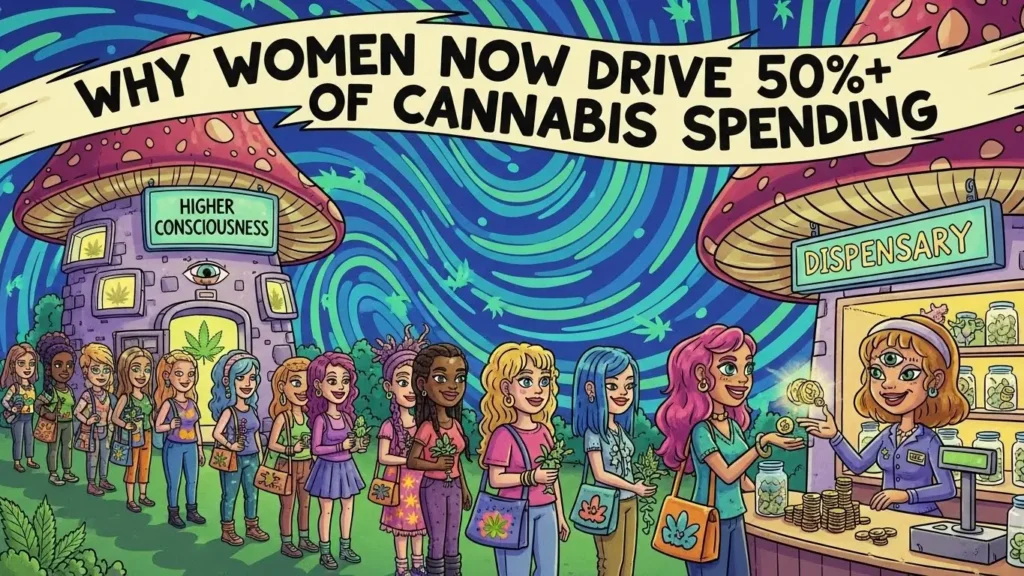
The cannabis industry is witnessing a historic shift: for the first time, women and cannabis consumption patterns are reshaping the market. Recent data confirms that women comprise 50% or more of the consumer base in key markets, directly influencing product development, marketing strategies, and sales trends. This isn’t just a demographic blip—it’s a fundamental transformation in who uses cannabis and why.
This article dives deep into the data behind this power shift. You’ll learn how evolving social attitudes, targeted wellness products, and a significant cannabis use increase among women are fueling a multi-billion dollar change. We’ll analyze consumption habits, explore the scientific and economic drivers, and provide actionable insights for anyone navigating this new landscape.
Understanding the Female Cannabis Consumer: Beyond the Stereotype
To effectively engage this market, you must first discard outdated stereotypes. The modern female cannabis consumer is not a monolith, but research reveals distinct and powerful commonalities in her motivations, product choices, and purchase journey.
The “Why”: Wellness, Lifestyle, and Targeted Relief
For the majority of women entering the market, cannabis is a wellness and lifestyle tool, not an intoxicant sought for its own sake. The data is clear: women consume for specific, outcome-oriented reasons. Chief among these is relaxation and stress reduction, with 64% of all consumers citing relaxation as a primary benefit. This is closely followed by pain management (48%) and the desire to improve sleep quality (45%).
This wellness orientation directly influences product choice. A staggering 29% of female consumers express a clear preference for non-flower products like edibles, topicals, and tinctures, compared to just 15% of men. Why? These formats offer precise dosing, discretion, and avoid the potential respiratory irritation of smoking. Furthermore, a 2025 study highlighted that almost all patients (the majority of whom were likely using cannabis for wellness) reported a preference for oral cannabis products like extracts and edibles over inhalation methods.
The “How”: A Meticulous, Research-Driven Purchase Journey
The female consumer’s path to purchase is characterized by deliberation and research. Studies show that women are significantly more likely to research brands before purchasing, relying on trusted sources, peer recommendations, and media they respect to navigate their choices. This behavior stems from the desire for a safe, predictable, and effective experience, especially when using cannabis for health and wellness goals.
Trust is the non-negotiable currency. In an industry where 61% of people believe business leaders purposely mislead the public, the opportunity for transparent, honest brands is immense. Women, in particular, reward brands that build trust through scientific authority, consistent quality, and ethical practices.
Table: Key Motivations & Preferences of Female Cannabis Consumers
The Historic Shift: Why Women Are Now the Driving Force in Cannabis
1 The New Cannabis Consumer Profile
The stereotype of the cannabis consumer has been permanently shattered. Women now represent a powerful majority in the cannabis market, a fact underscored by major industry surveys. For the first time, data shows that more than one in three American women are active consumers, a figure that now surpasses male consumption rates in the same age groups. This shift is echoed in consumer platforms like the Jointly app, where women make up 55% of the user base.
This growth is part of a broader trend where the demographics of who uses cannabis are expanding rapidly. The most pronounced increases are among older adults, particularly those who are college-educated, married, and have higher incomes. This new consumer is informed, health-conscious, and views cannabis not through a recreational lens alone, but as a component of a managed wellness routine. They are driving demand for quality, consistency, and products tailored to specific lifestyle needs.
2 Breaking Down the Data: How Consumption Differs
The purchasing power of women is not only growing—it’s distinctly shaping the product landscape. Consumption preferences between genders reveal a clear divide:
- Product Preferences: Men tend to favor traditional flower and pre-rolls, with 27% stating it’s their preferred form. In contrast, only 19% of women prefer flower, leaning significantly toward non-smokable options.
- The Rise of Alternatives: Women are the primary drivers behind the booming markets for edibles, tinctures, topicals, and beverages. These discreet, dose-controlled, and often wellness-oriented products align with the consumption patterns of female buyers. Notably, the cannabis beverage category, while still small, was the fastest-growing by percentage in 2025.
- Purpose of Use: While relaxation is a universal goal (64% of all consumers), women are more likely to incorporate cannabis for targeted relief, seamlessly blending medicinal and recreational use. This is particularly evident among patients, such as those with breast cancer, where a significant majority use cannabis to manage treatment-related pain, insomnia, and anxiety.
The table below summarizes these key differences in consumer behavior:
3 The Wellness Revolution: Cannabis as a Lifestyle Tool
The engine of this demographic shift is the modern wellness movement. Women are increasingly using cannabis as a tool for self-care, opting for it over other substances. A significant cultural trend shows that 62% of consumers choose cannabis over alcohol when given a choice, with 73% believing it is a healthier alternative.
This is more than a Dry January trend; it’s a sustained lifestyle change. The data is compelling:
- Replacement Therapy: 57% of consumers report replacing some of their drinking with cannabis.
- Medical Integration: Among medical users, 51% have replaced at least some prescription medications with cannabis. For conditions like chronic pain, anxiety, and sleep disorders, cannabis is becoming a first-line option for many.
For women, this often means seeking products high in CBD or with balanced THC:CBD ratios for manageable effects without intense psychoactivity. This purposeful, outcome-driven consumption is what defines the new market.
4 Economic Power: Women as Market Drivers
With economic influence comes market transformation. Women are not just consumers; they are becoming entrepreneurs and leaders in the legal cannabis industry. A groundbreaking global study found that in regions with legal markets, women are significantly more likely to grow cannabis and earn a larger share of their income from it than men.
This economic empowerment has a direct feedback loop into the products available. Recognizing this powerful demographic, brands and retailers are:
- Refocusing Shelf Space: Allocating more room to topicals, edibles, tinctures, and beverages—categories where women dominate purchases.
- Investing in Targeted Marketing: Developing branding and education that speaks directly to women’s health concerns, lifestyle needs, and desire for quality and safety.
- Shaping Medicinal Markets: The same study noted that women are more likely than men to grow cannabis for medical purposes, suggesting they are driving the expansion of medicinal markets.
5 A Scientific Perspective: Key Research and Health Considerations
Informed consumption is a hallmark of this new demographic. Here are 5 recent scientific findings that are particularly relevant for women considering cannabis:
- Impact on Female Fertility: A landmark 2025 study in Nature Communications provided clear evidence that THC can reach the ovarian follicle. The research associated THC exposure with a lower rate of chromosomally normal embryos in IVF patients, highlighting potential risks for women trying to conceive.
- Pain and Symptom Management: Cannabis is widely used for pain. Among breast cancer patients, 78% reported using it to reduce pain, and 75% found it “extremely” or “very” helpful for managing treatment symptoms.
- Mental Health Considerations: While many use cannabis to reduce anxiety (52% of consumers), it’s crucial to note that daily use, particularly starting at a young age, has been associated with an increased risk of depression and anxiety in some studies.
- Sleep Aid Popularity: Cannabis has become a popular sleep aid, used by 16% of adults—more than prescription sleep medications. However, men (18%) are slightly more likely than women (15%) to use it for this purpose.
- Safety Perceptions vs. Reality: A study of breast cancer patients found that 70% considered medical cannabis safe but were often unaware of the significant variability in product quality and potency. This underscores the need for reliable sourcing and professional guidance.
6 Navigating the Market: Trends and Predictions
Looking ahead, several key trends are set to define the future of women in cannabis:
- Product Innovation: Expect continued growth in low-dose, fast-acting, and functional products (e.g., beverages for hydration and relaxation, topicals for targeted muscle relief).
- Education and Community: As women rely less on traditional healthcare providers for cannabis advice—only 4% of breast cancer patients cited doctors as their most trusted information source—trusted brands and community-driven education will fill the gap.
- Mainstream Integration: Cannabis will continue to be normalized as a wellness staple, similar to vitamins or fitness, rather than an illicit substance.
- Ongoing Research: As consumption grows, so will scientific inquiry, particularly into sex-specific effects, long-term impacts, and interactions with other medications.
7 Key Takeaways and Future Outlook
The data is unequivocal: women are the most powerful and influential demographic in the modern cannabis industry. Their preferences are moving markets, their spending is fueling innovation, and their approach is redefining cannabis as a legitimate wellness tool.
This shift from a niche, recreational market to a broad-based wellness industry is permanent. For businesses, the mandate is clear: understand the nuanced needs of the female consumer—her reasons for use, her product preferences, and her demand for quality and safety. For consumers, it’s an era of unprecedented choice and the power to drive the market toward better, more responsible products.
The future of cannabis is inclusive, health-focused, and female-driven.
The Product Revolution: What Women Are Buying (and Why)
Female spending power is catalyzing a product renaissance, moving the market beyond traditional flower. Shelf space is being reorganized, and R&D budgets are being redirected to meet this demand.
Topicals, Tinctures, and Edibles Lead the Way. Retailers report actively refocusing shelf space toward products women tend to purchase, which directly drives the growth of these categories. Edibles, in particular, have seen sustained innovation, moving from simple gummies to sophisticated, chef-crafted chocolates, functional beverages, and precise nano-emulsified drinks for faster onset. The cannabis beverage category, while small, is the fastest-growing by percentage, seeing a 15% increase in sales in early 2025.
The “High-THC” Arms Race is Over. For this demographic, potency is not the primary selling point. Women are less attracted to high THC for its own sake and are more interested in balanced effects, specific cannabinoid profiles (like CBD, CBN), and consistent, manageable experiences. This has led to the rise of ratioed products (e.g., 1:1 THC:CBD) and products highlighting minor cannabinoids known for specific therapeutic effects.
Convenience and Discretion are Key. The explosive growth of pre-rolls (up 12% in sales) and vape pens speaks to a desire for convenience, but even here, female preferences shape the market. Infused pre-rolls, which offer a more consistent experience, hold a dominant 43% market share within the pre-roll segment. For many women, a discreet, single-serving edible or a simple-to-use tincture fits more seamlessly into a busy daily routine than traditional consumption methods.
Actionable Strategies: How to Win in the Women-Dominated Market
Understanding the trend is one thing; capitalizing on it is another. Here is your strategic playbook.
1. Build Unshakeable Trust Through Education & Transparency
- Lead with Science, Not Slogans: Leverage the fact that 74% of people trust scientists on new innovations. Partner with researchers, feature credentialed experts, and use clear, study-backed language to explain your products.
- Radical Transparency: Provide detailed Certificates of Analysis (COAs), explain your sourcing, and be open about your manufacturing processes. In a market wary of greenwashing, authenticity wins.
- Content That Educates, Not Just Sells: Create guides on microdosing, the entourage effect, or how to choose a product for sleep. Become a trusted resource, not just a vendor.
2. Master the Art of Authentic, Lifestyle-Focused Branding
- Storytelling Over Spec Sheets: Women form alliances with brands whose stories resonate. What is your brand’s purpose? How does it fit into a holistic wellness lifestyle? Communicate this through every channel.
- Embrace Purpose-Driven Ethics: 73% of millennials (a huge segment of cannabis consumers) will spend more on brands that align with their ethics. Support social equity initiatives, environmental sustainability, or community programs—and communicate these efforts authentically.
- Gender-Neutral, Benefit-Focused Marketing: Take a cue from successful CPG brands. Market to a mindset, not a gender. Focus on the benefit (better sleep, pain-free mornings, relaxed socializing) rather than stereotypical imagery.
3. Optimize the Product & Retail Experience
- Simplify the Choice: With 64% of consumers feeling overwhelmed by choice, curation is a service. Create clear product lines (e.g., “Sleep,” “Relax,” “Focus”) and offer simple starter kits or samplers.
- Train Your Budtenders: Ensure retail staff are knowledgeable about the specific benefits and effects of products favored by women. They should be equipped to guide a wellness-focused, perhaps first-time, consumer with confidence and empathy.
- Prioritize Design and UX: From elegant, discreet packaging to a user-friendly, informative website and e-commerce platform, every touchpoint should reflect quality and build confidence.
The Broader Market Context: A $444 Billion Opportunity
This demographic shift is supercharging an already explosive global market. The global cannabis market is projected to grow from $57.18 billion in 2023 to a staggering $444.34 billion by 2030, representing a compound annual growth rate (CAGR) of over 34%. North America, driven by progressive legislation, dominates this landscape and is expected to maintain a leading share.
Simultaneously, legal frameworks are evolving. While the U.S. federal government has taken steps to reschedule cannabis, advocates emphasize that true descheduling and comprehensive regulation are needed to fully support patient access, ensure public safety, and create an equitable commercial environment. This evolving legal landscape makes understanding and serving a stable, high-value demographic like female consumers even more critical for long-term business planning.
Conclusion
The data leaves no room for doubt: women are now the dominant growth engine and a primary spending force in the cannabis industry. They are educated, intentional, and driving demand for a new generation of products centered on wellness, quality, and trust. For brands, dispensaries, and investors, ignoring this shift is a strategic failure.
The winners in the next decade of cannabis will be those who move beyond seeing “women as a segment” and instead recognize them as the core of the modern mainstream market. This means embedding their preferences into your product roadmap, their values into your brand identity, and their need for trust into every customer interaction. The revolution isn’t coming; it’s already being led by the female consumer. The only question is: is your business built for it?
Ready to refine your strategy for the most important consumer in cannabis? Start by conducting an audit of your product line, marketing messaging, and retail experience through the lens of the female consumer profile outlined here. Share your insights or questions in the comments below.
Frequently Asked Questions (FAQs)
Do women make up 80% of the consumer market?
No, they do not make up 80%. However, they have become the majority in key segments. Recent data shows that more than 1 in 3 American women consume cannabis, and for the first time, they have surpassed men in consumption rates for certain age groups. On some consumer platforms, like the Jointly app, women comprise about 55% of the user base.
Do men or women use cannabis more?
As of the most recent data, the overall percentage of adults who use cannabis is relatively close, but a significant shift is occurring. While 17% of men report smoking marijuana versus 11% of women, women are driving the overall cannabis use increase, particularly in non-smokable product categories like edibles and topicals. In some studies, women have recently surpassed men in consumption within the same age brackets.
Do women have a higher tolerance to cannabis?
Tolerance is highly individual and based on frequency of use, biology, and product type, not gender. However, consumption patterns differ. Women are more likely to use lower-dose, non-inhalation products (e.g., edibles, topicals) designed for controlled effects. This suggests a preference for managing intake and experience carefully, rather than an inherent difference in biological tolerance.
What are the benefits of cannabis for women?
Many women report using cannabis for specific wellness benefits, including:
- Pain Management: A primary reason for use, especially for chronic pain or conditions like arthritis.
- Sleep Aid: 16% of adults use it to improve sleep quality.
- Anxiety & Stress Reduction: 52% of consumers use it to reduce anxiety.
- Symptom Relief: Particularly noted among patients, such as those with breast cancer, for managing treatment-related pain, nausea, and insomnia.
It is crucial to consult with a healthcare provider to discuss potential benefits against any personal health risks.
Is it really true that women now outspend men on cannabis?
Yes, this is a verified market shift. While men historically had higher consumption rates, women are now the fastest-growing demographic. They comprise a larger share of new consumers and, critically, drive over 50% of spending in key categories like edibles, topicals, and tinctures due to their preference for these wellness-oriented products.
What are the main reasons women use cannabis?
The primary motivations are wellness-focused: relaxation and stress reduction (64%), pain management (48%), and improving sleep quality (45%). For most, it’s a purposeful part of a health and lifestyle regimen, not primarily recreational intoxication.
What types of cannabis products do women prefer?
Women show a strong preference for non-flower, precisely dosed products. This includes edibles (like gummies and chocolates), topicals (creams, patches), tinctures, and beverages. They value discretion, consistent effects, and avoiding the potential harms of smoking.
How does the purchasing behavior of female cannabis consumers differ?
Female consumers are typically more research-driven. They are more likely to investigate brands, read reviews, and seek information from trusted sources before making a purchase. Building trust through transparency, scientific backing, and positive peer reviews is essential to reaching them.
What’s the “CaliSober” trend mentioned in the article?
The “CaliSober” movement refers to choosing cannabis over alcohol as a social or relaxation aid. Data shows 33% of adults aged 21-24 prefer cannabis/CBD products over alcohol, and a significant portion of consumers report replacing some or all of their alcohol consumption with cannabis, viewing it as a healthier alternative.