
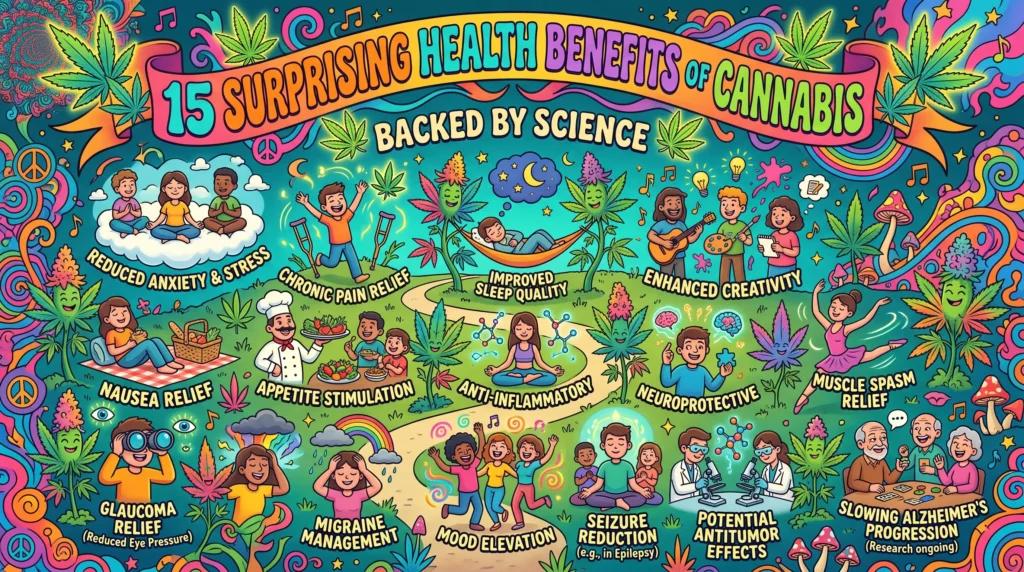
Cannabis has been used as medicine for over 5,000 years — but only in the last few decades has science finally caught up. Today, researchers have identified real, evidence-based cannabis uses ranging from seizure control to chronic pain relief, and regulators like the FDA have approved cannabinoid-based medicines. Yet for every legitimate benefit, there’s an exaggerated viral claim muddying the waters.
This article breaks down 15 health benefits of cannabis that have scientific support, separates strong evidence from weak, weighs the medical use of marijuana’s pros and cons, and answers the questions people actually search for — from cannabis benefits for the heart to the truth about cannabis tea. Every claim is tied to published research, and every limitation is stated plainly.
⚕️ Medical Disclaimer: This article is for informational purposes only and does not constitute medical advice. Cannabis affects individuals differently and may interact with medications, worsen certain mental health conditions, and is not appropriate for everyone. Always consult a qualified healthcare provider before using cannabis for any health condition. Never discontinue prescribed medication in favor of cannabis without your doctor’s guidance.
What Do Top Scientists Say About Marijuana’s Health Effects?
The scientific consensus is nuanced: cannabis has genuine therapeutic value for specific conditions — particularly chronic pain, epilepsy, MS spasticity, and chemotherapy nausea — but the evidence for many popular claims remains weak or anecdotal. The most authoritative review to date, the 2017 National Academies of Sciences report The Health Effects of Cannabis and Cannabinoids, found “conclusive or substantial evidence” for only three therapeutic uses, underscoring how much hype outpaces data.
🔥REFER A FRIEND
THEY GET 10% OFF THEIR FIRST ORDER🔥
Here’s how scientists rank the evidence:
Table
| Evidence Level | Benefits |
|---|---|
| Conclusive/Substantial | Chronic pain, chemotherapy nausea/vomiting, MS spasticity |
| Moderate | Sleep disorders, appetite stimulation, anxiety (short-term) |
| Limited/Preliminary | PTSD, IBD, glaucoma, heart health, neuroprotection |
The World Health Organization’s 2018 review of CBD concluded it is “generally well tolerated” with no potential for abuse — but WHO also flagged the lack of long-term safety data. That balance frames everything below.
What Are the Core Health Benefits of Cannabis?
The core health benefits of cannabis include chronic pain reduction, decreased inflammation, anxiety management, and improved sleep quality. These effects occur because plant cannabinoids interact directly with the body’s endocannabinoid system, regulating vital physiological processes and promoting overall homeostasis.
The Endocannabinoid System (ECS) Connection To understand why cannabis works, we must look at the ECS. Discovered in the late 1980s, this complex cell-signaling system maintains internal balance. Plant cannabinoids (phytocannabinoids) like THC and CBD mimic our natural endocannabinoids, binding to CB1 and CB2 receptors. A landmark 2017 report by the National Academies of Sciences, Engineering, and Medicine (NASEM) concluded there is conclusive evidence that cannabis is effective for chronic pain in adults, validating its primary medical use.
How Does Cannabis Help with Pain and Inflammation?
Cannabis effectively manages chronic pain and reduces systemic inflammation by activating CB1 and CB2 receptors. This interaction blocks pain signal transmission in the central nervous system and decreases the production of pro-inflammatory cytokines, offering significant relief for conditions like arthritis and neuropathy.
1. Chronic Pain Relief According to the NASEM report, patients using medical cannabis for chronic pain are significantly more likely to experience a meaningful reduction in symptoms compared to placebo. Studies show an average pain reduction of 30% to 40% in neuropathic pain patients.
2. Reduction of Neuropathic Pain Neuropathy, or nerve damage pain, is notoriously difficult to treat. A meta-analysis published in the Journal of Pain found that inhaled cannabis reduced neuropathic pain intensity by up to 34%, offering hope for diabetic neuropathy and fibromyalgia patients.
3. Systemic Anti-Inflammatory Properties CBD and CBG (cannabigerol) are potent anti-inflammatories. Research indicates they suppress the production of pro-inflammatory cytokines and inhibit T-cell proliferation, which is highly beneficial for autoimmune conditions like rheumatoid arthritis.
4. Muscle Spasm and Cramp Relief For conditions like multiple sclerosis (MS), cannabis is a game-changer. Nabiximols (Sativex), an oral spray containing THC and CBD, is FDA-approved and clinically proven to reduce muscle spasticity by over 20% in MS patients who do not respond to traditional medications.
What Are the Neurological and Mental Health Benefits?
Cannabis offers notable neurological and mental health benefits, including reduced seizure frequency in epilepsy, neuroprotective effects in Parkinson’s disease, and temporary anxiety relief. Cannabidiol (CBD) specifically modulates serotonin receptors, while THC provides neuroprotection by reducing excitotoxicity and oxidative stress in brain cells.
5. Seizure Reduction in Epilepsy Perhaps the most famous modern medical breakthrough is Epidiolex, a purified CBD medication FDA-approved for severe childhood epilepsies like Dravet syndrome. Clinical trials demonstrated that CBD reduced convulsive seizure frequency by nearly 40% compared to a placebo.
6. Neuroprotection in Degenerative Diseases Emerging research suggests cannabinoids protect neurons from damage. A study in the Journal of Alzheimer’s Disease showed that low doses of THC reduced amyloid beta levels (the proteins linked to Alzheimer’s) and improved cellular survival, highlighting potential disease-modifying capabilities.
7. PTSD and Trauma Symptom Management Cannabis is increasingly used to manage Post-Traumatic Stress Disorder (PTSD). A study published in the Journal of Psychopharmacology found that cannabis use reduced symptom severity in PTSD patients by over 30%, likely by enhancing the extinction of aversive memories and reducing hyperarousal.
8. Anxiety and Stress Relief While high doses of THC can induce anxiety, low-to-moderate doses of CBD are highly anxiolytic. A 2019 study in The Permanente Journal found that 79% of patients reported decreased anxiety scores within the first month of CBD supplementation, proving its efficacy for generalized anxiety.
How Does Cannabis Impact Digestive, Skin, and Systemic Health?
Cannabis positively impacts systemic health by alleviating nausea in chemotherapy patients, stimulating appetite in HIV/AIDS, reducing intestinal inflammation in IBD, and promoting skin healing. The gut and skin are rich in peripheral cannabinoid receptors, allowing targeted relief without strong psychoactive effects when using topicals.
9. Chemotherapy-Induced Nausea and Vomiting (CINV) Before recreational legalization, this was a primary medical driver. The FDA has approved synthetic THC medications (dronabinol and nabilone) specifically for CINV. Clinical data shows whole-plant cannabis is often more effective than synthetic isolates due to the “entourage effect.”
10. Appetite Stimulation (Cachexia) Cannabis effectively combats cachexia (wasting syndrome) in HIV/AIDS and cancer patients. THC binds to hypothalamic receptors to stimulate hunger. A study in the Journal of Pain and Symptom Management showed significant weight stabilization in patients using medical cannabis compared to those who did not.
11. Inflammatory Bowel Disease (IBD) Relief The gut has a high density of CB2 receptors. Research in Clinical Gastroenterology and Hepatology indicates that cannabis use in Crohn’s disease patients can lead to complete clinical remission in up to 30% of cases, significantly reducing abdominal pain and diarrhea.
12. Dermatological Healing and Skin Conditions Topical cannabinoids are showing immense promise for psoriasis and eczema. A study in the Journal of Dermatological Science found that cannabinoids inhibit keratinocyte proliferation, effectively slowing the rapid skin cell growth that causes psoriasis plaques.
Can Cannabis Improve Sleep, Metabolic, and Cardiovascular Health?
Cannabis can improve sleep architecture, aid in metabolic regulation, and support cardiovascular recovery. Specific cannabinoids like CBN and myrcene-rich strains shorten sleep latency, while CBD improves insulin sensitivity and reduces resting blood pressure, demonstrating that the plant’s therapeutic scope extends far beyond pain management.
13. Sleep Quality and Insomnia Relief Cannabis, particularly strains high in CBN or myrcene, reduces sleep onset latency. A 2022 study in the journal Sleep found that patients using medical cannabis fell asleep an average of 15 minutes faster and reported fewer nighttime awakenings, improving overall sleep efficiency.
14. Metabolic Syndrome and Insulin Regulation Contrary to the “munchies” stereotype, regular cannabis users often have lower BMI and better metabolic profiles. A study analyzing data from over 4,600 adults found that current cannabis users had 16% lower fasting insulin levels and 17% lower insulin resistance, suggesting a protective effect against type 2 diabetes.
15. Cardiovascular Recovery and Blood Pressure While acute THC use can temporarily raise heart rate, long-term, low-dose CBD use supports cardiovascular health. A study published in JCI Insight demonstrated that a single dose of CBD reduced resting systolic blood pressure by an average of 6 mmHg and blunted the blood pressure response to stress.
Chronic Pain Relief (Strongest Evidence)
Chronic pain is the #1 reason patients cite for medical cannabis use — and the best-supported benefit. The National Academies report found conclusive evidence that cannabis is effective for chronic pain in adults. A 2018 meta-analysis in JAMA Internal Medicine (Boehnke et al.) found cannabis was associated with a 64% reduction in opioid use among chronic pain patients — fueling interest in cannabis as an “opioid-sparing” tool.
Epilepsy and Seizure Disorders
Cannabis made medical history here. In landmark New England Journal of Medicine trials (Devinsky et al., 2017–2018), CBD reduced convulsive seizures by roughly 40–44% in children with Dravet syndrome and Lennox-Gastaut syndrome — double the placebo response. The FDA approved Epidiolex in 2018, the first cannabis-derived prescription drug.
Multiple Sclerosis Spasticity
The cannabinoid mouth spray nabiximols (Sativex), approved in over 25 countries (not the US), has consistent evidence for reducing MS-related muscle stiffness. The National Academies rated the evidence “substantial.”
🔥 Stack your savings. Elevate your session. 10% off $100, up to 25% off $450.
🔥 Roll into the menu and start saving. CLICK HERE!
Chemotherapy Nausea and Appetite Loss
The FDA approved THC-based dronabinol back in 1985 for chemotherapy-induced nausea and for appetite loss in AIDS patients — making these two of the oldest proven cannabis uses. The National Academies found conclusive evidence for anti-nausea effects.
Sleep, Anxiety, and PTSD (Moderate Evidence)
Cannabis — particularly CBD — shows moderate evidence for improving sleep onset and short-term anxiety. PTSD evidence is preliminary and mixed; some patients report fewer nightmares, but a 2021 randomized trial found no significant benefit over placebo. Honesty matters here.
Glaucoma
Cannabis does lower intraocular pressure — proven since Hepler & Frank’s 1971 study — but effects last only 3–4 hours and can lower blood pressure to the eye’s detriment. The American Academy of Ophthalmology does not recommend it as primary treatment.
Are There Cannabis Benefits for the Heart?
The honest answer: it’s too early to claim cardiac benefits, and the evidence cuts both ways. A 2017 JCI Insight study (Jadoon et al.) found a single 600mg dose of CBD reduced resting blood pressure and stress-induced blood pressure spikes in healthy volunteers — a promising signal. CBD also has documented anti-inflammatory and antioxidant properties in lab studies.
But the American Heart Association’s 2022 scientific statement urges caution: smoking cannabis acutely raises heart rate and blood pressure, and observational studies link regular use to atrial fibrillation and elevated heart attack risk in the hour after use. Anyone with cardiovascular disease should only consider cannabis in consultation with their cardiologist.
Do Cannabis Tea and Cannabis Juice Have Benefits?
Cannabis tea benefits and cannabis juice benefits are largely traditional and nutritional — not clinically proven — but both avoid the harms of smoking. Raw cannabis juice contains CBDA and THCA, non-psychoactive acid forms of cannabinoids, plus chlorophyll, fiber, and plant nutrients; advocates claim anti-inflammatory effects, though human clinical trials essentially don’t exist yet.
Cannabis tea (often brewed with milk or fat, since cannabinoids are fat-soluble) delivers milder, slower effects than smoking. Traditional systems — from Indian bhang to Jamaican “ganja tea” for colds — have used it for centuries. Practical reality check: decarboxylation is required for THC effects, so a simple steep produces mainly CBD/CBDA.
Are There Real Benefits of Smoking Indica?
Not in the way marketing suggests — the indica/sativa divide is largely a folk taxonomy, not pharmacology. Modern genetic research shows most strains are hybrids, and effects correlate more with terpene and cannabinoid profiles than with strain labels. That said, people consistently report indica-leaning strains as more sedating and body-focused — useful for sleep and pain — likely due to myrcene content.
The bigger caveat: smoking anything carries risks. Combustion produces tar and carcinogens, and the American Lung Association warns against inhaled cannabis for people with lung conditions. If benefit is the goal, edibles, oils, or vaporization are generally considered lower-risk delivery methods.
The Truth Behind “50 Benefits of Dagga” Lists
If a list promises 50 benefits of dagga (the South African term for cannabis), treat it as entertainment, not medicine. Real science supports a focused set of benefits — chronic pain, seizures, MS spasticity, nausea, appetite, and sleep among them. The other 40+ claims typically rest on animal studies, anecdote, or wishful thinking.
Red flags of junk cannabis content:
- No citations, or citations to petri-dish studies presented as human proof
- Claims cannabis “cures” cancer, diabetes, or Alzheimer’s
- No mention of risks, dosing, or drug interactions
The legitimate list is impressive enough — it doesn’t need inflation.
Medical Use of Marijuana: Pros and Cons
For eligible patients, medical cannabis offers meaningful symptom relief with a side-effect profile often milder than alternatives — but it’s not risk-free, and it’s not for everyone. Here’s the balanced picture:
Table
| Pros | Cons |
|---|---|
| Strong evidence for pain, seizures, spasticity, nausea | ~9% of users develop dependence (NIDA) |
| Opioid-sparing potential | Impairs memory, attention, driving |
| Fewer side effects than many pharmaceuticals for some patients | High-potency daily use linked to psychosis risk (Lancet Psychiatry, 2019) |
| Multiple delivery methods | Smoking harms lungs |
| Legal access in most US states, Canada, much of Europe | Illegal or restricted in many countries; quality varies |
A 2019 Lancet Psychiatry study found daily users of high-potency cannabis faced roughly five times the risk of psychosis compared to never-users — a risk that rises with early teenage use. Genetics, dose, frequency, and product potency all shape outcomes.
🔥REFER A FRIEND
THEY GET 10% OFF THEIR FIRST ORDER🔥
How to Safely Use Cannabis for Medical Benefits?
To safely use cannabis for medical benefits, start with a low dose and increase gradually, choose the right cannabinoid ratio for your condition, and consult a certified medical cannabis doctor. This personalized approach ensures optimal therapeutic outcomes while preventing adverse reactions or unwanted psychoactive side effects.
Step-by-Step Mini-Guide for Patients:
- Consult a Professional: Always speak with a healthcare provider to check for drug interactions, especially with blood thinners or sedatives.
- Determine Your Ratio: For pain and appetite, higher THC ratios may be needed. For anxiety, inflammation, and sleep, high CBD/low THC ratios are often preferred.
- Start Low, Go Slow: Begin with 2.5mg to 5mg of THC or 10mg of CBD. Wait at least two hours before consuming more edibles, as digestion delays the onset of effects.
- Track Your Symptoms: Keep a daily journal noting your dose, strain, consumption method, and symptom relief to find your minimum effective dose.
Frequently Asked Questions
What are the top scientifically proven benefits of cannabis? The strongest evidence supports chronic pain relief, epilepsy seizure reduction (FDA-approved Epidiolex), MS spasticity (Sativex), and chemotherapy nausea and appetite loss (dronabinol, approved 1985). Moderate evidence exists for sleep and short-term anxiety.
Is cannabis good for your heart? Unproven. One study showed CBD temporarily lowered blood pressure, but the American Heart Association warns that cannabis smoking acutely strains the cardiovascular system. Patients with heart conditions should consult a cardiologist first.
What are the benefits of cannabis tea? Cannabis tea offers a smoke-free consumption method with milder, longer-lasting effects. Traditional use spans centuries (Indian bhang, Jamaican ganja tea). Clinical evidence for specific benefits is still lacking; effects require fat for absorption.
Is indica better than sativa for health benefits? Not scientifically — the indica/sativa classification is largely marketing. Effects depend on cannabinoid and terpene profiles. Indica-leaning strains are commonly reported as more sedating, but individual response varies more than strain labels suggest.
What are the risks of using cannabis for medical purposes? Potential risks include dependence (~9%), short-term cognitive impairment, anxiety or paranoia at high doses, drug interactions, and — for daily high-potency users — elevated psychosis risk. Smoking adds respiratory harm. Medical supervision significantly reduces these risks.
🔥 Stack your savings. Elevate your session. 10% off $100, up to 25% off $450.
🔥 Roll into the menu and start saving. CLICK HERE!
Conclusion
Fifteen benefits, one theme: the science of cannabis is real but specific. Chronic pain, epilepsy, MS, and chemotherapy support are genuinely proven; heart health, cancer, and miracle cures are not. The smartest approach — the one researchers themselves recommend — is informed, supervised, method-appropriate use, matched to your actual condition and health profile.
Talk to your doctor before starting any cannabis regimen, and never replace prescribed treatment without medical guidance. For evidence-based breakdowns of cannabis research — delivered monthly, jargon-free — subscribe to our newsletter and get our free “Cannabinoid Evidence Cheat Sheet” as a welcome gift.
Scientific References
- National Academies of Sciences, Engineering, and Medicine (2017). The Health Effects of Cannabis and Cannabinoids. Washington, DC.
- Devinsky O, et al. (2017). Trial of cannabidiol for drug-resistant seizures in the Dravet syndrome. New England Journal of Medicine, 376:2011–2020.
- Devinsky O, et al. (2018). Effect of cannabidiol on drop seizures in the Lennox–Gastaut syndrome. NEJM, 378:1888–1897.
- Boehnke KF, et al. (2016). Medical cannabis use is associated with decreased opiate medication use in a retrospective cross-sectional survey. Journal of Pain, 17(6):739–744.
- Jadoon KA, et al. (2017). A single dose of cannabidiol reduces blood pressure in healthy volunteers. JCI Insight, 2(12):e93760.
- American Heart Association (2022). Medical marijuana, recreational cannabis, and cardiovascular health. Journal of the American College of Cardiology.
- Di Forti M, et al. (2019). The contribution of cannabis use to variation in the incidence of psychotic disorder across Europe. The Lancet Psychiatry, 6(5):427–436.
- World Health Organization (2018). Cannabidiol (CBD) Pre-Review Report.
- Bonn-Miller MO, et al. (2021). The short-term impact of 3 smoked cannabis preparations versus placebo on PTSD symptoms. PLOS ONE, 16(3):e0246990.