
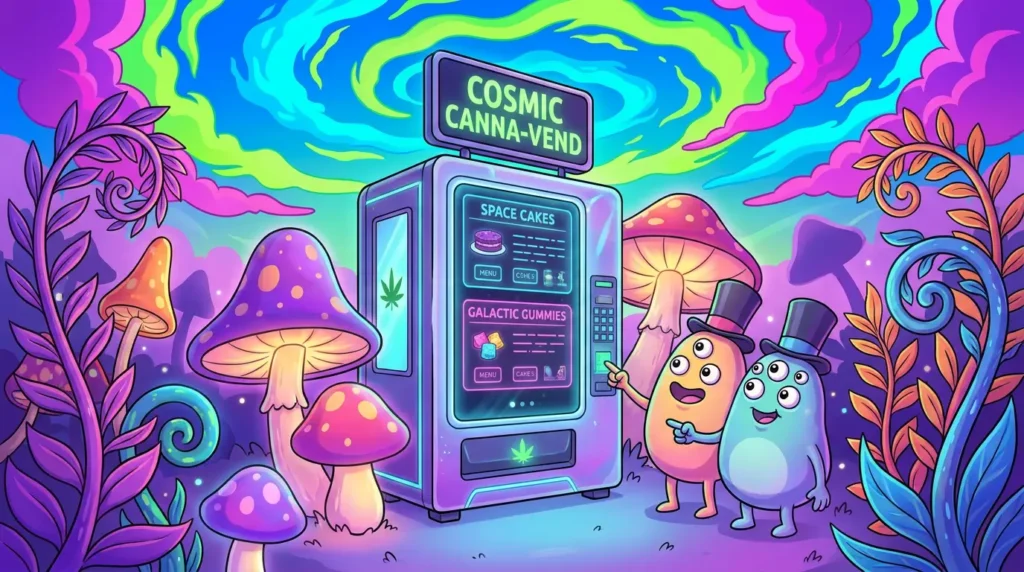
Picture this: a customer walks into a dispensary, bypasses the long line snaking around the budtender counter, scans their ID at a sleek kiosk, and walks out with a pre-rolled pack in under 90 seconds. No small talk. No waiting. Pure frictionless conversion.
If you’re still relying solely on human labor to move flower in 2026, you’re leaving serious cash on the table. The cannabis vending machine market isn’t a futuristic gimmick anymore—it’s the frontline of automated cannabis retail, and the numbers are ballistic. Early adopters are seeing average basket sizes jump by 30% while slashing payroll overhead. The question isn’t if these machines will reshape the dispensary experience, but how fast you can integrate them before your competitors do.
But here’s the hard truth: deploying a smart vending unit isn’t just a hardware play. It’s a compliance minefield wrapped in a UX puzzle. A machine that crashes during ID verification or fails to sync with your seed-to-sale software can turn your highest-traffic Saturday into a regulatory nightmare.
In this deep dive, we’re mapping the entire cannabis retail innovation landscape for Q2 2026. We’ll unpack the tech upgrades that finally make these machines viable for high-volume operators, break down the state-by-state regulatory patchwork, and show you exactly how to optimize the customer journey for impulse purchases. Whether you’re exploring dispensary automation solutions for the first time or scaling your fleet, this update gives you the actionable blueprint.
The State of the Market: Why Q2 2026 is the Tipping Point
The shift we predicted back in 2024 is no longer theoretical. Consumer expectations have fundamentally changed. After years of curbside pickup and delivery apps, the modern cannabis consumer views waiting in line as a design flaw, not a necessary evil.
In Q1 2025, we saw major cannabis vending machine manufacturers like anna™ and GreenStop secure multi-state operator (MSO) contracts that signaled a shift from pilot programs to full-scale deployment. By Q2 2026, the conversation has matured. We aren’t debating whether age-verification vending tech works; we’re watching operators compete on the quality of the automated interaction.
What’s driving this surge?
- Labor Optimizing: With margins compressing in mature markets like Colorado and California, operators cannot afford a 1:1 ratio of budtenders to browsing customers.
- Speed of Service: Data shows that automated cannabis retail units process transactions 3x faster than the average human budtender during peak hours.
- Upsell Consistency: A machine never forgets to ask, “Do you want to add a lighter or a battery?”
However, the real unlock for Q2 2026 isn’t hardware—it’s software. Specifically, the integration of predictive inventory engines. The newest dispensary automation solutions don’t just dispense product; they analyze sell-through rates in real-time and dynamically adjust on-screen promotions.
Quick-Answer Insight: The operators winning right now aren’t just installing hardware; they are blending cannabis retail innovation with a ruthless focus on reducing “time-in-store” while increasing spend per visit.
How Automated Cannabis Retail Machines Actually Work
Before you sign a purchase order, let’s strip away the marketing gloss. A cannabis vending machine is essentially a robotic safe governed by a state-mandated API. The technical dance between a driver’s license scan and a product drop is more complex than a standard snack machine—and the Q2 2026 specs are finally enterprise-grade.
The Biometric & Blockchain Handshake
Every transaction starts with a defensive perimeter. Modern age-verified cannabis kiosks utilize optical character recognition paired with passive liveness detection. The machine doesn’t just scan the barcode; it compares the photo on the ID to the face of the person standing in front of it.
Simultaneously, the unit broadcasts a verification request to the state’s mandatory seed-to-sale tracking system. Here’s where blockchain technology is revolutionizing the backend. Some operators are moving verification logs to a distributed ledger. Why? Because it creates an immutable, time-stamped record of the ID check that exists independently of both the dispensary’s server and the machine’s local storage. If a state auditor asks for a compliance report, you don’t pull a CSV file; you provide a cryptographically secure proof of verification.
How a Transaction Flows (The 5-Second Rule)
If you break down the dispensary automation process, it looks like this:
- Identity Binding: The user scans ID. The machine creates a one-time encrypted token.
- Age Gate Logic: The software calculates the user’s exact age to the day, not just “over 21,” ensuring no accidental sales to underage users during a birthday edge case.
- Inventory Sync: The front-end UI removes any product from the digital shelf that has a negative quantity in the backend POS, preventing overselling.
- Payment Capture: The unit processes cashless payments through a compliant, PIN-based debit rail or a closed-loop gift card system.
- Custody Transfer: The robotic arm or coil motor releases the product only after payment settles. The transaction closes in the state registry.
This isn’t a gimmick. This is a high-frequency retail engine.
Designing for Experience: The New Frontier of Cannabis Vending UX
Let’s talk about the “hospitality trap.” A common fear is that smart vending kills the vibe. It doesn’t have to. The mistake operators make is treating the screen like a spreadsheet.
Visual Merchandising in a Digital Grid
Think of the kiosk screen as a vertical shelf. The top row is your premium “eye-level” real estate. You need to apply the AAA Diamond model instantly recognizable to seasoned retail designers. When I consult for operators rolling out cannabis vending machine market strategies, I see a direct correlation between high-resolution lifestyle imagery on the touchscreen and an increase in basket size. Don’t just show the bag; show the sunset hike where the customer plans to enjoy it.
Reducing Cognitive Load
A confused mind says “no.” If a user has to tap three times to find a pre-roll, you’ve lost them. The most successful Q2 2026 interfaces use a “three-tap checkout”: Category -> Product -> Pay.
- Tap 1: “I want to relax.”
- Tap 2: “Indica Gummies.”
- Tap 3: “Checkout.”
Does your current automated cannabis retail flow allow for this, or are you forcing customers to scroll through a wall of text? If it’s the latter, you’re bleeding conversions.
Regulatory Compliance: Hardwiring Trust into Every Transaction
You cannot talk about dispensary growth without confronting the regulatory elephant in the room. Cannabis retail innovation without compliance isn’t innovation; it’s a liability. Q2 2026 brings tighter scrutiny on unattended retail.
The Patchwork Problem
If you operate in multiple states, your cannabis vending machine strategy cannot be uniform.
- California: Strict limits on unattended operation. Most machines require a dedicated “rover” staff member within a line of sight.
- Nevada: Cashless payment integration is harder due to historical banking friction, making closed-loop cards essential.
- Emerging Markets: States launching adult-use programs in 2026 are writing vending machine language into their initial regulations, which is a massive win. They are defining age-verification vending tech standards from day one.
Hardware Compliance Specs
Don’t cheap out on the enclosure. A standard UL-listed commercial safe isn’t enough. You need:
- Tamper-Evident Seals: For logistics transfers.
- Automatic Lockdown Mode: If the machine loses connection to the state traceability system for more than 30 seconds, it must stop all sales.
- Surveillance Integration: The machine’s onboard cameras must feed directly into your existing security DVR with a uniquely tagged time stamp.
When a regulator walks in, they shouldn’t have to ask how your dispensary automation solutions keep product safe. It should be glaringly obvious.
Quick Wins: Optimizing Your Product Strategy for Smart Vending
Let’s shift to practical execution. You don’t need a fleet of 20 machines to win. You need the right mix of products and a tight funnel strategy. Here are the quick wins validated with operators who are currently dominating the cannabis vending machine market.
1. Curate for the Impulse Buyer
Your budtender can sell a complex $60 live resin cart because they can explain the terpene profile. Your machine can’t (yet). Load your automated units exclusively with “Low-Risk, High-Recognition” SKUs. We are talking about legacy brand pre-rolls, classic gummy flavors, and single-source flower that has already built repeat purchase loyalty.
2. The “Line Skip” Pass
Experiential smart vending works wonders for patient retention. Create a premium loyalty tier where medical patients (or top-spend recreational users) receive a QR code that gives them priority access to the machine queue. This isn’t just about speed; it’s about status. You are giving them a VIP pass away from the crowd.
3. Dynamic End-of-Day Pricing
One of the slickest features of dispensary automation is the ability to algorithmically adjust prices. At 8:00 PM, if you have a surplus of a batch that’s been testing at a lower THC percentage, the screen can automatically apply a “Night Owl Discount.” This moves aging inventory without a budtender having to awkwardly push a product they know is sub-par.
The Customer Engagement Funnel: From Curiosity to Repeat Buyer
The transaction isn’t the finish line; it’s the midpoint. The cannabis vending machine is a high-volume capture tool, but you need to push those anonymous customers into your owned marketing channels.
Capture the Email Post-Sale
On the “Thank You” screen, offer a $1 charity donation or a chance to win a branded hoodie in exchange for an email. Don’t offer a discount on the next purchase immediately—first-time kiosk users aren’t loyal yet; they are convenience seekers. Offer social currency.
Contextual Retargeting
Utilize the purchase record to segment users automatically. If John bought a 10mg THC sleep gummy at 11 PM via the machine, your email system should tag him as “Nighttime/Relief.” Two days later, your cannabis retail innovation strategy triggers an automated email: “Sleep better. Discover our new CBN + THC gummies.” The machine fed the top of the funnel; your CRM needs to build the long-term value.
Trust and Transparency Signaling
It’s not enough to claim your machines are secure; you need to demonstrate it. For your digital presence showcasing your automated cannabis retail, integrate a live-feed review widget on your website. Let site visitors see tweets (X posts) or reviews from actual customers scanning their IDs. That social proof builds experiential credibility. How often do you showcase the actual face of a happy customer using your tech?
FAQs: Cannabis Vending Machines in 2026
Are cannabis vending machines legal everywhere in the US?
No. However, the cannabis vending machine market is expanding jurisdiction by jurisdiction. Legality is dependent on state cannabis laws and specific local ordinances. As of Q2 2026, they are most common in states with mature medical or adult-use frameworks, but always require strict age-verification vending tech integration with the state’s monitoring system.
How does the machine stop minors from buying?
Modern units use a dual-layer defense. First, the age-verified cannabis kiosks scan the 2D barcode on the back of the ID and cross-reference the data with the physical card to detect fakes. Second, AI-powered cameras perform facial analysis to match the ID photo with the live user, often supported by manual remote verification for ambiguous scans.
What happens if the cannabis vending machine loses internet?
This is a critical compliance feature of dispensary automation solutions. If the machine loses connectivity to the state seed-to-sale tracking system, a “hard-stop” protocol activates instantly. The transaction screen locks, and no sales can be completed until the connection is restored, ensuring you never sell a gram off the books.
What is the best product to sell in a cannabis vending machine?
Based on Q2 2026 data from automated cannabis retail, pre-rolls and standard-dose gummies dominate unit sales. These are “known commodities” with predictable effects, requiring little to no budtender explanation, which makes them perfect for smart vending impulse purchases.
Can I integrate the machine with my existing dispensary POS?
Yes, via API. The key to successful cannabis retail innovation is ensuring your vending software “speaks” to your main inventory database. It’s recommended to use an intermediary middleware that can translate the machine’s data stream to your specific POS provider (Flowhub, Dutchie, Treez, etc.) to prevent inventory ghosting.
How often do the machines need to be restocked?
This depends entirely on your velocity and the capacity of the unit. A high-traffic cannabis vending machine location might need restocking of top-selling SKUs once per shift, while less busy units might last 2-3 days. Look for machines with telemetry dashboards that send “low stock” alerts to your operations team.
Conclusion: The Impulse Economy is Automated
The hand-holding era of cannabis retail is sunsetting for a large segment of the market. The informed consumer doesn’t want to be educated every time they visit; they want to be efficient. The cannabis vending machine market expansion in Q2 2026 proves that operators can finally trust robots with the simplest—and most profitable—part of the transaction: the straightforward re-buy.
By embracing dispensary automation solutions, you aren’t killing the human touch; you’re redeploying it. You take the budtender out from behind the counter to walk the floor, engage with the confused newbie who really needs help, and build a relationship while the machine silently handles the volume spikes.
The tech is ready. The regulations are coalescing. The customer demand for speed is peaking.
Now, over to you: Have you mapped out how a 90-second transaction could triple your peak-hour throughput? If you haven’t calculated that number, your competitors likely have.
Let’s keep the conversation rolling. Drop a comment below with your biggest hesitation about unattended retail, or share this breakdown with your ops team. And if you want to catch the next wave of cannabis retail innovation, subscribe to our newsletter—we break down the tech, the policy, and the strategy so you don’t have to.