
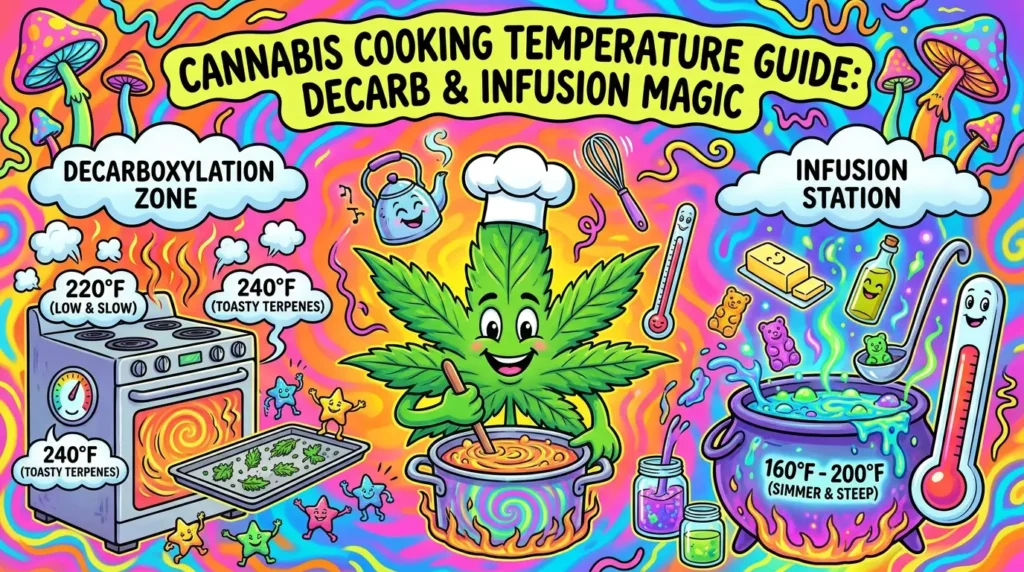
Stop guessing and start knowing. If you’ve ever wasted precious flower on a batch of brownies that barely hit, or created a homemade tincture that tastes like a mouthful of lawn clippings, you’re in the right place. The culprit isn’t your recipe; it’s almost certainly your misunderstanding of the Cannabis Cooking Temperature. This isn’t just about throwing weed into butter; it’s a strategic, scientific process where precise heat activation is the funnel that turns raw plant material into a high-conversion, deeply therapeutic edible experience.
For years, the conversation around edibles has been dominated by guesswork and stoner mythology. But the landscape has shifted. The modern cannabis kitchen is a high-tech laboratory where we chase not just potency, but the perfect entourage effect. This guide is your blueprint. We’re diving deep into the thermal dynamics of cannabinoids, bypassing the noise to give you a clear, actionable protocol. Whether you’re crafting a full-spectrum CBD salve or a high-THC gourmet dinner, mastering temperature is the single highest-leverage engagement driver—it’s what turns a one-time experimenter into a lifelong connoisseur. Are you ready to stop wasting your plant’s potential and start creating consistent, reliable, and potent infusions every single time?
The Critical Conversion: Why Temperature is Your Primary Lever
Let’s get one thing straight: raw cannabis is largely non-psychoactive. In its natural state, the plant produces cannabinoid acids like THCA and CBDA, not the THC and CBD your body recognizes. Think of it like a website with incredible content that’s hidden behind a broken navigation menu—the value is there, but no user (or in this case, no receptor in your body) can access it. The conversion event, the moment you unlock that value, is called decarboxylation.
Mastering the Cannabis Cooking Temperature is the single most critical control point in this entire process. A 2016 study published in the journal Cannabis and Cannabinoid Research confirmed that the conversion of THCA to THC is almost entirely dependent on time and temperature, with efficiency dropping off dramatically if parameters aren’t met. When you just toss ground flower into a brownie mix and bake it at 350°F, you’re not being efficient; you’re executing a high-risk strategy that usually leads to a low return. The extreme heat converts some THCA, sure, but it simultaneously vaporizes the very THC you just created, along with the delicate aromatic terpenes. You’re literally burning your potential profit.
To get a true picture of why this matters, consider the concept of value preservation. Every cannabinoid and terpene has a boiling point. Exceed it, and you’re not just “cooking”; you’re destroying the active ingredients. The question you need to ask yourself every time you preheat the oven is: Am I designing this process for maximum retention, or am I just winging it?
Decarboxylation Demystified: The Quick Win You Can’t Skip
Decarboxylation—or “decarbing”—is the non-negotiable first step. It’s the manual optimization of your raw material. By applying a controlled, low heat over a sustained period, you catalyze a chemical reaction that removes a carboxyl group (COOH) from the cannabinoid acids, releasing carbon dioxide and leaving behind the active compounds like delta-9-THC. This is your foundational quick win. Without it, your infusion is dead on arrival.
To execute this flawlessly, you must think of your oven as a piece of precision marketing tech. You wouldn’t launch a campaign without first segmenting your audience; don’t decarb without precisely calibrating your tools. Always use an external, oven-safe digital thermometer. The built-in dial on your appliance is often off by 10 to 20 degrees, a margin of error that can completely nuke your terpenes. Lay your coarsely ground flower in a single layer on a parchment-lined baking sheet, cover it tightly with foil to lock in those volatile compounds, and treat the next step as gospel.
The Exact Cannabis Decarb Temperature Chart
This is your cheat sheet. Forget the conflicting forum posts. Scientific consensus points to a sweet spot that balances reaction speed with compound preservation. Use this chart to maximize the activation of your most valuable assets.
| Target Compound | Optimal Activation Temperature | Time (Range) | Key Strategy |
|---|---|---|---|
| THCA to THC | 220°F – 240°F (104°C – 115°C) | 25 – 40 minutes | Use the lower end (220°F) to preserve terpenes if you plan to add them to a hot dish later. This is your primary conversion funnel. |
| CBDA to CBD | 240°F – 260°F (115°C – 127°C) | 40 – 60 minutes | CBD requires a slightly more aggressive push. If working with high-CBD strains, extend the time but watch for browning. |
| CBGA to CBG | 230°F (110°C) | 30 – 45 minutes | The “mother cannabinoid” is sensitive. Consistency here drives the downstream health benefits. |
The visual cue is critical: your flower should transform from vibrant green to a dry, crumbly, light golden-brown. If it’s dark brown or black, you’ve torched your inventory and your user engagement metrics will reflect zero satisfaction.
The Time Factor: A Slippery Slope to Sedation
Why do some edibles knock you out cold while others offer a burst of creativity? This isn’t just strain-dependent; it’s a direct result of your Cannabis Cooking Temperature and duration. Prolonged exposure to heat doesn’t just decarboxylate; it degrades. Delta-9-THC begins converting to CBN (cannabinol), a cannabinoid known for its powerfully sedative, mildly psychoactive properties. A study by Paul Hornby from 2015, widely cited in extraction science, highlighted that while CBN is therapeutic, it’s often the unintended byproduct of poor temperature control. If your homemade cookies make everyone fall asleep on the couch, you’ve over-decarbed and cranked up the CBN ratio. You didn’t make a party edible; you engineered a sleep aid. Are you tracking the end-user experience you’re actually creating?
The Infusion Phase: Low and Slow Wins the Race
Once your flower is activated, you’ve got a potent, highly marketable asset ready to be bound to a carrier. This is the infusion phase, and the cardinal rule here is “low and slow.” Cannabinoids are lipophilic, meaning they have a high affinity for fats and alcohols, not water. To complete the successful transfer, you need to suspend your decarbed flower in a fat source and apply gentle heat to allow the resinous trichomes to melt and dissolve.
The ideal Cannabis Infusion Temperature sits firmly between 160°F and 190°F (71°C – 87°C). You are not trying to cook the mixture; you are simply creating a thermodynamic environment where these valuable molecules detach from the plant and bond with the lipid chains of your oil. This is a classic example of quality over speed. A rapid boil at high heat might seem like a growth hack, but it’s actually a value-destroying move that scorches the plant matter and vaporizes the active components you worked so hard to activate.
Butter, Oil, and Alcohol: Optimizing the Medium
Your choice of fat is your targeting platform. Each has a different saturated fat content, which dictates how much THC it can hold before reaching saturation.
- Clarified Butter or Ghee: With a high smoke point and pure fat content, this is a premium asset. The removal of milk solids reduces the risk of burning and creates a cleaner infusion.
- Coconut Oil (Refined): The industry gold standard. It boasts the highest saturated fat content (around 90%), making it a conversion powerhouse for maximum bioavailability. Plus, its neutral taste is versatile.
- High-Proof Alcohol: When creating tinctures, heat is the enemy of a clean taste. Freezing the flower and alcohol separately before combining (the “cold wash” method), or using a countertop still for careful evaporation, prevents the extraction of harsh, water-soluble plant compounds like chlorophyll. This is the pathway to a premium, top-shelf product.
How to Tell If You’ve Degraded Your Valuable Cannabinoids
The user feedback loop here is sensory. What are the performance indicators of a failed infusion?
- The Taste Test: Does it taste like burnt popcorn or bitter charcoal? You’ve burned your fat and the plant material. That’s a total loss.
- The Color Profile: A healthy, long-steeped oil will be a rich, translucent emerald or amber. An opaque, dark green-black sludge indicates chlorophyll contamination from cooking too hot or too long.
- The Aroma: Before infusion, your decarbed flower should smell nutty and toasty. After a low-heat infusion, the oil should carry those same warm notes. If the smell is gone, you’ve volatilized your terpenes.
Navigating the Entourage Effect: Beyond THC and CBD
If your entire edible strategy revolves around THC percentage, you’re optimizing for a vanity metric. The true power of cannabis lies in the entourage effect—the synergistic interaction of cannabinoids and terpenes, where the combined effect is far greater than the sum of its parts. A 2011 review in the British Journal of Pharmacology laid the groundwork for this, demonstrating how terpenes and minor cannabinoids significantly modulate the effects of THC, reducing anxiety and enhancing therapeutic benefits.
To harness this, your Cannabis Cooking Temperature protocol must shift from a one-size-fits-all model to a tiered strategy. You can’t maximize THC and preserve delicate fruit-forward terpenes at the same temperature; physics won’t allow it. Smart operators recognize this and adjust their strategy mid-process, a tactic akin to adjusting bids in a live campaign based on performance data.
The Terpene Goldmine: Why Flavor Equals Function
Terpenes are the aromatic compounds responsible for the scent of lavender, lemon, and pine. In cannabis, they provide the flavor, but more importantly, they directly influence the psychoactive journey. Losing terpenes to excessive heat doesn’t just make your edibles taste flat; it fundamentally alters the quality of the user’s experience.
The Terpene Temperature Guide
To preserve these volatile organics, you need to know their boiling points. Exceeding these temperatures means immediate evaporation and a permanent loss of both flavor and therapeutic synergy.
- Myrcene (Sedative, “Couch-Lock”): Boiling point around 332°F (167°C). That musky, herbal, mango-like vibe is critical for a relaxing product. If your infusion method involves rapid, high-heat processing, you’re stripping away the relaxing component, leaving a potentially racy, anxiety-inducing THC experience.
- Limonene (Mood Elevation, Stress Relief): Boiling point around 349°F (176°C). This bright, citrusy terpene is a driving force behind the “up and active” feeling. Preserving it requires strict adherence to sub-300°F decarb and infusion protocols.
- Beta-Caryophyllene (Anti-Inflammatory, Spicy): Boiling point around 266°F (130°C). A major player in pain relief. The peppery note is a sign of a functional, well-processed edible, but it’s one of the first to go if your process isn’t airtight.
The advanced move here is terpene re-introduction. Because you will inevitably lose some terpenes during decarb, professionals often source high-quality, cannabis-derived terpenes and add them back to the infusion after it has cooled down to around 120°F. This guarantees a full-spectrum, premium user experience that commands brand loyalty.
Advanced Protocols for the Modern Cannabis Kitchen
To dominate in a sophisticated market, you need sophisticated tools. The era of the double boiler is being replaced by precision immersion technology, a move that provides the ultimate control over your process. This isn’t about cooking; it’s about data-driven extraction.
Sous-Vide Precision: The Ultimate A/B Test for Potency
The sous-vide immersion circulator is the killer app for the home cannabis chef. By sealing your flower or oil in a vacuum bag and submerging it in a precisely controlled water bath, you eliminate temperature fluctuation entirely. This method offers an airtight, odor-free, and thermally perfect environment.
Here is your advanced workflow for maximum conversion and retention:
- Decarb (Sous-Vide Method): Set your circulator to 203°F (95°C). Submerge the vacuum-sealed cannabis for 60 minutes. Because water transfers heat more efficiently than air, you get a more uniform conversion and completely eliminate the risk of hot spots that can scorch your flower. This is a set-and-forget, zero-risk entry point.
- Infusion (Double-Bag Method): Reduce the water bath temperature to 185°F (85°C). Add your chosen oil to the decarbed flower bag, re-seal, and submerge for a full 4 hours. This is the ultimate “low and slow” protocol, yielding an oil with exceptional clarity and a complete terpene profile that survives because the temperature never spikes.
Does this take longer? Yes. But the difference in quality is the difference between a generic display ad and a highly-targeted, personalized funnel. One merely exists; the other converts exponentially better.
The Biggest Cannabis Cooking Temperature Mistakes
Let’s do a hard reset on some pervasive myths that are acting as performance bottlenecks in your kitchen. If you’re making these errors, you’re not cooking; you’re composting.
- The “Just Throw it in the Batter” Delusion: This is the cardinal sin of edibles. Relying on a 350°F oven to decarb and infuse during the 25-minute baking time for a batch of cookies is a recipe for failure. The internal temperature of the batter rarely gets high enough for a complete decarb, but the exterior of any ground flower particles will oxidize. The result is a completely unpredictable, mostly non-psychoactive product. Are you comfortable with such a wildly unpredictable conversion rate?
- The Microwave Madness: Microwaves work by agitating water molecules. They provide chaotic, uneven bursts of heat that will instantly vaporize terpenes and create localized hot spots that degrade THC before the rest of the material is even warm. If you’re trying to decarb in a microwave, you’re effectively throwing your product lifecycle into a blender.
- The Grinding Error: Are you grinding your flower to a fine powder before decarbing? Stop. You’re rupturing all the protective trichome glands, exposing the volatile oils directly to the oven’s atmosphere for the entire duration, accelerating their evaporation. A very coarse hand-break is far superior. Preserve the structure to preserve the value.
Frequently Asked Questions
What is the best temperature to cook cannabis to activate THC?
The optimal Cannabis Cooking Temperature for activating THC (decarboxylation) is between 220°F and 240°F (104°C – 115°C) for 25 to 40 minutes. For maximum accuracy and terpene preservation, use an external oven thermometer and look for a light golden-brown color.
What is the ideal temperature for infusing cannabis into coconut oil?
For infusion, you should keep the oil between 160°F and 190°F (71°C – 87°C). The best practice is to hold it at 185°F for 4 hours, using a double boiler or a sous-vide machine to prevent the temperature from exceeding 200°F, which destroys valuable cannabinoids.
Can you decarb weed in the microwave?
No. A microwave provides chaotic, uneven heat and cannot accurately maintain the steady Cannabis Cooking Temperature needed for a proper chemical conversion. It will instantly burn off terpenes and degrade the THC into CBN, creating a weak, non-psychoactive product with zero therapeutic engagement.
Why do my homemade edibles make me sleepy but not high?
This is a direct result of overheating. Prolonged exposure to high temperatures converts delta-9 THC into CBN, a sedative cannabinoid. If you bake your edibles too hot or decarb for too long, you accidentally engineer a sleep aid instead of a euphoric experience.
Does freezing your cannabis before making edibles help?
Yes, but not for decarbing. Freezing is a technique used to make better tinctures. When doing a cold ethanol wash, freezing the plant material and the alcohol hardens the cell walls and makes them brittle, allowing the trichomes to snap off efficiently while preventing the extraction of harsh chlorophyll, resulting in a cleaner, golden extract.
Is it necessary to cover cannabis when decarbing in the oven?
Absolutely. You should tightly cover your baking dish with aluminum foil or use a sealed oven bag. This creates a microclimate that locks in volatile terpenes, preventing them from being blown away by the oven’s convection fan, ensuring your final product retains its aromatic profile and therapeutic entourage effect.
What happens if I exceed the recommended cannabis infusion temperature?
Exceeding 200°F (93°C) triggers rapid cannabinoid degradation. You begin to burn off the desired THC and aromatic terpenes, converting your active ingredients into sedative CBN and an unpleasant, charred flavor profile that signifies a total loss of product quality and user satisfaction.
Final Verdict: Your Edible Strategy Moving Forward
Mastering the Cannabis Cooking Temperature is not a simple kitchen hack; it’s the core technology stack behind any successful edible or medicinal infusion. We’ve moved past the era of burnt brownies and unpredictable highs. You now have the schematic for a precision process: a strategic, low-temperature decarb to activate your primary assets, a slow, controlled fat infusion to lock in the value, and a new awareness of terpene boiling points to protect the holistic user experience.
From the sous-vide deep dive to the golden-brown color guide, every step you take from here should be data-driven. You’re not just making food; you’re delivering a programmable, consistent, and repeatable experience. The only question that remains is execution. Will your next batch be a guess, or will it be a calibrated, high-performance product built on the principles of thermal science?