
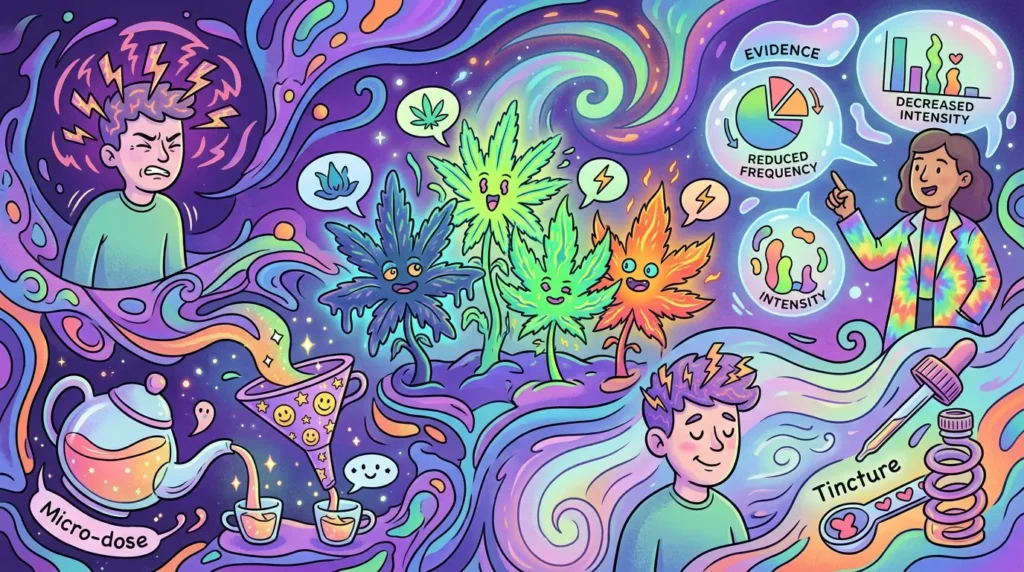
The throbbing starts behind your left eye. It feels like someone is slowly tightening a vise around your skull. You’ve dimmed the lights, tried over-the-counter pills that barely scratch the surface, and maybe even tracked your triggers in a journal that hasn’t left your nightstand in months. If this scenario sounds painfully familiar, you’re not just looking for relief—you’re looking for a strategy that actually converts that relief into a fully functional day. That’s precisely where medical cannabis for migraines enters the conversation, transforming from a whispered folk remedy into a legitimate, data-backed intervention.
For years, the conversation around cannabis was clouded by stigma. But the modern understanding of chronic pain management has evolved. We’ve moved past the binary thinking of “does weed help headaches?” to a sophisticated, targeted inquiry: which specific molecules, strains, and delivery methods stop a neurological storm in its tracks? The modern migraine warrior isn’t looking for a buzz; they’re looking for real engagement with their own endocannabinoid system to recalibrate a brain screaming in pain.
Think of your migraine not just as a headache, but as a temporary glitch in your brain’s operating system. Cannabis doesn’t just reboot the system; it modulates the pain signals at the synaptic level. But here is the hard truth that most surface-level blogs won’t tell you: smoking a random joint you got from a friend is just as likely to exacerbate your pain as it is to soothe it. The game has changed, and precision is everything. The goal is to stop the pain without stopping your life.
The Endocannabinoid Deficiency Theory: Why Your Brain is Screaming
Before we talk about products, we need to talk about roots. Why does cannabis for migraines work for so many when pharmaceuticals fail? The answer lies in a theory that has shifted the entire medical paradigm: Clinical Endocannabinoid Deficiency (CED).
Think of your endocannabinoid system (ECS) as your body’s homeostatic regulator. It’s the traffic controller for your neurotransmitters. When you have a migraine, your neurons are firing off like a DDoS attack on a server. Dr. Ethan Russo, a pioneering neurologist, proposed that many chronic pain conditions, specifically migraines, stem from an underperforming ECS. If your body isn’t producing enough of its own endocannabinoids (like anandamide, nicknamed the “bliss molecule”), it can’t put the brakes on pain signals.
So, when we talk about cannabis for migraines, we aren’t talking about intoxication. We’re talking about supplementation. Phytocannabinoids like THC and CBD act as external backup drives, plugging into your CB1 and CB2 receptors to reduce neuroinflammation and serotonin release. This isn’t just a “good vibe”—it’s a biological patch for a broken system.
Why is this crucial for your decision-making? Because if you understand that your migraine is a signal of deficiency, you stop chasing the “highest high” and start targeting the lowest effective dose to restore balance. This is the ultimate optimization of your internal engagement metrics—where “traffic” is nerve pain and “bounce rate” is a resolved headache.
Understanding the Endocannabinoid Connection to Head Pain
Why does cannabis work for some and not for others? The answer lies in a biological system that was only discovered in the 1990s: the Endocannabinoid System (ECS). This is your body’s master regulatory network, acting as a high-level traffic controller for neurotransmitters. When a migraine hits, your brain is essentially experiencing a failure in sensory processing, often linked to a deficiency in endocannabinoid tone—a condition some researchers call Clinical Endocannabinoid Deficiency (CECD).
Dr. Ethan Russo, a board-certified neurologist and psychopharmacology researcher, has pioneered the theory that migraines, fibromyalgia, and irritable bowel syndrome may all stem from an underperforming ECS. If your brain isn’t producing enough of its own “endogenous cannabis,” phytocannabinoids from the plant can step in to fill the gap.
What does this mean for your pain? Rather than just masking the pain like ibuprofen, cannabinoids like CBD and THC work to correct the dysfunctional signaling that causes the migraine in the first place. This creates a massive advantage for you because you’re addressing the root cause, not just the symptom. But to unlock this, we must dial in the chemistry.
The Clinical Evidence: What the Studies Actually Say
Let’s move away from anecdotes for a moment and look at the hard numbers. When we talk about medical cannabis for migraines, we are referring to a regulated, measurable intervention. A 2016 study published in Pharmacotherapy reviewed the effects of medical marijuana on migraine frequency. The results were striking: the number of migraine attacks decreased from an average of 10.4 per month to just 4.6 per month—a reduction of over 55%.
Furthermore, a significant 2019 retrospective study from the Skaggs School of Pharmacy in Colorado tracked 121 adults using cannabis for migraines. Nearly 40% reported a reduction in migraine days, with inhaled forms showing the fastest efficacy for acute “abortive” treatment. This highlights a crucial split in strategy: are you trying to stop a storm that has already started, or prevent the clouds from forming in the first place?
Did you know that even the way you consume cannabis changes the chemical structure? When you smoke or vaporize flower, the heat converts THCA into Delta-9-THC. However, when you eat edibles, the liver metabolizes Delta-9-THC into 11-hydroxy-THC, a compound estimated to be four to five times more psychoactive and profoundly more effective for deep, sustained pain relief.
What’s your current strategy for when a migraine breaks through your defenses? Do you reach for something fast-acting or a long-term shield?
Indica or Sativa for Migraines: Dismantling the Binary Myth
“Which one won’t glue me to the couch?” “Which one will let me still work?” This is the classic dilemma. Walk into any dispensary, and you’ll hear the stereotype: Sativa for daytime, Indica for nighttime. But when deciding on Indica or sativa for migraines, this binary is dangerously oversimplified. We need to think less about the plant’s physical structure and more about its chemical fingerprint.
Terpenes are the true conductors of the cannabis experience. To truly achieve high-impact symptom relief, you must match the terpene profile to the type of head pain you have.
- For Tension and Stress Migraines: High levels of the terpene Linalool (found in lavender) and Caryophyllene (a beta-caryophyllene that acts like a cannabinoid) are non-negotiable. Caryophyllene is unique because it directly activates CB2 receptors, reducing inflammation without any psychoactive “head change.”
- For Nausea and Vestibular Migraines: You need Limonen. If your migraines come with intense stomach upset and vertigo, limonene’s uplifting anti-anxiety effect is critical.
- For Acute Pain and Sensory Overload: Myrcene is your ally. Myrcene high strains are typically labeled “Indica,” and they lower the blood-brain barrier’s resistance, allowing THC to hit faster and harder to kill the pain signal.
Our Strategy Tip: A true “sativa” leaning profile (high in pinene and limonene) is usually better for the prodrome phase—that weird, foggy, irritable feeling you get before the pain starts. A “sedating” profile (high in myrcene and linalool) is your abortive tool during the peak pain phase.
The “Sativa” Myth for Migraines
While we ask “Indica or sativa for migraines,” note that pure Sativas (high in pinene) can sometimes trigger anxiety and increased heart rate, which is the last thing you want during an attack. We are looking for hybrids that lean heavily on specific terpenes, not just a “Sativa” label.
[Internal Link Opportunity: Check out our complete guide on Understanding Terpenes for Pain Relief to see the full flavor wheel and medical effects chart.]
Finding the Best Strain for Tension Headache Relief
A tension headache is not a full-blown migraine, but it’s the annoying little sibling that can easily escalate. The Best strain for tension headache is one that melts the physical knot in your trapezius muscle without inducing a panic attack. Tension headaches are largely driven by muscle constriction and stress. To convert that tension into release, you need a 1:1 ratio of THC to CBD.
High THC alone can paradoxically increase muscle tension and anxiety. CBD, on the other hand, is a muscle relaxant and an anxiolytic. When combined, they create the “entourage effect.”
Top Tier Profiles for Tension:
- Cannatonic (High CBD Hybrid): This is a powerhouse for the Best strain for tension headache because it doesn’t heavily intoxicate. It physically forces the muscles in the neck and shoulders to unlock.
- Harlequin: A classic sativa-dominant phenotype, but very high in CBD. It offers clear-headed relief. If you need to keep working in front of a screen, this stops the tension without the nap.
- Blue Dream: If the tension is purely stress-related, the myrcene in this strain wraps the brain in a warm blanket, washing away the “gritting” sensation in your jaw and temples.
Do you carry your stress in your neck or behind your eyes? Identifying the physical origin of your tension will dictate whether you need a myrcene-heavy or caryophyllene-heavy strain.
Best Gummies for Migraines: Precision Dosing for Prevention
Inhalation offers rapid onset, but for consistent, preventive pressure, nothing beats the edible strategy. When reviewing the Best gummies for migraines, we aren’t looking for gas station candy that sends you on a psychedelic ride. We’re looking for pharmaceutical-grade consistency with low sugar (since sugar spikes can trigger migraines).
The Criteria for a Migraine Gummy:
- Rapid Onset: Standard edibles take 60-90 minutes to kick in. Look for “nano-emulsified” or “liposomal” medical cannabis for migraines gummies. These bypass the liver initially and enter the bloodstream via the mucous membranes, cutting onset time to 15-20 minutes—critical for intercepting a migraine in the aura phase.
- Ratio is King: The clinically sweet spot for migraines is usually a 1:2 (THC/CBD) or 1:1 ratio.
- The CBG Factor: Cannabigerol (CBG) is the “mother cannabinoid.” It’s an excellent vasodilator and analgesic. The Best gummies for migraines in 2024-2025 are incorporating significant CBG doses.
A Practical Gummy Protocol:
Start with a 2.5mg THC / 5mg CBD gummy. Do not re-dose for 2 hours. The biggest failure point in the edible journey is the “this isn’t working, so I’ll eat another” trap, which leads to a dopamine crash and a worsened “hangover” headache. Consistency creates compounding relief. Micro-dosing daily with a 2.5mg gummy has shown in patient surveys to reduce the frequency of monthly attacks by bringing down the baseline of neuroinflammation.
[External Link: Review the 2019 study by the Journal of Pain Research regarding cannabinoid inhalation vs. oral administration for chronic pain onset timing.]
Dosing Strategies: From Micro to Macro
If the strain is the engine, dosing is the steering wheel. A common error in medical cannabis for migraines is “over-steering” into sedation. You don’t want to trade a migraine for a hangover. We use a tiered system.
Tier 1: Micro-Dosing (Prevention)
This is your daily supplement. 2.5mg to 5mg of THC, ideally combined with a high dose of CBD (15-25mg).
Objective: Regulate the ECS. You should not feel “high.” You should just notice an absence of the usual daily pressure.
Success Metric: A reduction in the total number of headache days per month.
Tier 2: Acute Abortive (The “Rescue” Dose)
You feel the first flash of the aura, or the nail starting to drive into your temple.
Action: Vaporize a small amount (1-2 short puffs) of a balanced hybrid flower. Wait 10 minutes. If the pain is severe, use a fast-acting nano gummy as a “slow-release” drag parachute while the vaporized THC acts as the “fast-release” nitrous boost. This dual-track method covers you for the immediate pain and the 3-hour horizon.
Tier 3: The Sedative Protocol (Emergency)
When the pain is an 8/10, and the only goal is to knock out the sensory input.
Action: A high-dose Indica-heavy RSO (Rick Simpson Oil), applied sublingually. This isn’t about being functional; it’s about inducing sleep to reset the neurological software. Always consult a doctor, but this “reboot” protocol is praised in patient communities for breaking intractable cycles.
Inhalation and Bioavailability: The Quick Win for Pain
Why do clinics often recommend vaporization for migraines? Bioavailability. When you ingest cannabis orally, it passes through the first-pass metabolism, leaving you with roughly 4-12% of the active cannabinoids. When you vaporize, you bypass the liver, achieving 30-40% bioavailability within seconds.
This is your “quick win” strategy. The speed of interaction between THC and your brain’s CB1 receptors through inhalation remains the gold standard for abortive migraine treatment. It’s the difference between catching the train at the station and chasing it three blocks down the track.
A Note on Safety: Avoid combustion. The carcinogens and heat created by a 1,500-degree Fahrenheit lighter degrade the terpenes you’re trying to use and constrict blood vessels through carbon monoxide intake. A dry-herb vaporizer set between 340°F and 380°F preserves limonene and caryophyllene.
Success Stories and the User Experience Flow
Let’s look at a real-world success mapping. Sarah, a 34-year-old graphic designer, suffered from menstrual-related migraines. Her flow was broken:
- Trigger: Hormonal drop.
- Old Result: 3 days of bed rest, missing project deadlines.
- New Strategy:
- 5 days before period: 10mg CBD/CBG gummy nightly (Prevention).
- Day of onset: 3 puffs of a 1:1 Harlequin vape cart + 5mg THC/10mg CBD nano-gummy.
- New Result: Project delivered on time. Pain blunted to a manageable “whisper” rather than a scream.
This isn’t a fluke. It’s the result of matching the delivery system to the specific phase of the neurological event. You aren’t just throwing compounds at a problem; you’re walking a precise path.
Frequently Asked Questions About Medical Cannabis for Migraines
Can medical cannabis completely cure my migraines?
No, but it can significantly alter the frequency and intensity. Medical cannabis for migraines is best viewed as a management tool, not a permanent cure. Clinical data points to a 40-50% reduction in headache days for consistent users, which is a massive quality-of-life upgrade for chronic sufferers.
Is smoking cannabis bad for migraines?
Smoking introduces combustion byproducts that can actually trigger headaches through vasodilation changes and oxidative stress. If you need the fast onset, always choose a dry-herb vaporizer over a joint or bowl to preserve the purity of the relief.
What is the Best strain for tension headache if I’m at work?
Look for a high-CBD, low-THC hybrid like Harlequin or Cannatonic. These strains allow you to retain cognitive function while releasing the physical clamp on your neck and scalp muscles. You’ll pass the “spreadsheet test” easily on these.
How do I choose between Indica or sativa for migraines?
Stop choosing based on the label and start choosing based on terpenes. For acute pain where you can’t see light, the myrcene in “Indica” types acts as a muscle relaxant. For the foggy prodrome phase, limonene and pinene in “Sativa” types lift the sensory processing deficit.
Are the Best gummies for migraines different from regular edibles?
Yes. The Best gummies for migraines have a precise ratio (usually 1:1 THC/CBD) and include minor cannabinoids like CBG. Crucially, many are nano-emulsified for a 15-minute onset, which lets you intercept the migraine before it establishes a foothold—standard edibles are too slow for this “intercept” strategy.
Can I use cannabis with my triptan medication?
This requires a candid conversation with your neurologist. While many patients use both without issue, combining vasoconstrictive triptans with cannabis (which can cause short-term heart rate variability) should be monitored. Do not alter prescription medications without professional guidance.
[External Link: Find a board-certified medical cannabis physician in your state via the American Medical Marijuana Physicians Association directory.]
Conclusion: Your New Prescription for Action
We’ve moved from the generic question of “does weed help?” to a tactical playbook. You now know that medical cannabis for migraines isn’t about chasing a high; it’s about engineering a specific, repeatable biochemical reset. We’ve broken down why the Best strain for tension headache differs chemically from a strain for a hormonal ocular migraine, and why choosing Indica or sativa for migraines is a false choice compared to the smarter terpene selection. We’ve navigated the edible aisle to find the Best gummies for migraines that prioritize function over fashion.
The path forward is clear: Identify your trigger, map your pain phase, select your delivery mechanism, and start low. Your migraines are a complex, nuanced puzzle, but your toolkit is now deeper than ever.
Are you ready to turn your next migraine from a full stop into a manageable comma in your day? Start tracking your results with a journal. Document the strain, the dose, and the outcome. The data will tell you more about your biology than any generic forum post ever could. If this guide changed how you view the connection between neurology and nature, share it with someone who is still suffering in the dark. Relief leaves clues—start following them.