
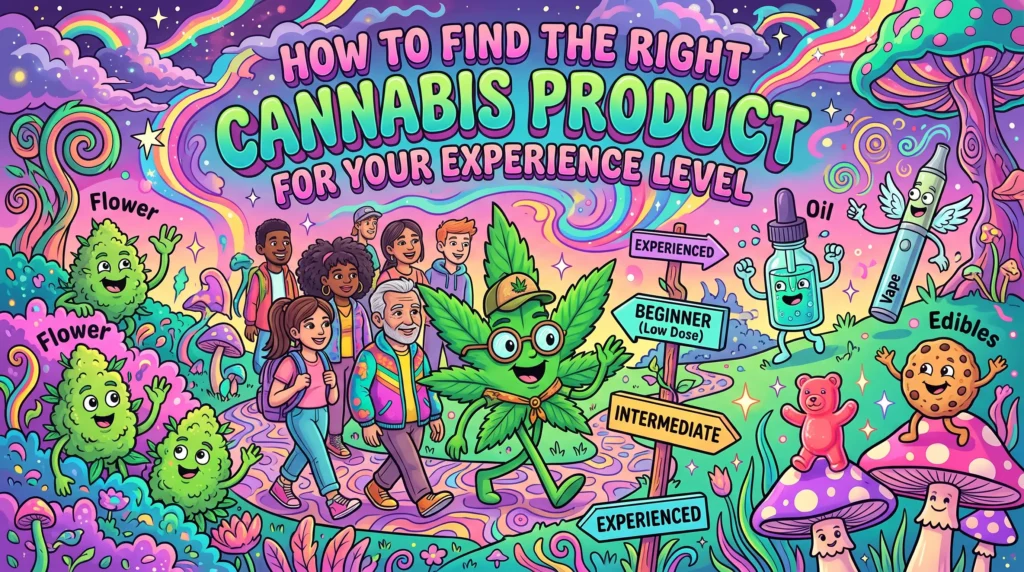
Sarah stood in front of the dispensary counter, her heart pounding slightly faster than usual. She had read the blogs, watched the YouTube tutorials, and even asked a friend who “knows someone.” Yet, faced with shelves labeled Indica, Sativa, Hybrid, Live Resin, Distillate, and Flower, she felt completely paralyzed. The budtender smiled politely but waited impatiently. Sarah didn’t want to buy something too strong that would ruin her evening, nor did she want something so mild it felt like wasting money. She wanted control. She wanted clarity. And most importantly, she wanted an experience that matched her body’s current tolerance, not just her curiosity.
If you have ever felt that same knot of anxiety in a cannabis store, you are not alone. The market has exploded in complexity over the last decade. What used to be a simple choice between two strains is now a biochemical puzzle involving cannabinoids, terpenes, extraction methods, and delivery systems. Choosing the wrong product isn’t just about wasted cash; it can lead to uncomfortable side effects like paranoia, dry mouth, or lethargy that lasts longer than intended.
This guide strips away the marketing jargon. We will walk through exactly how to assess your personal tolerance, decode product labels, and select the right format—whether flower, vape, edible, or concentrate—to ensure your next session is safe, enjoyable, and perfectly calibrated to your experience level.
Understanding Your Tolerance Profile Before You Buy
Your tolerance profile is the single most important factor in selecting a cannabis product, yet it is often ignored by new buyers who focus solely on strain names. To find the right product, you must first categorize yourself into one of three distinct tiers: Newbie, Occasional User, or Experienced Consumer. Each tier requires a different approach to dosage, potency, and delivery method.
Newbies typically have little to no prior exposure to THC. Their endocannabinoid system receptors are sensitive, meaning small amounts produce significant psychoactive effects. For this group, safety and predictability are paramount. High-potency concentrates or unmeasured edibles are dangerous territory. Instead, look for low-THC, high-CBD options or precise micro-doses.
Occasional Users consume cannabis perhaps once a week or during special events. They retain some baseline sensitivity but have built up minor immunity to acute effects. This group benefits from moderate-potency flower or vapes where they can titrate their intake slowly. Edibles work well here if the user remembers their previous experiences with timing.
🔥REFER A FRIEND
THEY GET 10% OFF THEIR FIRST ORDER🔥
Experienced Consumers use cannabis daily or near-daily. Their CB1 receptors have downregulated due to chronic exposure, requiring higher doses of THC to achieve desired effects. However, relying only on high THC can lead to diminishing returns and increased health risks. Experienced users often benefit more from full-spectrum extracts that preserve terpenes and minor cannabinoids, offering a more nuanced effect rather than just raw intensity.
Expert Insight: Never assume your tolerance based on how much alcohol you drink. Cannabis interacts with a completely different biological pathway. A heavy drinker might still get “greened out” from a standard joint if they rarely smoke weed. Always start lower than you think you need.
What Does “Experience Level” Actually Mean in Cannabis?
Experience level in cannabis refers to your tolerance — how your endocannabinoid system responds to THC after repeated exposure — not how many years you have technically known about cannabis. A person who has used cannabis for a decade but only once every few months may have a lower tolerance than someone who started six months ago and consumes daily.
Tolerance operates on a spectrum, but three broad tiers make product selection far easier. The table below maps each tier to practical product ranges.
A crucial caveat: tolerance and experience are not the same thing. Someone can have years of familiarity with cannabis and still have a low tolerance if they use it infrequently. Frequency of use is the primary driver of tolerance, because regular THC exposure gradually reduces the sensitivity of the brain’s cannabinoid receptors. Honest self-assessment here matters more than any other single factor.
Pro Tip: If you are returning to cannabis after a break of several weeks or longer, reset your internal category to “low tolerance.” Even a few weeks off can bring sensitivity closer to baseline. What felt moderate before the break may feel overpowering after it.
How Do You Match a Product Format to Your Desired Experience?
You match a product format to your experience by asking how fast you want to feel the effects and how long you want them to last. Inhaled products deliver effects within minutes; edible products can take 30 minutes to two hours, with a longer total duration. Neither is inherently better — but choosing the wrong format for your comfort level is one of the most common reasons a first experience goes sideways.
The table below compares the major consumption methods on the variables that matter most for matching.
The format decision is not cosmetic. A 10 mg edible and a 10 mg inhalation dose are not interchangeable: the edible passes through the liver, where THC is converted into 11-hydroxy-THC, a compound that is more potent and longer-lasting than inhaled THC. This is why the same milligram number can produce wildly different experiences depending on the route.
Expert Insight: If you are brand-new, inhalation of flower or a low-potency vape offers one underrated advantage: titration in real time. You can take one puff, wait 10–15 minutes, and decide whether more is needed. Edibles do not give you that feedback loop. They ask you to commit first and feel later.
Decoding the Label: Terpenes, Cannabinoids, and Extraction Methods
Once you know your tier, you need to speak the language of the label. Most consumers fixate on THC percentage, but that is merely one variable in a complex equation. To truly match a product to your needs, you must understand the entourage effect—the theory that cannabis compounds work better together than in isolation.
The Role of Terpenes
Terpenes are aromatic oils found in cannabis (and many other plants) that dictate the scent and flavor, but also influence the subjective “high.”
- Myrcene: Earthy, musky. Often associated with sedation and physical relaxation. Ideal for nighttime use or pain relief.
- Limonene: Citrusy. Linked to mood elevation and stress relief. Good for daytime creativity.
- Pinene: Piney. May help counteract short-term memory loss caused by THC and promotes alertness.
- Caryophyllene: Spicy/Peppery. Interacts with CB2 receptors, potentially aiding inflammation and anxiety without intoxication.
When buying, ask for terpene profiles. If you are anxious, avoid strains high in Limonene if they make you jittery, and lean toward Myrcene-heavy Indicas or balanced Hybrids.
🔥 Stack your savings. Elevate your session. 10% off $100, up to 25% off $450.
🔥 Roll into the menu and start saving. CLICK HERE!
Cannabinoid Ratios: THC vs. CBD vs. CBG
- High THC (>20%): Potent psychoactivity. Risk of anxiety for beginners. Best for experienced users seeking strong euphoria or pain management.
- Balanced (1:1 THC:CBD): Provides mental clarity alongside physical relaxation. Reduces the likelihood of panic attacks. Excellent for therapeutic use and cautious newcomers.
- High CBD (<5% THC): Non-intoxicating or mildly intoxicating. Great for inflammation, sleep, and anxiety without the “head high.”
Extraction Matters
How the oil is made changes its impact.
- CO2 Extracts: Clean, pure, retains natural terpenes. Smooth hit.
- Solventless (Rosin, Live Budder): Made using heat and pressure only. Preserves the full plant matrix. Highly regarded for quality and purity.
- Distillate: Pure THC/CBD isolate mixed back with added terpenes. Predictable potency but often lacks the depth of whole-plant extracts.
| Feature | Flower (Bud) | Vape Cartridges | Edibles/Gummies | Concentrates (Dabs/Rosin) |
|---|---|---|---|---|
| Onset Time | 1–10 minutes | 1–5 minutes | 30–90 minutes | Seconds |
| Duration | 2–4 hours | 1–3 hours | 4–8+ hours | 1–3 hours |
| Dosage Control | Moderate (hard to split joints) | High (puff count) | Very High (mg precision) | Low (easy to overconsume) |
| Best For | Socializing, ritualistic use | Discretion, quick relief | Sleep, long-lasting relief | Experienced users, medical needs |
| Beginner Friendly? | Yes, if smoked slowly | Yes, with low-mg carts | No, delayed onset risks stacking | No, extreme potency risk |
Matching Delivery Systems to Lifestyle Needs
The “right” product is not just about chemistry; it is about context. Where will you be? What do you need to accomplish? Here is how to align the medium with the moment.
1. Flower: The Traditionalist’s Choice
For those who enjoy the ritual of grinding, rolling, and smoking, flower remains king. It offers the most transparent view of what you are consuming—you can see the trichomes, smell the terpenes, and taste the strain.
- Pros: Full spectrum, customizable dose (take one puff, wait), social aspect.
- Cons: Lung irritation, odor, combustion byproducts.
- Strategy: Start with a pre-roll containing 0.5g to test a strain before committing to an eighth. Look for “Sun-Grown” organic flower for the cleanest burn.
2. Vapes: Precision and Portability
Vaporizers heat cannabis oil to release vapor without burning plant matter. Modern hardware allows for temperature control, letting you choose between flavor preservation (lower temps) and maximum potency (higher temps).
- Pros: Discreet, fast-acting, consistent dosing per puff.
- Cons: Battery life issues, potential for additives in cheap cartridges.
- Strategy: Only buy from licensed dispensaries. Check for COAs (Certificates of Analysis) ensuring no pesticides or heavy metals. Choose distillate for strength, live resin for flavor and entourage effect.
3. Edibles: The Long Game
Edibles process THC through the liver, converting Delta-9-THC into 11-Hydroxy-THC, a compound that crosses the blood-brain barrier more efficiently and produces a stronger, longer-lasting, and sometimes more psychedelic effect.
- Pros: No lung damage, discreet, long duration ideal for sleep or chronic pain.
- Cons: Unpredictable onset, difficult to reverse effects, risk of accidental overconsumption (“stacking”).
- Strategy: Golden Rule: Start with 2.5mg to 5mg of THC. Wait at least 90 minutes before considering another dose. Never eat a whole gummy because “it didn’t kick in after 30 minutes.” It likely will.
4. Topicals and Transdermals: Localized Relief
These products do not enter the bloodstream significantly, meaning they do not cause a psychoactive high. They interact with cannabinoid receptors in the skin and underlying tissue.
- Pros: Targeted pain/inflammation relief, zero impairment, safe for workplace environments.
- Cons: Does not help with systemic issues like nausea or insomnia.
- Strategy: Apply liberally to sore muscles or joints. Look for products infused with menthol or camphor for enhanced cooling/heating sensations.
How Do You Dose a Cannabis Product Without Overdoing It?
You dose a cannabis product by starting at the lowest effective range for your tolerance tier and waiting the full onset window before considering more. The universal principle — repeated across clinical guidance and public health recommendations — is “start low, go slow.” For beginners, that means 1–5 mg THC for edibles and tinctures, and one or two puffs of low-potency inhaled products.
A common mistake is treating 10 mg as a “standard” dose because it is a common package size. For a true first-timer, 2.5 mg is a smarter opening move; 5 mg is a reasonable standard dose for someone with average tolerance, not for someone starting from zero. You can always take more. You cannot take less.
The waiting rule is non-negotiable with edibles: wait a minimum of two hours before deciding the dose “isn’t working.” The CDC has documented that the delayed onset of edibles is exactly what leads to overconsumption — people assume the first dose failed, take a second, and then both arrive at once. Set a timer. The same logic applies to tinctures, though the window is shorter (30–45 minutes).
Pro Tip: Keep a simple cannabis journal for your first several sessions. Record the product, the dose in milligrams (or number of puffs), the onset time, the peak, the duration, and how you felt. Patterns emerge quickly, and they are far more reliable than guesswork. Clinicians who work with medical cannabis patients often recommend exactly this practice to improve outcomes and avoid repeat mistakes.
What Is “Greening Out,” and How Do You Avoid It?
“Greening out” is acute cannabis over-intoxication — a cluster of unpleasant symptoms including nausea, dizziness, anxiety, paranoia, rapid heartbeat, and a feeling of heaviness or dissociation. It is typically not life-threatening, but it is intensely uncomfortable and very good at convincing the person experiencing it otherwise. The primary cause is THC overstimulation of CB1 receptors, especially when a low-tolerance user consumes a high-potency product or takes a second edible dose too soon.
Prevention is straightforward and entirely within your control:
- Start below your perceived limit. The margin between a good first experience and an uncomfortable one is thinner than it will ever be again; use that information to be conservative, not daring.
- Respect the onset window. Do not redose an edible before two hours have passed. Do not chain vape hits because the first one “didn’t hit yet.”
- Choose a CBD-forward ratio if you are anxiety-prone. A 1:1 or CBD-dominant product is the safer entry point for nervous first-timers.
- Control your set and setting. Negative reactions show up disproportionately in new users, particularly in unfamiliar environments. A comfortable space, a meal beforehand, water within reach, and a relaxed headspace are not luxuries — they are harm-reduction tools.
- Never mix cannabis with alcohol on a low tolerance. Alcohol can exacerbate the symptoms of greening out and muddy your ability to gauge how intoxicated you are.
If a green-out does happen, the management is supportive: stay hydrated, rest, use deep breathing, and remind yourself that the experience will end. Inhaled symptoms often peak within 15–30 minutes and improve within a few hours; edible symptoms can peak around 2–4 hours and linger longer. CBD — ideally a CBD-only product, not a 1:1 that adds more THC — may help take the edge off the anxiety.
🔥REFER A FRIEND
THEY GET 10% OFF THEIR FIRST ORDER🔥
Practical Step-by-Step: Your First Smart Purchase
Let’s simulate a real-world scenario to cement this knowledge. Imagine you are an Occasional User looking to relax after a stressful workweek without feeling groggy the next morning.
Step 1: Define the Goal. You want relaxation, not sedation. You want to remain functional enough to watch a movie or chat with friends.
Step 2: Select the Category. Avoid edibles tonight; the long tail could disrupt your sleep schedule tomorrow. Avoid dabs; too intense. Choose between Flower or Vape. Let’s go with a Vape Pen for convenience and controlled dosing.
Step 3: Analyze the Terpene Profile. Ask the budtender for a cartridge high in Linalool (calming, floral) or Bisabolol (anti-anxiety, chamomile-like). Avoid high Myrcene if you fear couch-lock, though moderate amounts are fine. Aim for a Hybrid strain listing.
Step 4: Check Potency. Look for a cartridge with 70-80% THC. Anything above 90% is likely isolate-based and may feel harsh or one-dimensional. Ensure there is a mix of CBD or minor cannabinoids if available, as this smooths out the edges.
Step 5: Execute the Micro-Dose. Take one small puff. Hold it for 3 seconds. Exhale. Wait 15 minutes. Assess how you feel. If you feel nothing, take a second puff. Repeat until you reach the desired state. Usually, 3-5 puffs suffice for an occasional user.
Pro Tip: Keep a simple log. Note the product name, batch number, time consumed, amount taken, and effects felt 1 hour later. Over time, this data becomes more valuable than any generic advice online. You will learn that Strain X makes you paranoid, while Strain Y gives you creative energy. Personalization is the ultimate optimization.
Navigating Legal and Safety Landmines
The cannabis industry is still largely unregulated in many regions compared to pharmaceuticals. This creates trust gaps. To protect yourself, prioritize transparency.
Always request the Certificate of Analysis (COA). This lab report verifies:
- Potency: Does the THC % match the label?
- Purity: Are there residual solvents (butane, propane) left from extraction?
- Contaminants: Is the product free from mold, bacteria, pesticides, and heavy metals?
Reputable brands display QR codes on packaging that link directly to these third-party lab results. If a brand hides this information, walk away. Your health is worth more than saving $5 on a subpar product.
Furthermore, be aware of local laws regarding possession limits and driving under the influence. Cannabis impairs reaction time similarly to alcohol. Never drive after consuming, regardless of how “functional” you feel. The legal definition of impairment varies, but the physiological reality does not.
Conclusion: Curiosity Meets Caution
Finding the right cannabis product is less about finding the “best” strain in existence and more about finding the best fit for your unique biology and lifestyle. By understanding your tolerance level, decoding the science behind terpenes and cannabinoids, and respecting the mechanics of different delivery systems, you transform from a passive consumer into an informed curator of your own experience.
Start slow. Respect the delay of edibles. Prioritize lab-tested purity over flashy branding. And remember, the goal is enhancement of your life, not disruption of it. With patience and practice, you will build a personalized toolkit of products that serve you reliably, whether you need deep sleep, creative spark, or gentle relaxation.
🔥 Stack your savings. Elevate your session. 10% off $100, up to 25% off $450.
🔥 Roll into the menu and start saving. CLICK HERE!
FAQ Section
Q: How much THC should a beginner start with? A: Beginners should start with 2.5mg to 5mg of THC per dose for edibles, or take one small puff of flower/vape and wait 15 minutes. Avoid products with >20% THC initially to prevent anxiety or over-intoxication.
Q: What is the difference between Sativa, Indica, and Hybrid? A: Traditionally, Sativas are energizing and cerebral, Indicas are relaxing and sedating, and Hybrids blend both. However, modern science suggests terpenes (aromatic compounds) determine effects more accurately than these plant classifications.
Q: Why do edibles take so long to kick in? A: Edibles must pass through the digestive system and liver, where enzymes convert Delta-9-THC into 11-Hydroxy-THC. This metabolic process takes 30 to 90 minutes, causing a delayed but often stronger and longer-lasting effect than inhalation.
Q: Are cannabis vapes safer than smoking flower? A: Generally, yes, as vaping heats material without combustion, reducing tar and carcinogens. However, safety depends entirely on product quality. Only use cartridges from licensed dispensaries with verified Certificates of Analysis (COAs) to avoid vitamin E acetate or pesticide contamination.
Q: Can I build a tolerance to cannabis quickly? A: Yes, regular use can downregulate CB1 receptors, requiring higher doses for the same effect. Taking breaks (tolerance breaks) of 2-4 weeks can reset receptor sensitivity, allowing you to return to lower, more effective doses.