
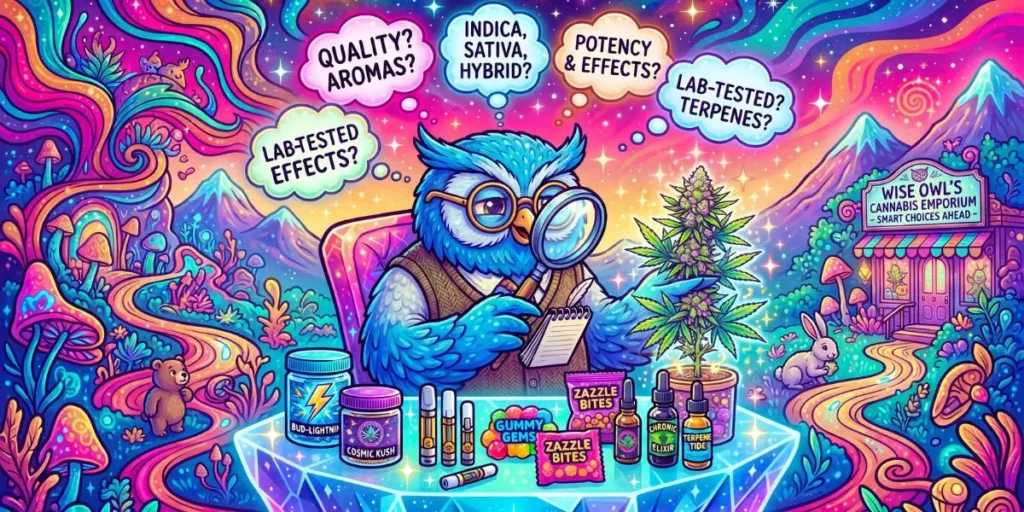
Let’s be honest—walking into a dispensary for the first time can feel overwhelming. You’re faced with dozens of options, unfamiliar terminology, and staff members speaking a language that might as well be Martian. But here’s the thing: making smarter cannabis buying decisions doesn’t require a degree in botany or chemistry. It just requires you to know what to look for and ask the right questions. Whether you’re a curious first-timer or someone looking to upgrade your purchasing game, this guide will walk you through everything you need to make choices that actually align with your needs and budget.
The landscape of cannabis consumption has shifted dramatically. We’ve moved from dimly lit back-alleys to well-lit, overwhelming dispensaries that feel more like Apple stores than apothecaries. While legalization is a victory, it has introduced a new problem: decision paralysis.
Walk into any modern dispensary, and you’re bombarded with 30%+ THC flower, crystalline isolates, “live” everything, and strain names that sound like rejected dessert menus. If you’ve ever stood at the counter nodding along but secretly feeling lost, or if you’ve gotten home and realized you bought a product that doesn’t fit your needs, this guide is for you.
Making smarter cannabis buying decisions isn’t just about saving money (though that’s a perk). It’s about respecting your endocannabinoid system, avoiding negative side effects, and consistently achieving the experience you desire. Let’s replace the trial-and-error approach with a strategy of education and intentionality.
Understanding Cannabis Basics Before You Buy
Before you spend a single dollar at a dispensary, you need to understand what you’re actually buying. Cannabis isn’t just “cannabis”—it’s a complex plant with hundreds of compounds that affect your experience in different ways. Think of it like wine: just because two bottles are both red doesn’t mean they’ll taste the same or affect you the same way.
What Are THC and CBD?
Let’s start with the big two: THC (tetrahydrocannabinol) and CBD (cannabidiol). THC is the compound that gets you high—it’s the psychoactive ingredient that produces that euphoric feeling. CBD, on the other hand, is non-intoxicating and is often associated with relaxation, pain relief, and anxiety management without the “high.”
Here’s where it gets interesting: the ratio of THC to CBD in your cannabis product dramatically changes your experience. A product with high THC and low CBD will hit you differently than one balanced equally between the two. If you’re new to cannabis, understanding these ratios is absolutely crucial. You wouldn’t drink a shot of whiskey the same way you’d drink a glass of wine, right? It’s the same principle here.
The Difference Between Indica and Sativa
You’ve probably heard these terms thrown around like they’re the gospel truth. Indicas are supposedly “relaxing,” while sativas are “energizing.” But here’s the reality check: while these categories have some validity, they’re not as clear-cut as dispensary staff might suggest.
The real difference comes down to cannabinoid and terpene profiles. A sativa-dominant strain might have a terpene profile that makes you feel more alert, while an indica might have compounds that encourage relaxation. But the strain name alone isn’t enough information to make a solid decision. You need to look deeper—check those lab results, read the terpene profiles, and honestly, experiment a bit to see what works for your body.
Identifying Your Personal Needs and Goals
This is where your personal circumstances come into play. What works for your friend might be completely wrong for you, and that’s okay. The key is understanding what you actually want from cannabis.
Recreational vs. Medical Cannabis
Are you looking to unwind after a long day at work? Seeking relief from chronic pain? Trying to manage anxiety or insomnia? Your goal completely changes what you should be looking for.
Recreational users might prioritize flavor and experience, while medical users need to focus on efficacy and consistency. If you’re using cannabis medically, you want something you can rely on—the same strain, the same dosage, producing the same results. For recreational use, you might want to explore different flavors and effects.
Finding the Right Strain for Your Lifestyle
Here’s a question to ask yourself: what’s your lifestyle actually like? If you’re a morning coffee drinker who needs to stay sharp, you probably don’t want to buy an indica-heavy strain. If you’re a creative professional who works late nights, maybe a sativa with energizing terpenes makes more sense.
Think about your daily routine, your schedule, and your responsibilities. Then choose products that complement your life, not complicate it. This is where personal research matters. Read reviews, talk to your budtender, and be honest about what you’re hoping to achieve.
Researching Quality and Potency
Here’s where many people go wrong: they assume that higher THC percentage automatically equals better quality. Wrong. A 35% THC product with poor terpene profiles and questionable growing practices is not better than a well-crafted 20% THC product from a reputable grower.
Reading Lab Test Results and COAs
Every legitimate dispensary should provide Certificate of Analysis (COA) results for their products. This is basically a lab report that tells you exactly what’s in your cannabis. Don’t skip this step—it’s your insurance policy.
Look for:
- Cannabinoid percentages (THC, CBD, THCA, CBDA, etc.)
- Terpene profiles (we’ll talk about these next)
- Pesticide testing (you want to see zero or acceptable levels)
- Microbial testing (checking for mold, bacteria, etc.)
- Heavy metal testing (ensuring no contamination)
If a dispensary can’t provide COA results, that’s a massive red flag. Walk away. You deserve transparency.
What Terpenes Tell You About Your Cannabis
Terpenes are aromatic compounds found in cannabis (and many other plants) that contribute to flavor and effects. They’re the real MVPs of the cannabis experience.
Common terpenes include:
- Myrcene: Earthy, herbal flavor; associated with relaxation
- Limonene: Citrus flavor; associated with mood elevation
- Pinene: Pine flavor; associated with alertness and memory
- Caryophyllene: Spicy, peppery flavor; associated with pain relief
Understanding terpene profiles helps you predict how a product might affect you. If you want something relaxing, look for high myrcene. If you want something uplifting, hunt for limonene-dominant strains. This is where the real customization happens.
Choosing the Right Product Format
Cannabis comes in many forms, and each has its own advantages and disadvantages. Your choice here depends on your lifestyle, tolerance level, and consumption preferences.
Flowers vs. Concentrates vs. Edibles
Flowers (buds) are the classic choice. They’re easy to use, you can see what you’re getting, and they’re forgiving for beginners. Plus, they offer a full terpene profile experience.
Concentrates (wax, shatter, rosin, etc.) are highly potent versions of cannabis—think of them as the espresso shot to flower’s regular coffee. They’re efficient, discreet, and long-lasting, but they require equipment and carry higher potency risks if you’re not careful.
Edibles offer the most discreet consumption method and provide longer-lasting effects (4-8 hours typically). However, they take 1-2 hours to kick in, and it’s easy to accidentally overdo it if you don’t understand dosing.
Understanding Dosage Across Different Formats
This is critical: dosage is not one-size-fits-all. A 10mg edible is very different from smoking 10mg of flower.
When it comes to edibles, start low and go slow. A standard serving is 5-10mg THC for beginners. For flowers, you might start with a small pinch. For concentrates, less is definitely more—these products are potent.
Keep a journal of what you consume and how it affects you. This data is gold for making future purchasing decisions. After a few weeks, you’ll have a clear picture of your ideal dosage and format.
Evaluating Dispensaries and Retailers
Not all dispensaries are created equal. Some prioritize profit over quality; others genuinely care about their customers’ experiences. Learning to spot the difference is essential.
Red Flags to Avoid When Shopping
Watch out for these warning signs:
- No lab testing information available: This is non-negotiable
- Extremely cheap prices: Sometimes deals are real, but often quality suffers
- High-pressure sales tactics: Good dispensaries don’t need to pressure you
- Inconsistent product quality: If different batches of the same strain vary wildly, that’s a problem
- Staff who can’t answer basic questions: Knowledge matters
- Dirty or poorly organized store: Cleanliness reflects care standards
Trust your gut. If something feels off, it probably is.
Building a Relationship With Your Budtender
Your budtender can be your secret weapon for smarter purchasing. A good one knows the inventory inside and out, understands terpene profiles, and genuinely wants to help you find the right product.
Invest in building a relationship with someone at your local dispensary. Visit regularly, ask questions, and provide feedback about what worked and what didn’t. When they know your preferences and goals, they become invaluable resources. Plus, they often know about new arrivals and quality products before they hit the main shelves.
🔥 Stack your savings. Elevate your session. 10% off $100, up to 25% off $450.
🔥 Roll into the menu and start saving.
Budget-Smart Shopping Strategies
Let’s talk money. Quality cannabis doesn’t have to break the bank if you’re strategic about it.
Comparing Price to Quality
Here’s the principle: you’re not buying THC percentage, you’re buying an experience. A $15 eighth of poorly-grown, terpy-less cannabis is a bad deal, even if the THC is high. A $20 eighth of carefully cultivated flower with excellent terpene profiles and proven effects is an investment.
Calculate your cost per milligram, but also consider:
- Potency: How much do you actually need to consume?
- Terpene profile: Does it match your goals?
- Lab testing: Are results available and clean?
- Grower reputation: Do they have consistent quality?
Sometimes spending a bit more upfront saves you money in the long run because you use less and get better results.
Money-saving tips:
- Join loyalty programs at your dispensary
- Buy in slightly larger quantities if quality is proven
- Avoid impulse purchases—stick to what works
- Watch for sales on quality brands
- Consider mid-tier options—they’re often better value than premium or budget options
The THC Trap: Why Potency Percentages Are Misleading
The single biggest psychological block preventing smart purchasing is “THC chasing.” The industry has conditioned us to believe that a 35% THC flower is inherently superior to a 19% THC flower. This is not just wrong; it’s biologically inaccurate.
Think of a glass of wine. If you want a relaxing evening, you don’t walk into a liquor store and ask for the bottle with the highest pure alcohol content. You’d likely go home with a harsh grain alcohol, not a smooth Cabernet. That’s exactly what happens when you buy cannabis based solely on the THC number.
Cannabis operates on the “Entourage Effect.” This is the synergistic interaction between cannabinoids (THC, CBD, CBG, CBN) and terpenes (aromatic compounds). A strain with 19% THC but a robust terpene profile will often produce a more profound, nuanced, and long-lasting experience than a 30% THC flower stripped of its natural essential oils.
The Smart Move: When judging potency, stop looking at the total THC and start looking for the terpene percentage. A total terpene count above 2% is a good sign; above 3% is exceptional. These compounds guide the high, determining whether you feel energized, sedated, or creatively uplifted. Essentially, don’t ask “How high will this get me?” Ask, “How will this make me feel?”
Decoding the Label: A Data-Driven Approach to Quality
You wouldn’t buy processed food without reading the nutrition label, yet many consumers ignore cannabis lab results. To buy smarter, you need to look past the front packaging and flip the jar over. Three critical data points will tell you everything you need to know.
1. The Harvest Date: Freshness Over Flash
Cannabis is a perishable agricultural product. As it ages, THCA slowly decarboxylates into CBN (cannabinol), the compound associated with sleepiness and sedation. If you’re buying a strain for energy and creativity, but it was harvested 14 months ago, you’re likely buying a sleepy, muted version of that strain.
- The Rule: For flower, don’t buy anything harvested more than six months ago unless it’s heavily discounted and you intend to use it for sleep. Vape cartridges and concentrates have longer shelf lives but can still lose terpene vibrancy.
2. The Moisture Content and Cure
High-end growers invest in a slow, cold cure. Why? It preserves the volatile terpenes that off-gassed during rapid drying. When you see “small batch” or “cold cure,” it’s often a marker of someone who prioritized flavor and effect over speed to market.
- The Touch Test: If you’re allowed to smell or feel the buds (where legally permissible), the flower should be slightly spongy, not turning to dust in your fingers (over-dried) or feeling like a wet sponge (risk of mold).
3. Extraction Methods for Concentrates
If you dab or vape, the solvent matters. Butane Hash Oil (BHO) is common, but solventless options (Rosin, Ice Water Hash) are chemically closer to the original plant. Solventless extractions rely purely on heat, pressure, and ice water. While generally pricier, they are a smarter buy for the medical-minded consumer seeking an unadulterated entourage effect without the faint whisper of residual solvents.
How to Read and Trust Cannabis Lab Results
Modern cannabis consumers have access to data previous generations couldn’t imagine. Third-party lab testing is the single most powerful tool for making informed decisions—if you know how to interpret it.
Understanding Potency Numbers
THC percentage dominates marketing, but fixating solely on THC is like judging wine only by alcohol content. A flower testing at 18% THC with robust terpenes often delivers a more nuanced, satisfying experience than a 30% THC strain with degraded terpene content. Look for the full cannabinoid profile: CBD, CBG, CBC, and even trace compounds contribute to the overall effect.
Terpene Content Matters More Than You Think
Terpenes drive aroma, flavor, and significantly influence how cannabinoids interact with your body. A product rich in limonene tends toward uplifting effects, while linalool leans calming. When lab reports show terpene percentages above 2% total, you’re typically looking at well-cured, properly handled flower. Below 1% often indicates age, poor storage, or rushed processing.
Safety Screenings Are Non-Negotiable
At minimum, verify testing for pesticides, heavy metals, mold, and residual solvents (for concentrates). Reputable brands publish these results proudly. If a product lacks accessible lab data, that’s a signal—not necessarily a dealbreaker in legacy markets, but a reason to proceed with caution and ask questions.
The Art of the Nose: Why Aroma Is Your GPS
Your olfactory system is an incredibly sophisticated chemical analyzer. You can leverage it to predict how a strain will affect you before you even consume it.
We’ve evolved beyond the simple binary of Indica (in-da-couch) and Sativa (energetic). Biologically, it’s the terpenes that dictate the direction of the experience.
Here is a cheat sheet for shopping by smell:
- If it smells like Lemon, Pinesol, or Citrus (Terpinolene/Limonene):
You’re likely looking at a “Sativa-like” uplift. These are great for creative work, social gatherings, or a pre-workout boost. Think strains like Jack Herer or Super Lemon Haze. - If it smells like Gas, Diesel, or Skunk (Caryophyllene/Myrcene):
Caryophyllene is the only terpene known to directly interact with CB2 receptors (like a cannabinoid). This profile suggests heavy stress relief and physical comfort. Don’t let the “gas” smell fool you into thinking it’s purely energetic; this often provides a grounded, body-centric calm. - If it smells like Lavender, Vanilla, or Berries (Linalool/Myrcene):
You’re in the “Indica-like” sedative territory. Linalool is the same terpene that gives lavender its relaxing properties. If the jar smells like a field of lavender or a blueberry muffin, it’s designed for the end of the day.
The Smarter Strategy: The next time you’re at a dispensary, ignore the “Sativa” label on the screen. Smell the “Indica.” You might be shocked to find it smells exactly like the “Sativa” you loved last week. Trust the nose, not the arbitrary classification.
🔥 Stack your savings. Elevate your session. 10% off $100, up to 25% off $450.
🔥 Roll into the menu and start saving.
Setting the “Set and Setting” from the Counter
Smarter buying is also about radical honesty with your current state. A common mistake is buying “emergency brake” sedatives when you’re currently relaxed, or buying “rocket fuel” sativas when you’re already anxious.
The Dopamine Trap:
When we shop, our brain releases a little anticipatory dopamine. We imagine our “ideal self”—the person who parties all night, or the person who meditates deeply. We buy for that imaginary self, not our actual self.
- Reality Check: If you haven’t meditated in three years, buying a strain that is “perfect for yoga” won’t turn you into a yogi. It might just make you uncomfortably aware of your heartbeat on the couch.
The “Clean the Room” Litmus Test:
To determine if a daytime strain works for you, don’t just ask if it tastes good. Ask yourself a behavioral question: Does this purchase give me the impulse to clean my room?
Truly effective daytime, focusing cannabis paradoxically makes tedious tasks absorbing. A behavioral activation trigger—like suddenly wanting to organize a drawer—is the hallmark of a perfectly dialed-in uplifting strain.
Modality Mastery: Matching the Format to the Need
The smartest cannabinoid profile in the world is useless if the delivery method doesn’t match your lifestyle.
Flower (The Sommelier’s Choice)
- Best for: Ritual, immediate feedback, and full entourage effect.
- The Truth: Combustion creates carcinogens. For a smarter lung-healthy decision, consider a dry-herb vaporizer. It heats the flower to a temperature that boils off the essential oils without igniting the plant matter. The flavor is exponentially better, and it’s more efficient.
Vape Cartridges (The Stealth Choice)
- Pitfalls: Distillate cartridges are often pure THC, stripped of the plant’s minor cannabinoids. This produces a flat, “one-note” high with a sharp tolerance curve.
- Smart Move: Seek out “Live Resin” or “Live Rosin” cartridges. “Live” means the plant was flash-frozen upon harvest, preserving the exact terpene profile of the living plant. This bridges the gap between convenience and a full-bodied high.
Edibles (The Body Load)
- The Biochemistry Hack: THC processed by the liver becomes 11-hydroxy-THC, a compound significantly more potent and psychedelic than inhaled THC.
- The Biphasic Curve: A microdose (1-2.5mg) can stimulate creativity and focus, while a macrodose (10mg+) is a time-travel trip to the couch. Smart edible buying isn’t about the brand; it’s about precise dosing. Don’t buy a 100mg chocolate bar if your sweet spot is a tricky 3mg segment, or you’ll end up chiseling away at a brick of chocolate with questionable accuracy.
Cultivation Ethics: Voting with Your Wallet
A truly smart decision aligns with your values. The “Craft vs. Corporate” conversation is big in 2026.
Many massive multi-state operators (MSOs) grow cannabis at scale using methods that prioritize yield over cannabinoid and terpene diversity. They often remediate failed batches (using irradiation or chemical scrubbing) to pass microbial tests, stripping the flower of its soul in the process.
Smarter buying sometimes means spending $5 more on an eighth from a small-scale, living-soil cultivator. “Living soil” implies a thriving ecosystem of bacteria and fungi in the root zone, which forces the plant to develop a richer immune response, producing more robust essential oils. It’s the difference between a hydroponic tomato in February and an heirloom tomato in August. Look for “no-till,” “living soil,” or family-owned micro-business logos.
Navigating Concentrates and Extracts
Concentrates represent the fastest-growing category in cannabis retail, but they also carry the highest risk for uninformed buyers. The extraction process can either preserve the plant’s beneficial compounds or introduce contaminants.
Understand Extraction Methods
Solventless options like rosin and bubble hash use only heat, pressure, and water—no chemical solvents. These appeal to purity-focused consumers. Hydrocarbon extracts (butane, propane) can produce exceptional products when properly purged, but require rigorous residual solvent testing. CO2 and ethanol extractions offer middle-ground safety profiles. The extraction method should be clearly labeled and explained.
Consistency and Appearance
Shatter, wax, live resin, sauce, diamonds—these terms describe texture, not quality. Quality concentrates display uniform coloration without dark spots, excessive cloudiness, or visible particulates. Live resin and fresh-frozen extracts should retain vibrant, strain-specific aromas. If a concentrate smells like chemicals or nothing at all, trust your nose over the packaging.
Dabbing vs. Vaping vs. Infusing
Your intended use determines the smartest concentrate purchase. Sauce with high terpene content excels in low-temperature dabbing. Distillate works better for infusing edibles due to its activated, neutral flavor. Cartridge buyers should prioritize full-spectrum options over pure distillate with reintroduced terpenes when seeking authentic effects.
Edibles: The Category That Demands the Most Caution
Edibles produce the most frequent reports of overwhelming experiences, primarily because onset timing and potency are misunderstood. Smart edible buying requires extra diligence.
Milligram Math That Actually Matters
Standard serving sizes vary by region, but 5-10mg THC represents a common single dose for average consumers. High-tolerance users might need 20-50mg, while microdosers prefer 2.5mg. The smartest approach? Choose products that allow precise portioning—gummies scored into segments, tinctures with marked droppers, or capsules—rather than guessing at homemade brownies.
Onset and Duration Planning
Inhaled cannabis takes effect within minutes. Edibles take 30 minutes to 2 hours, with effects lasting 4-8 hours or longer. Your buying decision should account for your schedule. A 50mg chocolate bar might seem perfect for Saturday night but disastrous if you have obligations the next morning.
Full-Spectrum vs. Distillate Edibles
Distillate-based edibles offer consistent dosing and neutral flavor but lack the entourage effect of full-spectrum or live resin infusions. For therapeutic users or those seeking more complex effects, the premium for full-spectrum edibles often justifies itself in superior outcomes.
The Real Deal on Pricing and Value
Cannabis pricing follows no universal standard. What costs $40 for an eighth in one market might be $25 or $60 elsewhere. Smart buying means understanding what drives cost—and what doesn’t necessarily correlate with quality.
What Justifies Higher Prices
Small-batch cultivation, organic growing methods, hand-trimming, extended curing, and live resin extraction all legitimately increase production costs. Premium pricing often reflects genuine labor and material inputs. Heritage genetics and rare phenotypes also command premiums based on scarcity.
What Doesn’t Justify Higher Prices
Packaging hype, celebrity endorsements, and THC percentage bragging rights rarely improve your actual experience. A $70 eighth in fancy packaging with a rapper’s face on it isn’t automatically better than a $35 eighth from a craft grower who invests in soil health over marketing.
Bulk Buying Logic
If you consume regularly and have proper storage (cool, dark, airtight with humidity control), buying larger quantities typically reduces per-gram costs significantly. However, buying an ounce of untried flower is risky. Smart bulk purchasing means finding a strain you love, then committing to quantity.
Building Relationships With Reputable Sources
Where you buy matters as much as what you buy. The smartest consumers cultivate relationships with sources they trust.
Dispensary Evaluation Criteria
A quality dispensary employs knowledgeable staff who can discuss terpene profiles, growing regions, and recent harvest dates without reading from a script. They display harvest and package dates prominently. They handle flower with care rather than letting it sit under hot display lights. They honor return policies when products fail to meet standards.
The Value of Direct Brand Relationships
Many craft cultivators and extractors sell through their own channels or authorized retailers with better pricing and fresher inventory than general dispensaries. Following brands directly on social media or subscribing to newsletters often provides early access to limited drops and educational content.
When to Trust Your Budtender—and When to Verify
Good budtenders are invaluable guides. However, they work on commission in some establishments and may push specific products. Cross-reference recommendations with independent reviews, lab data, and your own established preferences. A budtender suggesting a sativa for sleep should raise questions, not automatic acceptance.
Storage: Protecting Your Investment
Even perfect purchases degrade without proper storage. Heat, light, air, and humidity are the enemies of cannabis quality.
The Basics of Proper Storage
Store flower in airtight glass containers away from direct sunlight. Maintain relative humidity between 58-62% using humidity packs. Avoid plastic bags, which create static that strips trichomes, and refrigerators, which introduce moisture fluctuations.
Concentrate and Edible Storage
Concentrates belong in cool, dark places—some require refrigeration to preserve terpene profiles. Edibles follow standard food storage rules with added caution: keep them clearly labeled and secured away from children and pets, preferably in original packaging with potency information visible.
Common Mistakes Even Experienced Buyers Make
Awareness of typical pitfalls accelerates your journey to consistently smart purchases.
Chasing THC Percentages
As mentioned, this remains the most pervasive error. The difference between 20% and 30% THC is less meaningful than the difference between a well-cured and poorly-cured product. Focus on total quality markers rather than a single number.
Ignoring Harvest and Package Dates
Cannabis degrades over time. Flower packaged six months ago has lost significant terpene content regardless of storage. Always check dates and favor recent harvests when possible.
Falling for Marketing Jargon
Terms like “premium,” “top-shelf,” and “small batch” have no regulated definitions. They’re marketing tools, not quality guarantees. Verify claims through observable characteristics and lab data.
Impulse Buying on Sales
A 40% discount on a product you don’t need or want isn’t a deal—it’s a waste of 60% of your money. Sales are excellent opportunities to stock favorites at lower prices, not reasons to experiment with products outside your goals.
🔥 Stack your savings. Elevate your session. 10% off $100, up to 25% off $450.
🔥 Roll into the menu and start saving.
Final Thoughts on Smart Cannabis Purchasing
Making smarter cannabis buying decisions ultimately comes down to three things: education, experimentation, and honesty. Educate yourself on cannabinoids, terpenes, and product formats. Experiment systematically to find what works for your body and lifestyle. And be honest with yourself about what you’re looking for and what results you’re actually getting.
Remember, cannabis affects everyone differently. What works perfectly for one person might be completely wrong for another. That’s not a failure—that’s just biology. Your job is to be curious, ask questions, and pay attention to your own experience.
The cannabis industry is evolving rapidly, and retailers are increasingly recognizing that informed customers are better customers. Take advantage of this by asking for detailed information, reading lab reports, and building relationships with knowledgeable staff. You’re not just making a purchase; you’re making an investment in your own well-being.
The next time you walk into a dispensary, you’ll do it with confidence. You’ll know what questions to ask, what to look for, and how to evaluate whether a product is actually right for you. That’s the power of informed decision-making.
Frequently Asked Questions
How much THC is too much for a beginner?
For most beginners, starting with products containing 5-15% THC is ideal. This allows you to experience effects without overwhelming your system. Once you understand your tolerance, you can adjust accordingly. Remember, you can always consume more, but you can’t consume less once you’ve already taken it.
Why should I care about terpenes if THC and CBD are what matter?
Terpenes dramatically influence your experience. They affect flavor, aroma, and the overall effects of cannabis. A high-THC product with poor terpene profiles will feel very different from one with rich terpene profiles. They’re not secondary—they’re essential to the full picture.
Is more expensive cannabis always better quality?
Not necessarily. While price often correlates with quality, it’s not a guarantee. Some premium brands charge for marketing rather than superior product. Always check lab results, read reviews, and compare terpene profiles regardless of price. A $15 product with excellent testing can outperform a $25 product with questionable sourcing.
How long should I wait before trying a different product if the first one didn’t work?
Give it at least 2-3 uses before deciding a product isn’t for you. Your body’s response can vary based on factors like food consumption, time of day, and stress levels. However, if you consistently have negative experiences, it’s definitely time to try something different.
Can I trust budtender recommendations?
Good budtenders are trustworthy and genuinely want to help. However, some may push products based on profit margins. The best approach is to listen to recommendations, ask detailed questions about why they’re suggesting something, and cross-reference with lab results and reviews. A good budtender welcomes questions and doesn’t get defensive.
Is it better to buy higher THC but older flower, or lower THC but fresh flower?
Always choose the fresh flower. A fresh, sticky 17% THC bud with a strong terpene profile will deliver a cleaner, more vibrant, and definable experience than a dry, year-old 30% THC powerhouse that has oxidized. Old flower often results in a heavy, foggy, short-lived high.
What does “Live Resin” actually mean, and is it worth the extra cost?
Yes, it’s often worth the premium. “Live” indicates that after harvest, the plant material was flash-frozen immediately instead of being dried and cured. This cryogenic freezing preserves the exact terpene profile that existed when the plant was alive. Standard cured resin loses many volatile terpenes during the drying room phase, resulting in a narrower flavor and effect.
How can I tell if a pre-roll is made with low-quality trim and shake?
Dispensaries rarely advertise “trim joints,” but there are clues. Look for terms like “infused” with distillate or kief. While sometimes enjoyable, heavy infusion can mask the harshness of low-grade trim. True smart buying is looking for “whole flower” or “nug-run” pre-rolls. If the price seems too good to be true for a pack, it’s usually filled with milled biomass, not prime buds.
Does the “Indica vs. Sativa” classification matter anymore?
Biologically, it’s obsolete for predicting effects; the terms accurately describe the plant’s physical morphology (broad-leaf vs. narrow-leaf). However, the classification persists as a useful linguistic shortcut in retail. Smart buyers translate “Sativa” to “uplifting/uplifting terpenes” and “Indica” to “relaxing/sedating terpenes” in their heads, always backing the translation up with a smell check.
Why does some cannabis make me paranoid while my friend feels fine?
Cannabis is a “non-specific amplifier” of the autonomic nervous system. If you are subconsciously stressed, a high-THC, low-CBD strain with “racy” terpenes (like high amounts of Terpinolene) can cause vasoconstriction and a racing heart. Your friend might lack that anxiety baseline. Smart buying involves choosing strains with the anxiety-buffering terpene Caryophyllene or adding CBD flower to your mix to flatten the anxiety curve.